When the Sun's Son Fell: Pizarro and the End of the Incas
In 1532 a handful of Spaniards on horseback stood before the vast, roadbound realm of the Sapa Inca — within a year, an empire that stretched thousands of kilometers along the Andes would be shattered.
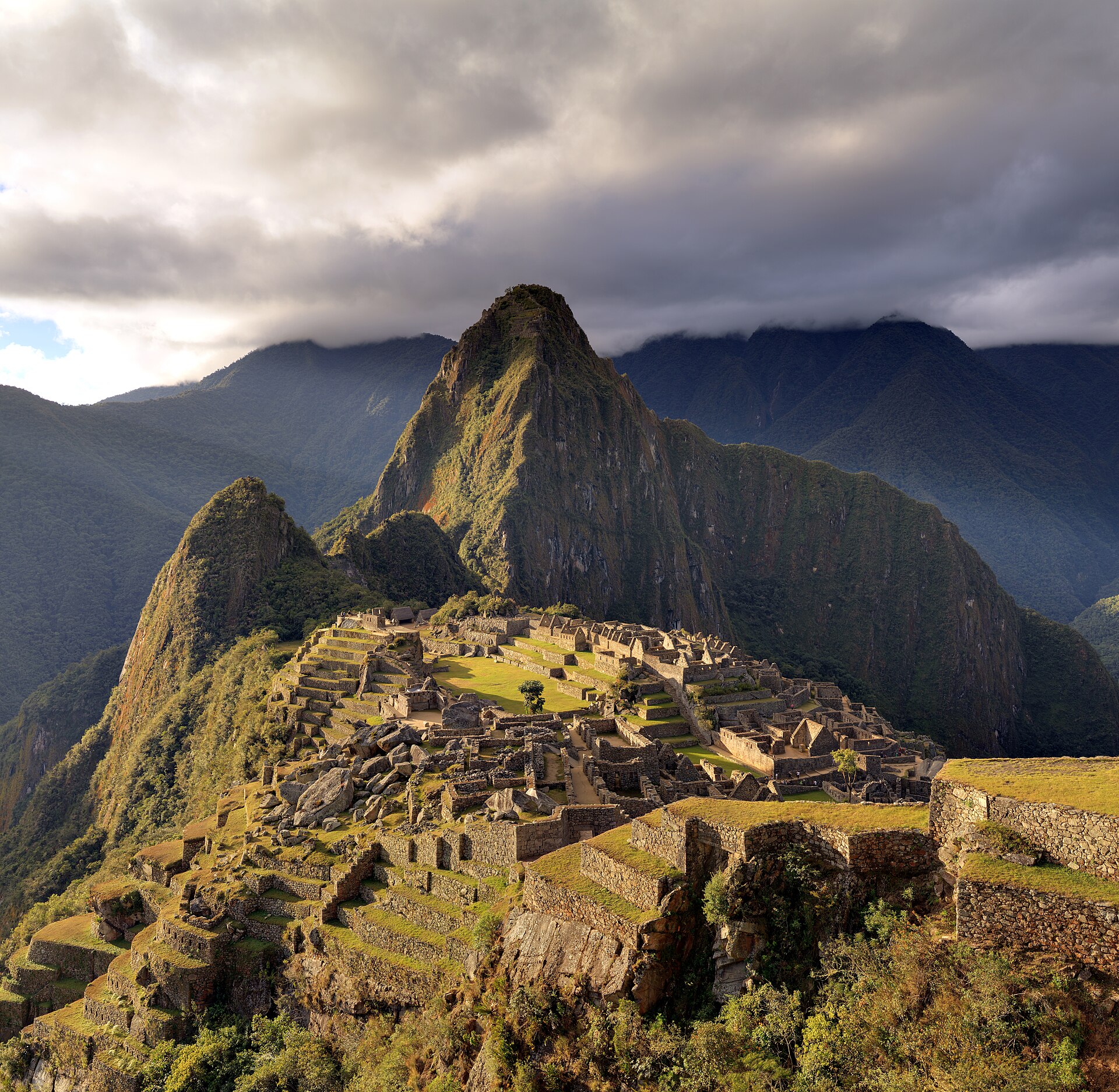
For centuries the Andes had built toward something extraordinary. Beginning in the early 13th century in the Peruvian highlands, a people calling themselves Inca rose from a small tribe near Cusco into rulers of Tawantinsuyu, the 'Realm of the Four Parts.' By 1438 their expansion had accelerated in earnest, and over the following century, through conquest and peaceful assimilation alike, they built the largest empire pre-Columbian America had ever seen.
At its height, Tawantinsuyu stretched from what is now Colombia's southwestern edge through Ecuador, Peru, Bolivia, northwest Argentina, and much of Chile — a state whose reach across roughly 4,000 kilometers rivaled the great empires of Eurasia. Its capital and administrative heart was Cusco, a city whose Quechua name meant 'navel,' fitting for a realm organized around it like spokes to a hub. From Cusco radiated the Qhapaq Ñan, an extensive road network binding together a territory of staggering diversity — over 700 languages spoken across the empire, unified under the official tongue of Quechua.
What made this empire remarkable to later observers was not just its size but the means by which it was built. The Incas achieved all this without the wheel, without draft animals, without iron or steel, and without a system of writing as understood elsewhere. Instead they relied on monumental stonework, finely woven textiles, agricultural innovation in one of the world's harshest terrains, and the quipu — knotted strings used for record-keeping and communication in place of written script.
The Inca economy ran on principles foreign to European visitors. There was little use of money or markets; instead, exchange rested on reciprocity. Taxes took the form of labor obligations owed to the empire, and in return the Sapa Inca — theoretically the owner of all productive land — granted access to goods and staged celebratory feasts for his subjects. Religion, too, bound the realm together: while local worship of sacred huacas persisted everywhere, Inca leadership promoted the cult of Inti, the sun god, and cast their ruler as Inti's own son on earth.
Europeans had brushed against this world before conquest began. The Portuguese explorer Aleixo Garcia reached the fringes of the Inca Empire in 1524, the first European to do so. But it was the Spanish who, beginning in 1532, launched the campaign that would end Tawantinsuyu. Francisco Pizarro led the effort, arriving at a moment of internal crisis: the empire, ruled at the time by Atahualpa, was already strained, and Spanish steel, horses, and the chaos of first contact combined to devastating effect.
More from Explorations

Humboldt: The Man Who Measured the World
A Prussian noble's son, once mocked as a sickly child, would climb a volcano to a world-record height and rewrite how humanity understood nature itself.

The Man Who Named Canada
A Breton mariner planted a wooden cross on a foreign shore and claimed a kingdom he did not understand — then spent a winter frozen into its river, praying a stranger's remedy would save his men.

Sixty Ships Into the Unknown: Hanno's Voyage Down the African Coast
A Carthaginian fleet of sixty ships and thousands of settlers vanished past the Pillars of Hercules to found cities on an unmapped coast — and came home with the skins of hairy, hostile 'gorillas' as proof of how far they had gone.

HMS Challenger: The Voyage That Charted the Deep
A stripped-down warship, its guns torn out to make room for microscopes, set sail from Portsmouth to answer a question no one had ever properly asked: what lies at the bottom of the sea?

Scott's Last Expedition: The Letters Written at the End of the World
Five men reached the bottom of the world only to find a Norwegian flag already planted there. What followed was not glory, but a slow, frozen unraveling that the world would remember for a century.

Marco Polo: In the Court of Kublai Khan
A fifteen-year-old boy meets the father he barely knew — and is soon swept toward the richest court on Earth. Twenty-four years later, he returns home with tales so vast that Venice simply calls him 'Mister Millions'.