08:15 — The Morning the Sky Broke Over Hiroshima
A B-29 bomber crosses a clear morning sky over a Japanese city that has, by design, never been bombed. At 8:15, that silence ends forever.
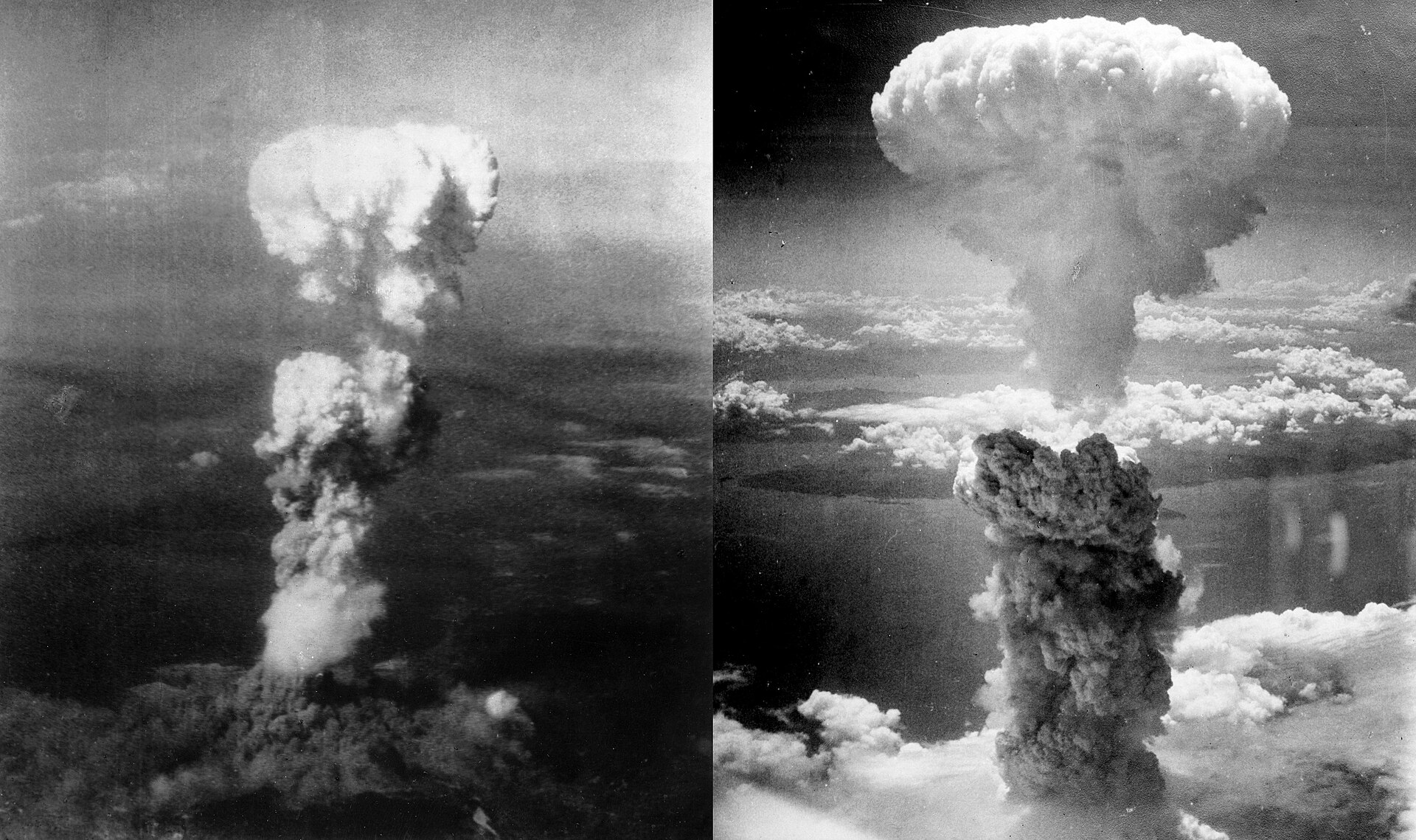
Before dawn on 6 August 1945, the city of Hiroshima woke as it had for weeks — untouched by the firebombing campaigns that had already devastated 64 other Japanese cities. That silence was not mercy; it was calculation. American planners had deliberately spared Hiroshima, along with Kokura, Niigata, and Nagasaki, from conventional air raids so that the destructive power of a new weapon could be measured against an undamaged target.
The decision to strike had been finalized weeks earlier. On 26 July, the Allies had issued the Potsdam Declaration, demanding Japan's unconditional surrender under threat of what it called 'prompt and utter destruction.' Japanese Prime Minister Kantarō Suzuki did not accept the terms, in part because the declaration made no guarantee about the preservation of the imperial system. With that rejection standing, orders had already been issued on 25 July by General Thomas T. Handy for atomic bombs to be used against the selected cities.
American intelligence had studied the daily rhythms of Hiroshima's population — when workers left their homes, when streets and offices filled — and identified 8:15 in the morning as the moment when the greatest number of civilians and military personnel alike would be out in the open, exposed rather than sheltered indoors.
The bomb itself, code-named 'Little Boy,' was a gun-type fission weapon built from enriched uranium-235, a design distinct from the plutonium implosion bomb still being prepared for a second strike. It had been carried across the Pacific to Tinian Island in the Marianas, where the specially trained 509th Composite Group of the U.S. Army Air Forces had readied their modified B-29 Superfortresses for the mission.
At exactly 8:15 a.m. local time on that Monday morning, the bomb was released over Hiroshima. Below, the city held its ordinary morning: commuters on their way to work, soldiers among a garrison estimated at 24,000 troops, families beginning the day in a city that had believed itself, for reasons it could not have known, protected from the war's aerial fire.
More from History

The Morning Bingham Climbed to Machu Picchu
On a cold July morning in 1911, an American historian scrambled up a jungle-choked ridge above the Urubamba River — and by afternoon, a forgotten Inca citadel would belong to the world.

The Last Half-Hour of the Hindenburg
It was already half a day late, and the public had been told to keep away — but at seven o'clock that evening, the Hindenburg finally turned toward its mooring mast for the last time.

The Last Hours of Pompeii: August 24, 79 AD
By noon it was just another hot day beside the Bay of Naples. By evening, an entire mountain had rewritten the fate of thousands.

The Longest Walk: Mandela's Last Steps to Freedom
After 27 years behind bars, a 71-year-old man had to relearn how to walk out of a prison gate — into a waiting world of cameras, crowds, and a country holding its breath.

The Document Lincoln Signed on the First Day of 1863
On a single January morning, a president's pen would change the legal status of more than three million people — if the ink held and his hand did not shake.

The Day of the Dream: August 28, 1963
Two hundred and fifty thousand people converged on the National Mall that morning — by nightfall, one voice from the steps of the Lincoln Memorial would echo for generations.