5:29 A.M.: The Day the Desert Learned to Burn
Before dawn on July 16, 1945, a handful of scientists crouched in the New Mexico desert, waiting to see if they had built a second sun—or a very expensive dud.
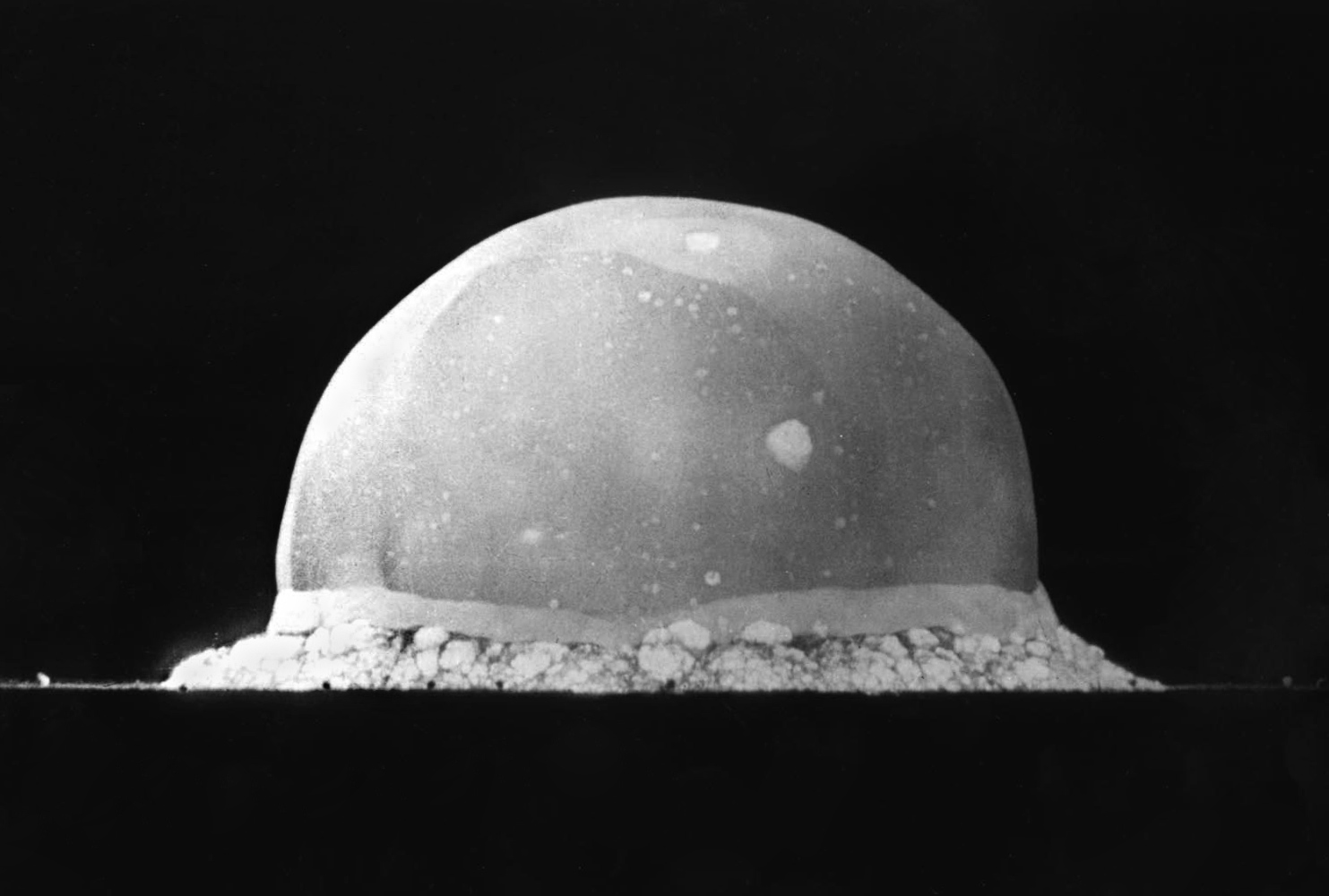
In the last dark hours before dawn on July 16, 1945, the Jornada del Muerto desert southeast of Socorro, New Mexico, held an unlikely gathering. Renamed White Sands Proving Ground only days earlier, the barren stretch of the Alamogordo Bombing and Gunnery Range had become the stage for a test the scientists of the Manhattan Project called Trinity, a name chosen by J. Robert Oppenheimer, possibly drawn from the poetry of John Donne.
At the center of it all sat the gadget, an implosion-design plutonium bomb identical in principle to the Fat Man weapon that would later fall on Nagasaki. Its complexity had worried the project's leaders enough that they insisted on a live test before risking the design in combat. A rehearsal had already been staged on May 7, when 108 short tons of conventional high explosive laced with radioactive isotopes was detonated to calibrate instruments. Fears the plutonium core might fizzle rather than explode had even prompted construction of a massive steel containment vessel nicknamed Jumbo, though in the end it went unused, left standing near the site as the real device was armed.
As the sky over the desert stayed black, 425 people were scattered across the test site and its distant observation points. Kenneth Bainbridge, who had planned and directed the test, moved through final checks. Oppenheimer was there, as were Vannevar Bush, James Chadwick, James B. Conant, Thomas Farrell, Enrico Fermi, Hans Bethe, Richard Feynman, Isidor Isaac Rabi, Leslie Groves, Philip Morrison, Frank Oppenheimer, Geoffrey Taylor, Richard Tolman, Edward Teller, and John von Neumann—a roll call of names that would define twentieth-century physics.
The device hung atop a 100-foot steel tower, its wiring running down to bunkers positioned miles away. In the hours before sunrise, technicians completed the arming sequence, aware that no one could be entirely certain what would happen when the current finally flowed. The McDonald Ranch House nearby, the only structure originally standing in the immediate vicinity, had served in the preceding days as an improvised laboratory where scientists assembled the plutonium core and other delicate components.```
At 5:29 a.m. Mountain War Time—11:29:21 GMT—the countdown reached zero. The gadget detonated, releasing the explosive energy of roughly 25 kilotons of TNT, give or take about 2 kilotons. In an instant the desert sky turned brighter than daylight, and a fireball rose where, moments before, there had been only a steel tower and darkness.
More from History

The Morning Bingham Climbed to Machu Picchu
On a cold July morning in 1911, an American historian scrambled up a jungle-choked ridge above the Urubamba River — and by afternoon, a forgotten Inca citadel would belong to the world.

The Last Half-Hour of the Hindenburg
It was already half a day late, and the public had been told to keep away — but at seven o'clock that evening, the Hindenburg finally turned toward its mooring mast for the last time.

The Last Hours of Pompeii: August 24, 79 AD
By noon it was just another hot day beside the Bay of Naples. By evening, an entire mountain had rewritten the fate of thousands.

The Longest Walk: Mandela's Last Steps to Freedom
After 27 years behind bars, a 71-year-old man had to relearn how to walk out of a prison gate — into a waiting world of cameras, crowds, and a country holding its breath.

The Document Lincoln Signed on the First Day of 1863
On a single January morning, a president's pen would change the legal status of more than three million people — if the ink held and his hand did not shake.

The Day of the Dream: August 28, 1963
Two hundred and fifty thousand people converged on the National Mall that morning — by nightfall, one voice from the steps of the Lincoln Memorial would echo for generations.