Babylon: The Small Town That Named an Empire
Long before it became a byword for grandeur, Babylon was a nondescript town in the shadow of older, mightier cities. Then one Amorite king rewrote the map.
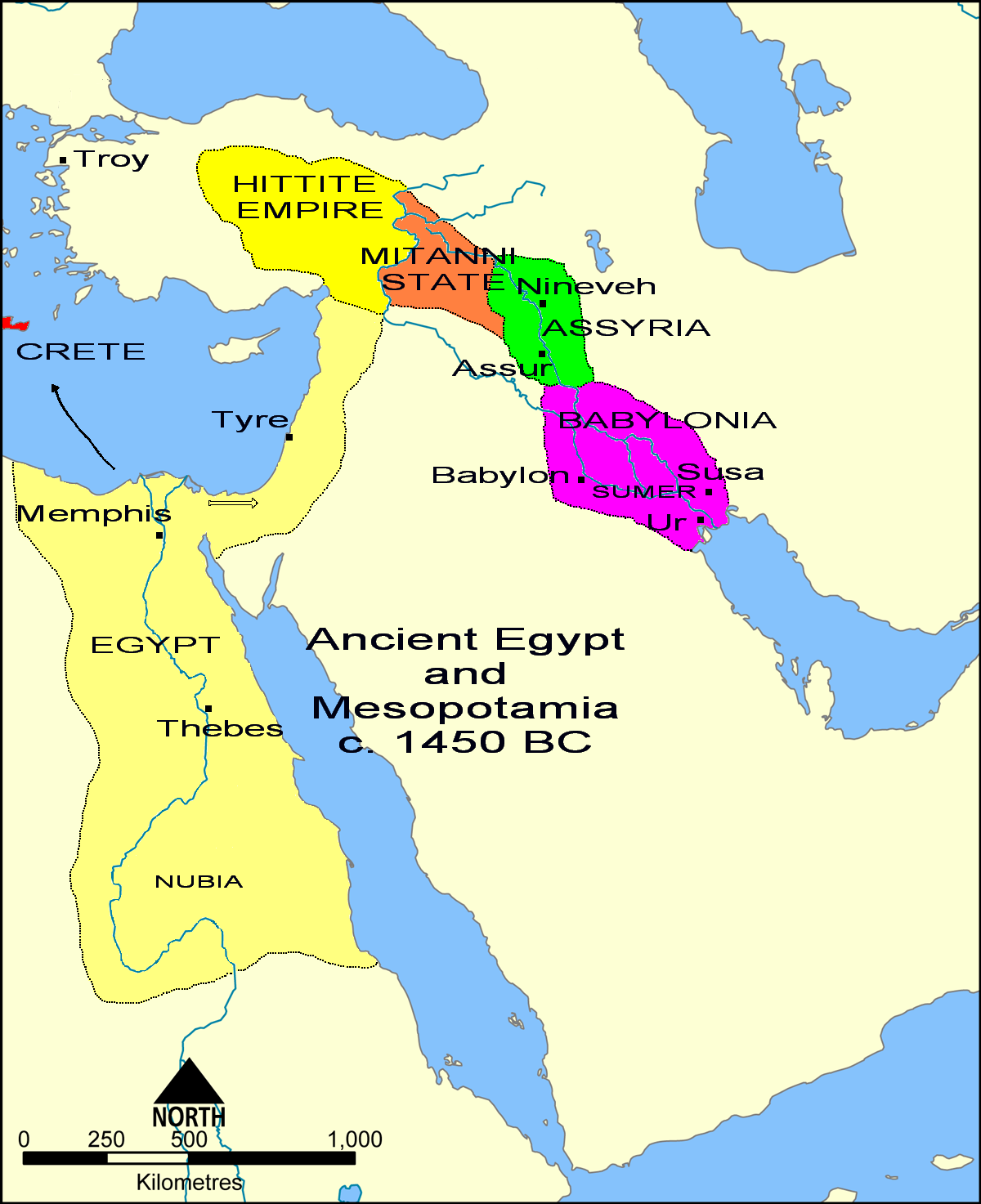
Around 1894 BC, an Amorite ruler named Sumu-abum seized a modest settlement on the Euphrates called Babylon, carving it out of the territory of the small city-state of Kazallu. It was an unremarkable acquisition at the time. Sumu-abum never even called himself King of Babylon, a silence in the record suggesting the town was not yet significant enough to warrant a royal title. His successors — Sumu-la-El, Sabium, and Apil-Sin — governed in similar obscurity, leaving no inscriptions boasting of a Babylonian kingdom.
This was still an age when Mesopotamia's real power lay elsewhere. Isin, Larsa, Assyria to the north, and Elam to the east towered over the fledgling Amorite settlement. Elam, in particular, had pushed deep into southern Mesopotamia, and the early Amorite rulers of Babylon operated largely as its subordinates. Only with a king named Sin-Muballit — known from a single inscribed tablet — was Babylon's ruler formally recognized as King of Babylon at all.
The transformation came with Hammurabi, who reigned from roughly 1792 to 1750 BC. He turned Babylon from a minor town into a major city, building a centralized administration and a functioning tax system. He broke free of Elamite dominance and even launched campaigns into Elam's own territory. Then he moved systematically to conquer southern Mesopotamia, ending long-standing regional instability and uniting the south under Babylonian rule.
Out of these conquests came Hammurabi's most enduring legacy: his code of laws, built upon older Sumerian, Akkadian, and Assyrian legal traditions. The stele bearing these laws survives today and is displayed in the Louvre. With Hammurabi's triumphs, Babylon eclipsed Nippur, which had been Mesopotamia's preeminent religious center for centuries. Babylon became the new sacred city, and any ruler who wished to claim dominance over southern Mesopotamia was expected to be crowned there.
This dominance did not last. Babylon's empire collapsed rapidly after Hammurabi's death, and under his son the state weakened, falling for long stretches under Assyrian, Kassite, and Elamite control. The city itself was later destroyed and rebuilt by the Assyrians. Yet the region as a whole kept the name Babylonia, retrospectively described as 'the land of Akkad' — a deliberate echo of the earlier glory of the Akkadian Empire.
More from History

The Morning Bingham Climbed to Machu Picchu
On a cold July morning in 1911, an American historian scrambled up a jungle-choked ridge above the Urubamba River — and by afternoon, a forgotten Inca citadel would belong to the world.

The Last Half-Hour of the Hindenburg
It was already half a day late, and the public had been told to keep away — but at seven o'clock that evening, the Hindenburg finally turned toward its mooring mast for the last time.

The Last Hours of Pompeii: August 24, 79 AD
By noon it was just another hot day beside the Bay of Naples. By evening, an entire mountain had rewritten the fate of thousands.

The Longest Walk: Mandela's Last Steps to Freedom
After 27 years behind bars, a 71-year-old man had to relearn how to walk out of a prison gate — into a waiting world of cameras, crowds, and a country holding its breath.

The Document Lincoln Signed on the First Day of 1863
On a single January morning, a president's pen would change the legal status of more than three million people — if the ink held and his hand did not shake.

The Day of the Dream: August 28, 1963
Two hundred and fifty thousand people converged on the National Mall that morning — by nightfall, one voice from the steps of the Lincoln Memorial would echo for generations.