Chaldiran, 1514: The Field Where Two Empires Broke Each Other's Faith
A sultan who believed himself God's caliph on earth marched against a shah his followers believed infallible — and on a single August afternoon, gunpowder settled a question theology never could.
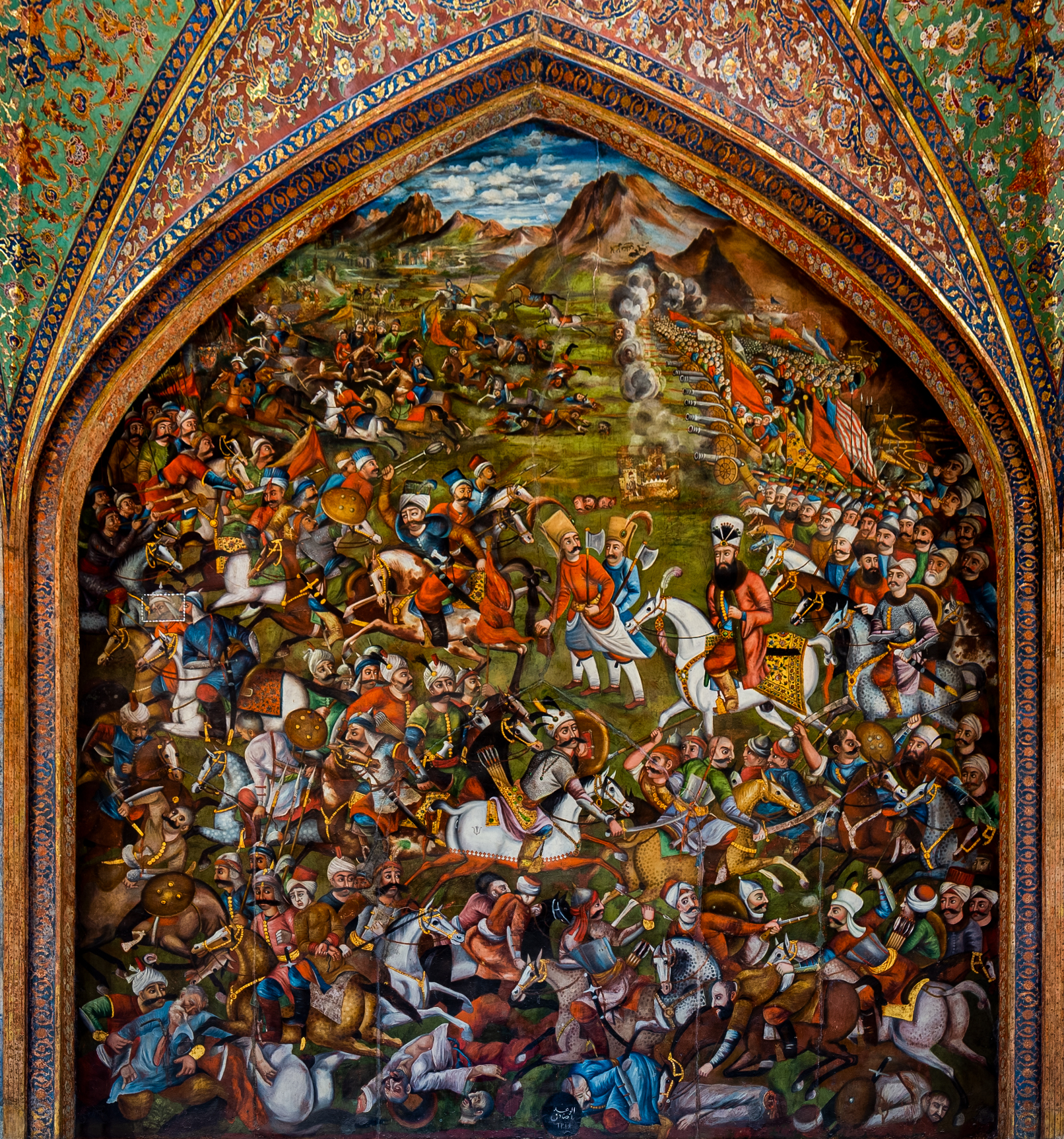
On 23 August 1514, in the Chaldiran Plain near what is now Maku in Iran, two armies faced each other with more at stake than territory. Selim I, the Ottoman sultan, brought a force of 60,000 to 100,000 men, including thousands of Janissaries armed with muskets and heavy artillery lashed behind a barrier of carts. Facing him was Ismail I, the Safavid shah, commanding 40,000 to 80,000 cavalry with no artillery at all.
The roots of the confrontation stretched back decades. Ottoman sultan Bayezid II had already viewed the Safavid religious movement — the Qizilbash, Twelver Shi'i warrior-dervishes who revered Ismail as divinely infallible — as a mortal threat to his rule, especially since they commanded loyal followings deep inside Anatolia. When Ismail seized Erzincan in 1501, though it lay outside Ottoman territory, it enraged Selim, then a provincial governor in Trabzon, who twice attacked Safavid lands afterward. Selim eventually deposed his own father to take the throne, and once crowned in 1512, moved to end the Safavid question permanently.
Selim secured a religious ruling branding Ismail and the Qizilbash as unbelievers and heretics, which he used to justify extreme measures. Before marching east, he ordered the execution of some 40,000 Qizilbash across Anatolia as punishment for perceived rebellion, and moved to choke off the import of Iranian silk. He sent Ismail a letter dripping with contempt, addressing him as 'the usurping Darius of the time' and 'the malevolent Zahhak of the age,' while styling himself the caliph of God on earth.
Ismail, meanwhile, faced pressure from the east, where the Khanate of Bukhara had invaded Safavid lands. To avoid a two-front war, he adopted a scorched-earth strategy against Selim's advancing army, denying it supplies as it crossed the brutal terrain of the Armenian highlands. The hardship provoked real unrest among Selim's own troops — at one point, Janissaries reportedly fired their muskets at the Sultan's tent in protest. When word came that the Safavid army was massing at Chaldiran, Selim moved quickly to force the engagement, partly to channel his soldiers' anger into battle.
At Chaldiran, the Safavid cavalry tried to strike at the Ottoman flanks to avoid the guns massed at the center, but the Ottoman artillery proved highly maneuverable and cut them down regardless. Lacking cannons or muskets, Ismail's forces relied on traditional weaponry against an army equipped with gunpowder, and the imbalance proved decisive. Poor planning and discipline compounded the Safavid losses. Ismail himself was wounded and nearly captured; his wives were seized by Selim's forces, with at least one later married off to one of the Sultan's own statesmen.
More from History

The Morning Bingham Climbed to Machu Picchu
On a cold July morning in 1911, an American historian scrambled up a jungle-choked ridge above the Urubamba River — and by afternoon, a forgotten Inca citadel would belong to the world.

The Last Half-Hour of the Hindenburg
It was already half a day late, and the public had been told to keep away — but at seven o'clock that evening, the Hindenburg finally turned toward its mooring mast for the last time.

The Last Hours of Pompeii: August 24, 79 AD
By noon it was just another hot day beside the Bay of Naples. By evening, an entire mountain had rewritten the fate of thousands.

The Longest Walk: Mandela's Last Steps to Freedom
After 27 years behind bars, a 71-year-old man had to relearn how to walk out of a prison gate — into a waiting world of cameras, crowds, and a country holding its breath.

The Document Lincoln Signed on the First Day of 1863
On a single January morning, a president's pen would change the legal status of more than three million people — if the ink held and his hand did not shake.

The Day of the Dream: August 28, 1963
Two hundred and fifty thousand people converged on the National Mall that morning — by nightfall, one voice from the steps of the Lincoln Memorial would echo for generations.