Did the Parthenon Really Use the Golden Ratio? Unpacking a Beautiful Myth
For over a century, math teachers and design gurus alike have pointed to the Parthenon as living proof that the ancient Greeks encoded a mystical number into stone. But how solid is that claim, really?
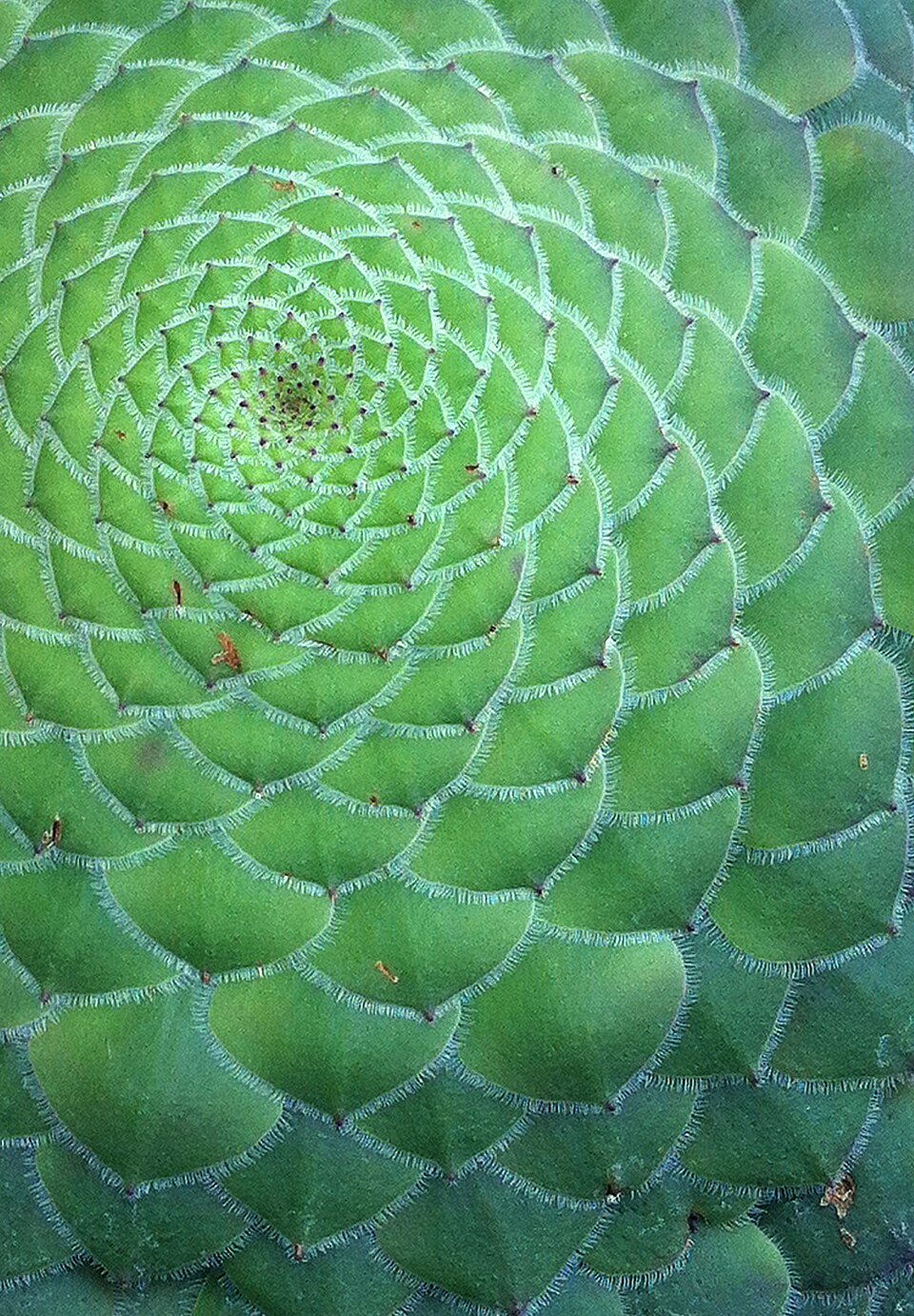
The golden ratio, denoted by the Greek letter phi (φ), is a precise mathematical relationship: two quantities are in golden ratio if the ratio of their sum to the larger equals the ratio of the larger to the smaller, working out to an irrational number, 1.618033988749....
The popular story — repeated in countless textbooks and design blogs — is that the Parthenon in Athens was deliberately built by the Greeks according to this proportion, and that the sculptor Phidias, who oversaw its construction, personally used it. This claim traces back to a specific historical moment: in the 1900s, an American mathematician named Mark Barr proposed using the Greek letter phi (Φ) to symbolize the golden ratio, explicitly naming it in honor of Phidias, whom Barr credited as the architect of the Parthenon and the first person known to have formally used the ratio.
Here is the catch: that naming decision by Mark Barr in the 1900s is itself the main documented source tying Phidias and the Parthenon to the golden ratio by name. The symbol phi was chosen as a tribute — a retrospective act of honoring what Barr believed to be true — rather than something built on a contemporary ancient Greek document describing Phidias's blueprints or design notes.
What we do know for certain, from the historical record, is much older and more solidly documented: the golden ratio itself was rigorously defined and proven mathematically by Euclid around 300 BC in his Elements, where he called it the 'extreme and mean ratio.' Euclid's interest was in geometry — particularly the construction of regular pentagons and pentagrams, and by extension the dodecahedron and icosahedron — not in architectural design manuals for temples.
The golden ratio was also known to have been studied by Pythagoras and his followers, with a story that the 5th-century BC mathematician Hippasus discovered its irrationality, unsettling the Pythagoreans who prized whole numbers and fractions. This places the ratio squarely in the world of Greek mathematics and geometry, centuries of study, rather than in a single act of temple design.
More from History

The Morning Bingham Climbed to Machu Picchu
On a cold July morning in 1911, an American historian scrambled up a jungle-choked ridge above the Urubamba River — and by afternoon, a forgotten Inca citadel would belong to the world.

The Last Half-Hour of the Hindenburg
It was already half a day late, and the public had been told to keep away — but at seven o'clock that evening, the Hindenburg finally turned toward its mooring mast for the last time.

The Last Hours of Pompeii: August 24, 79 AD
By noon it was just another hot day beside the Bay of Naples. By evening, an entire mountain had rewritten the fate of thousands.

The Longest Walk: Mandela's Last Steps to Freedom
After 27 years behind bars, a 71-year-old man had to relearn how to walk out of a prison gate — into a waiting world of cameras, crowds, and a country holding its breath.

The Document Lincoln Signed on the First Day of 1863
On a single January morning, a president's pen would change the legal status of more than three million people — if the ink held and his hand did not shake.

The Day of the Dream: August 28, 1963
Two hundred and fifty thousand people converged on the National Mall that morning — by nightfall, one voice from the steps of the Lincoln Memorial would echo for generations.