Dilmun: The Vanished Paradise of the Gulf
Long before Sumerians dreamed of a garden without death, they spoke of a real place across the water where merchants grew rich on copper and pearls — a kingdom whose ruins now lie sunken beneath the Persian Gulf.
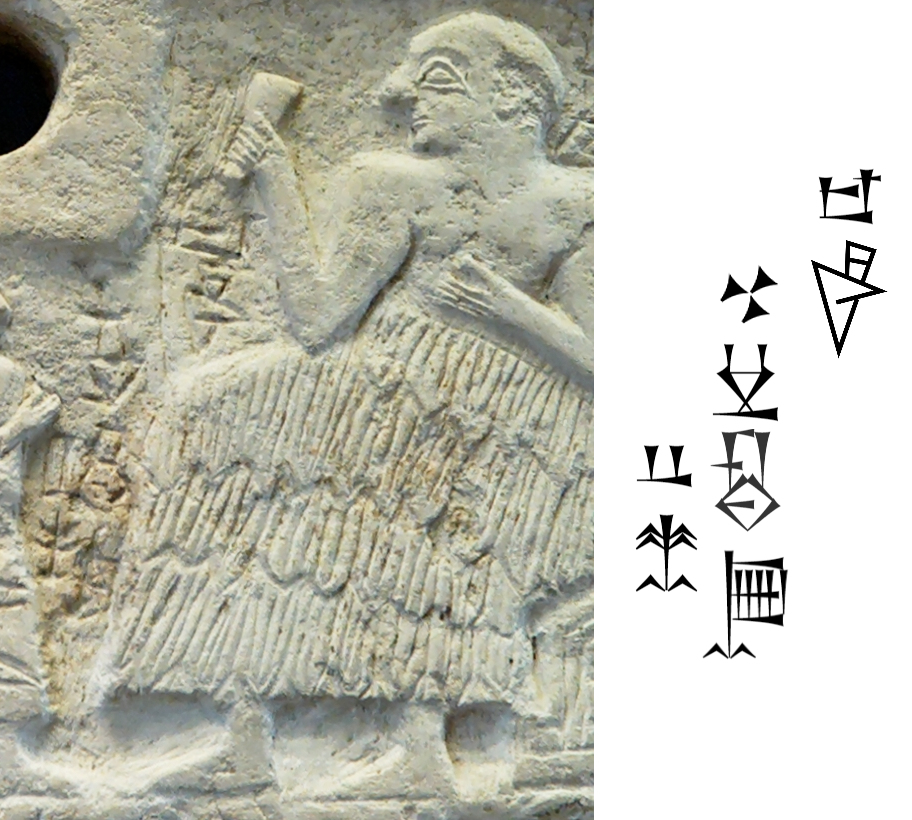
On a clay door-socket dedicated by King Ur-Nanshe of Lagash around 2300 BC, a scribe carved a simple boast: 'The ships of Dilmun brought him wood as tribute from foreign lands.' It is one of the earliest known mentions of a civilization that would haunt Mesopotamian memory for two thousand years — not as a myth, but as a trading partner whose ships crossed the Persian Gulf loaded with copper, pearls, and timber.
Dilmun rose along the Persian Gulf, likely encompassing modern Bahrain, Kuwait, and eastern Saudi Arabia, at a crossroads between Mesopotamia and the Indus Valley Civilization. Close to the sea and fed by artesian springs that once made its land fertile, it became the connective tissue of ancient trade — a stopover where goods from Mesopotamia, Persia, the Levant, and Asia Minor were exchanged for treasures arriving from India, Africa, and the Arabian Peninsula.
Merchants from Ur exported wool and crops to Dilmun and returned with staggering profits — copper, whose price ran high in Ur, along with fragrant woods, perfumes, and pearls that fetched enormous sums in Mesopotamian markets. Texts describing commercial agreements and contracts between Dilmun and Ur reveal just how tightly the two economies were bound together.
In Sumerian religious imagination, Dilmun was elevated beyond mere commerce. The saga of Enki and Ninhursag described it as a paradise existing before time: a place where predators did not kill, disease and pain were unknown, no one grew old, and death itself had no purchase. Some scholars have suggested this vision of a garden paradise may have echoed forward into the biblical Garden of Eden, though ancient texts never explicitly call Dilmun sacred.
By around 2050 BC, Dilmun reached its political peak, likely ruled from the settlement now known as Qal'at al-Bahrain. Freed from Mesopotamian dominion, it became an independent kingdom that exchanged royal gifts and maintained contact with the distant Amorite state of Mari. Around 1780 BC, inscriptions on stone vessels name King Yagli-El and his father Rimum, whose burial mounds have been unearthed by archaeologists. Later, from around 1650 BC, seals from Failaka name further rulers — Sumu-lěl and, separately, Samuʽa — each carrying the title 'servant of Inzak of Akarum.'
More from History

The Morning Bingham Climbed to Machu Picchu
On a cold July morning in 1911, an American historian scrambled up a jungle-choked ridge above the Urubamba River — and by afternoon, a forgotten Inca citadel would belong to the world.

The Last Half-Hour of the Hindenburg
It was already half a day late, and the public had been told to keep away — but at seven o'clock that evening, the Hindenburg finally turned toward its mooring mast for the last time.

The Last Hours of Pompeii: August 24, 79 AD
By noon it was just another hot day beside the Bay of Naples. By evening, an entire mountain had rewritten the fate of thousands.

The Longest Walk: Mandela's Last Steps to Freedom
After 27 years behind bars, a 71-year-old man had to relearn how to walk out of a prison gate — into a waiting world of cameras, crowds, and a country holding its breath.

The Document Lincoln Signed on the First Day of 1863
On a single January morning, a president's pen would change the legal status of more than three million people — if the ink held and his hand did not shake.

The Day of the Dream: August 28, 1963
Two hundred and fifty thousand people converged on the National Mall that morning — by nightfall, one voice from the steps of the Lincoln Memorial would echo for generations.