Eight O'Clock, October 30th: The Night New Jersey Fell to Mars
At 8 pm sharp, a dance band on the radio dissolved into a bulletin about strange explosions on Mars. By 8:30, Manhattan was supposedly choking on poison gas — and some listeners believed every word.
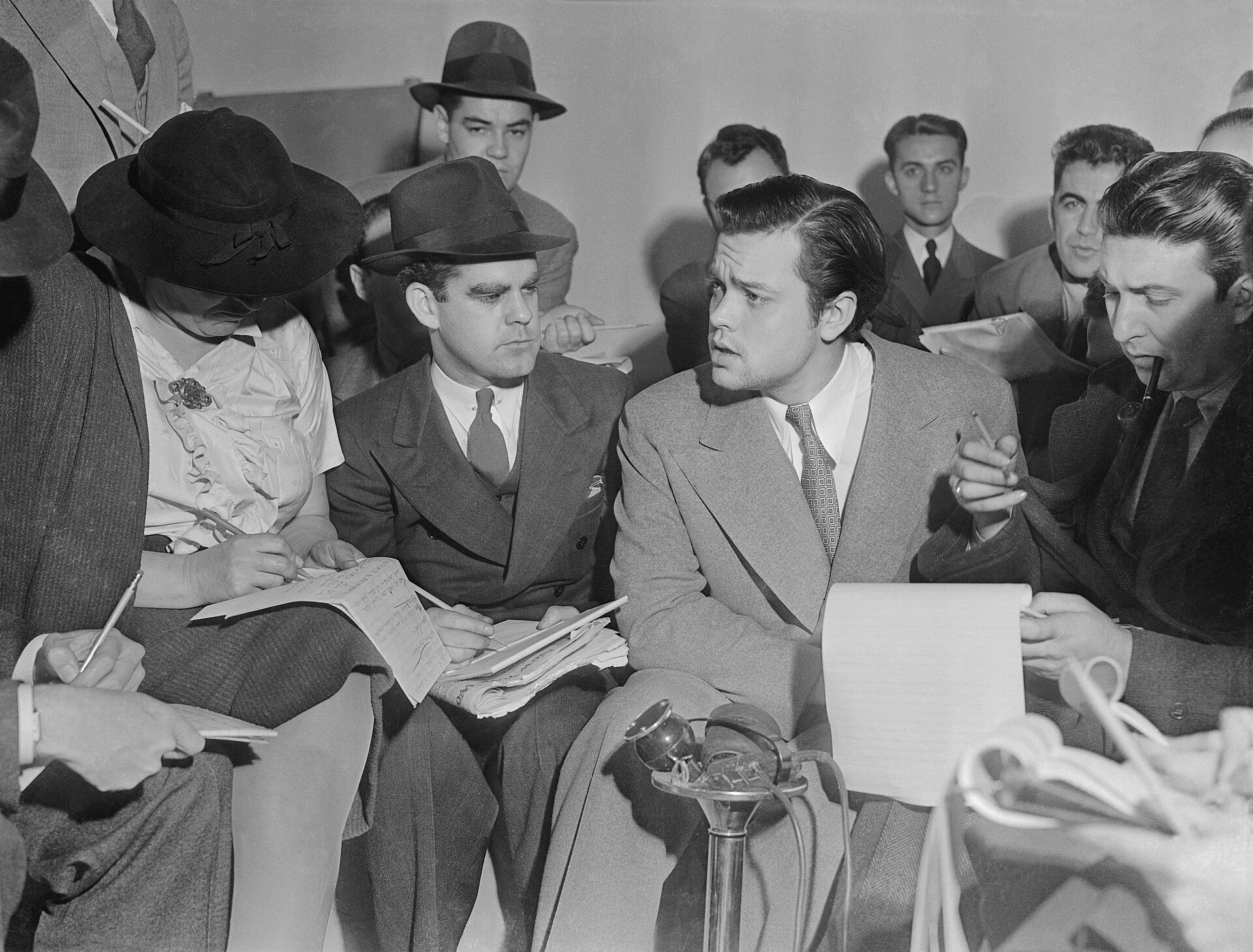
At 8 pm Eastern time on October 30, 1938, CBS Radio Network aired the seventeenth episode of The Mercury Theatre on the Air, a Halloween offering directed and narrated by twenty-three-year-old Orson Welles. It was an adaptation of H. G. Wells's novel The War of the Worlds, reworked by Howard Koch, who moved the story from Victorian England to contemporary America and set the Martians' landing at Grovers Mill, a small, unincorporated village in West Windsor, New Jersey.
The broadcast opened with a monologue drawn closely from the novel's own opening lines, establishing the mood before the program slid into what sounded like an ordinary evening of radio: dance music, played live, interrupted every so often. Because The Mercury Theatre on the Air ran with few commercial breaks, nothing broke the illusion — no jingles, no clear separation between fiction and reality — as the interruptions grew more frequent and more alarming.
The first bulletins were mild: reports of unusual explosions observed on Mars. Then came a seemingly unconnected item — an unidentified object had fallen onto a farm at Grovers Mill, New Jersey. Within minutes the tone shifted. A reporter on the scene described creatures emerging from what was plainly a spacecraft, and moments later those creatures unleashed a heat ray on the police and onlookers gathered around the site. His voice climbed into panic as he narrated the attack — and then his audio feed went dead.
What followed was a rapid cascade of updates chronicling a full-scale alien invasion and the US military's failed attempts to stop it. The first half of the program built to its climax with a correspondent reporting live from a rooftop in Manhattan, describing crowds fleeing poison smoke released by towering Martian war machines advancing on the city — until he coughed, and fell silent. Only then, roughly thirty minutes after Welles's introduction, did the program take its first break.
During these thirty minutes, some listeners had tuned in late, missing Welles's opening framing of the piece as fiction. Popular legend attributes this to audiences switching over from the far more popular Chase and Sanborn Hour with Edgar Bergen on NBC during a musical interlude — though modern research suggests this happened only rarely. Whatever the exact mechanism, confusion and fear spread among some portion of the audience even as CBS officials, monitoring the broadcast live, grew alarmed enough to consider halting it.
More from History

The Morning Bingham Climbed to Machu Picchu
On a cold July morning in 1911, an American historian scrambled up a jungle-choked ridge above the Urubamba River — and by afternoon, a forgotten Inca citadel would belong to the world.

The Last Half-Hour of the Hindenburg
It was already half a day late, and the public had been told to keep away — but at seven o'clock that evening, the Hindenburg finally turned toward its mooring mast for the last time.

The Last Hours of Pompeii: August 24, 79 AD
By noon it was just another hot day beside the Bay of Naples. By evening, an entire mountain had rewritten the fate of thousands.

The Longest Walk: Mandela's Last Steps to Freedom
After 27 years behind bars, a 71-year-old man had to relearn how to walk out of a prison gate — into a waiting world of cameras, crowds, and a country holding its breath.

The Document Lincoln Signed on the First Day of 1863
On a single January morning, a president's pen would change the legal status of more than three million people — if the ink held and his hand did not shake.

The Day of the Dream: August 28, 1963
Two hundred and fifty thousand people converged on the National Mall that morning — by nightfall, one voice from the steps of the Lincoln Memorial would echo for generations.