El Alamein: The Wind Turns in the Desert
For thirteen days in the autumn of 1942, two exhausted armies fought over a stretch of Egyptian desert with nowhere left to retreat — and when the dust settled, the war itself had changed direction.
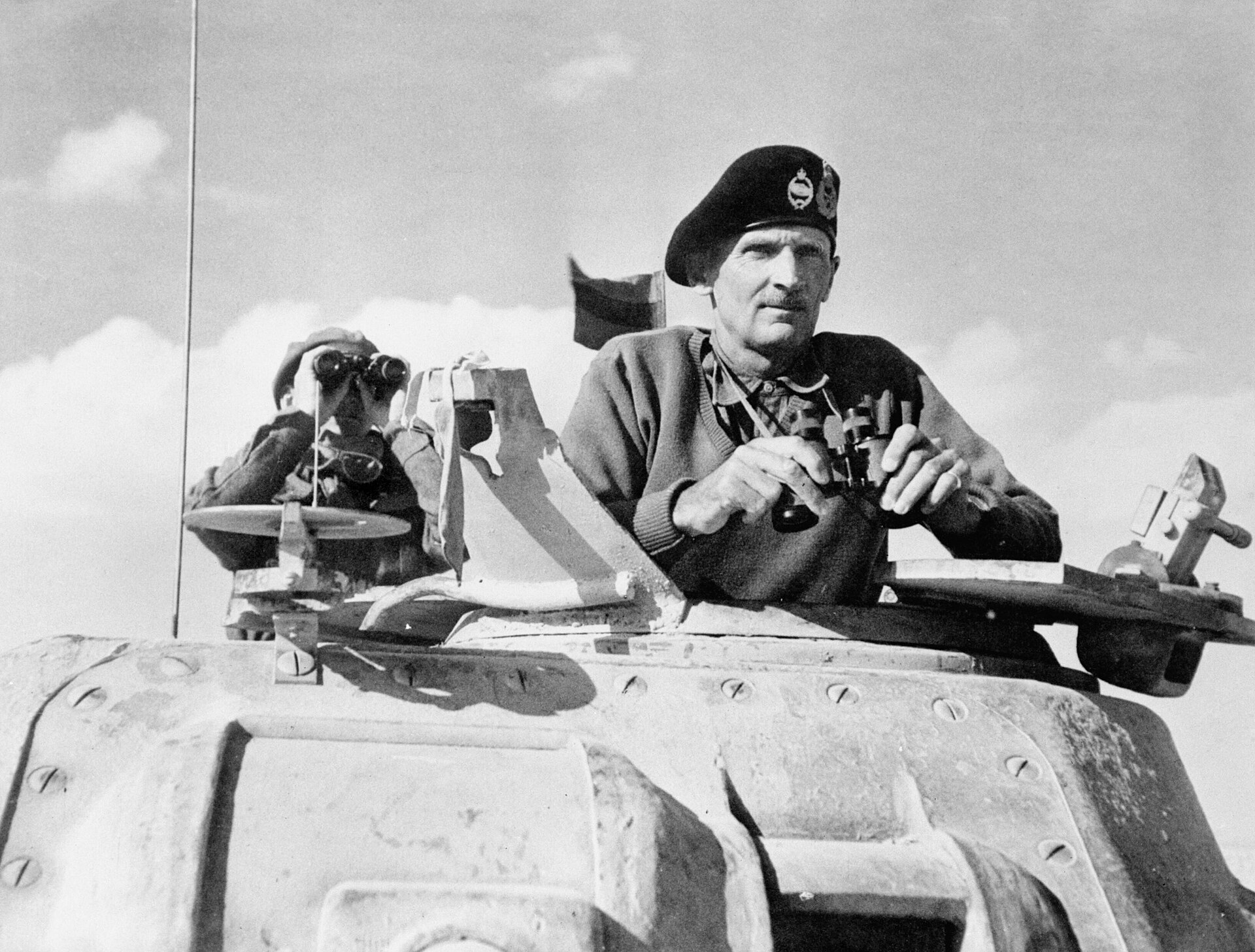
By the summer of 1942, Erwin Rommel's Panzerarmee Afrika had pushed deep into Egypt, threatening the Suez Canal and the oil-rich Middle East beyond it. The British Eighth Army, first under Claude Auchinleck and then reorganized under new commanders, had held the line at El Alamein, where the impassable Qattara Depression forced any battle into a narrow frontal collision. The First Battle of El Alamein and the Battle of Alam el Halfa had already stopped Rommel's advance, but the Axis army dug in, sowing roughly 500,000 mines and miles of barbed wire across the front — a defensive labyrinth soldiers would call the Devil's Garden.
Command changed hands that summer in dramatic fashion. Churchill and General Alan Brooke replaced Auchinleck with Harold Alexander, and after Lieutenant-General William Gott was killed when his transport plane was shot down, Bernard Montgomery was flown in from Britain to take charge of the Eighth Army. Montgomery inherited an army with a growing advantage: British intelligence, aided by Ultra intercepts and the capture of a German signals battalion, had exposed Axis supply routes so thoroughly that Allied aircraft and submarines could sink ships bound for North Africa almost at will. By late October, Rommel's force had only three days of fuel.
Montgomery's plan, Operation Lightfoot, called for a main thrust in the north to cut two corridors through the minefields, allowing armor to pour through and destroy the Panzerarmee, while a secondary attack in the south pinned down Axis reserves. Deception measures — dummy tanks, fake jeeps, a fake pipeline — reinforced the illusion of a southern buildup. When the offensive opened before dawn on 23 October 1942, 882 British guns fired a five-hour barrage, each gun loosing around 600 rounds, before engineers began the perilous work of clearing lanes through the Devil's Garden under infantry cover.
Progress was agonizingly slow. Five hundred British tanks pushed into the cleared corridor but stalled in dust and congestion. On 24 October, an air raid struck the German headquarters, killing General Georg Stumme, who was standing in for Rommel; General Ritter von Thoma took command until Rommel himself flew back from Germany. That evening, panzers of the 15th Panzer Division pushed back the Australian troops holding Kidney Ridge, and by nightfall the battle's first great tank clash had unfolded — over a hundred tanks engaged, nearly half lost on each side.
Rommel returned to his headquarters on the evening of 25 October to find his army bleeding out: the Italian Trento Division had lost half its strength, the 164th Light Division two battalions, rations cut in half, and only three days of fuel remaining for the entire force. On 26 October, with Churchill reportedly despairing of finding a general who could win the war, Rommel launched a counterattack near Tel el Eisa, throwing his armor at Kidney Ridge in hopes of reclaiming lost ground. Fuel shortages stopped the advance in open desert, where Allied aircraft tore into the exposed columns, and a torpedo-bomber strike sank a tanker in Tobruk harbor, extinguishing Rommel's last hope of resupply.
More from History

The Morning Bingham Climbed to Machu Picchu
On a cold July morning in 1911, an American historian scrambled up a jungle-choked ridge above the Urubamba River — and by afternoon, a forgotten Inca citadel would belong to the world.

The Last Half-Hour of the Hindenburg
It was already half a day late, and the public had been told to keep away — but at seven o'clock that evening, the Hindenburg finally turned toward its mooring mast for the last time.

The Last Hours of Pompeii: August 24, 79 AD
By noon it was just another hot day beside the Bay of Naples. By evening, an entire mountain had rewritten the fate of thousands.

The Longest Walk: Mandela's Last Steps to Freedom
After 27 years behind bars, a 71-year-old man had to relearn how to walk out of a prison gate — into a waiting world of cameras, crowds, and a country holding its breath.

The Document Lincoln Signed on the First Day of 1863
On a single January morning, a president's pen would change the legal status of more than three million people — if the ink held and his hand did not shake.

The Day of the Dream: August 28, 1963
Two hundred and fifty thousand people converged on the National Mall that morning — by nightfall, one voice from the steps of the Lincoln Memorial would echo for generations.