Elam: The Forgotten Kingdom of the Zagros
Long before Persia had a name, a civilization of highlanders and lowlanders built a language no one else on Earth ever spoke — and it outlived the empire that erased it.
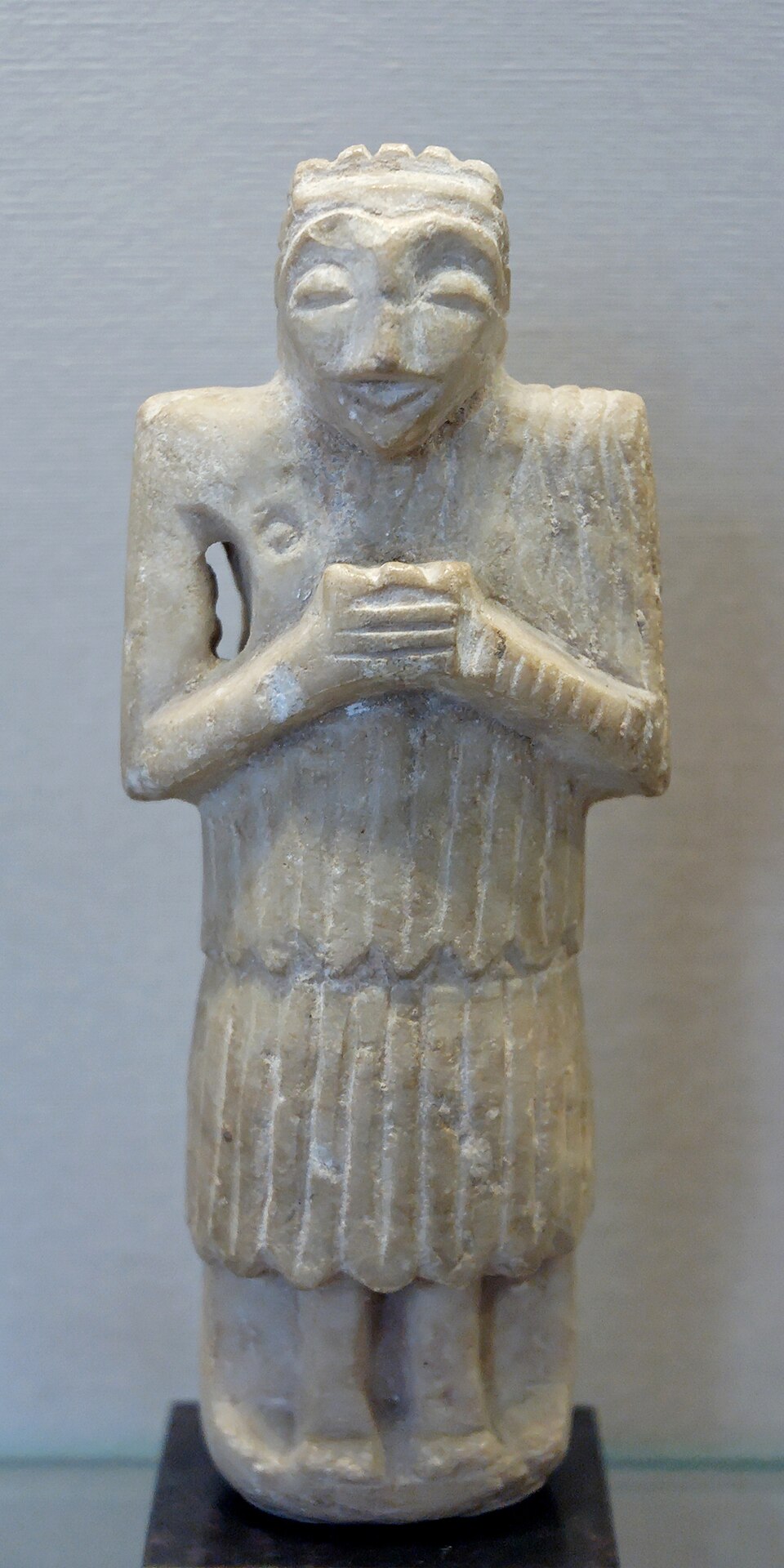
In the far southwest of what is now Iran, where the Zagros mountains slope down into the marshy plains of Khuzestan, a civilization rose that Mesopotamian scribes called Elam. It was not a single city or a single people but a confederation stretching from the highlands around Anshan to the lowland capital of Susa, its two halves bound together by trade, kinship, and a shared political identity that outsiders found easier to name than to define. The very word 'Elam' was not native to its people — the highlanders called themselves Anshanites, Awanites, Shimashkians, and by other local names. 'Elam' was a Mesopotamian construct, a convenient label the Sumerians and Akkadians used for a world they traded with, feared, and periodically invaded.
Elam's story begins in the shadow of the Ubaid culture, in a landscape already dense with early urban life. By around 3200 BC, the proto-Elamite period had begun, marked by the appearance of a distinctive script at Susa — a system of writing that emerged almost in parallel with Sumerian cuneiform, though its language remains only partially understood. At least three proto-Elamite states — Anshan, Awan, and Shimashki — merged in response to pressure from Sumer, forging the political unity that would define Elam for the next two millennia. This federated structure allowed the confederation to draw on the very different resources of highland and lowland alike, a flexibility that became its great strength.
The Old Elamite period, spanning roughly 2700 to 1500 BC, saw Elam locked in a long rivalry with Mesopotamia's great powers. Sumerian records preserve the names of Elamite dynasties such as Awan, Hamazi, and Shimashki, the last of which delivered the fatal blow to Sumer's Third Dynasty of Ur. Sargon of Akkad, who ruled from 2334 to 2279 BC, fought wars against Elam that left behind inscriptions naming Elamite cities, kings, and officials. The conflict dragged on through the reign of his grandson Naram-Sin, ending in a treaty invoking the names of thirty-seven gods as witnesses, with an Elamite king named Hita recorded as a signatory.
Elam's ambitions did not fade with age. Between 1792 and 1750 BC, during the reign of the Babylonian king Hammurabi, Elam joined a coalition against him — though Hammurabi managed to break the alliance apart. Centuries later, under the Shutrukid dynasty, Elam reached the height of its power. In the twelfth century BC, King Shutruk-Nahhunte led a campaign against Babylon and won a resounding victory, bringing back to Elam extraordinary trophies: the stele of Naram-Sin, the inscribed Code of Hammurabi, and two statues of the Akkadian king Manishtushu. His successor Shilhak-Inshushinak, also of the twelfth century BC and remembered as having reigned around 1150 to 1120 BC, presided over an era of such prosperity and political stability that he is remembered as the greatest king in Elamite history.
By the reign of Kudur-Nahhunte, the Elamite capital had shifted first to Madaktu and then to Hidalu, signs of a kingdom under increasing strain. Babylonian sources name Urtaki as Elam's final king, while Assyrian records instead point to Te-Umman. Whichever account is followed, the end came decisively in 646 BC, when the Assyrian king Ashurbanipal launched a campaign that destroyed the Elamite kingdom and effectively erased it from the political map of the Near East.
More from History

The Morning Bingham Climbed to Machu Picchu
On a cold July morning in 1911, an American historian scrambled up a jungle-choked ridge above the Urubamba River — and by afternoon, a forgotten Inca citadel would belong to the world.

The Last Half-Hour of the Hindenburg
It was already half a day late, and the public had been told to keep away — but at seven o'clock that evening, the Hindenburg finally turned toward its mooring mast for the last time.

The Last Hours of Pompeii: August 24, 79 AD
By noon it was just another hot day beside the Bay of Naples. By evening, an entire mountain had rewritten the fate of thousands.

The Longest Walk: Mandela's Last Steps to Freedom
After 27 years behind bars, a 71-year-old man had to relearn how to walk out of a prison gate — into a waiting world of cameras, crowds, and a country holding its breath.

The Document Lincoln Signed on the First Day of 1863
On a single January morning, a president's pen would change the legal status of more than three million people — if the ink held and his hand did not shake.

The Day of the Dream: August 28, 1963
Two hundred and fifty thousand people converged on the National Mall that morning — by nightfall, one voice from the steps of the Lincoln Memorial would echo for generations.