From Coal and Steel to a Union of Nations
Two countries that had bled each other white in two world wars decided the safest way to bind themselves together was to share their coal mines and steel mills. It worked better than anyone dared hope.
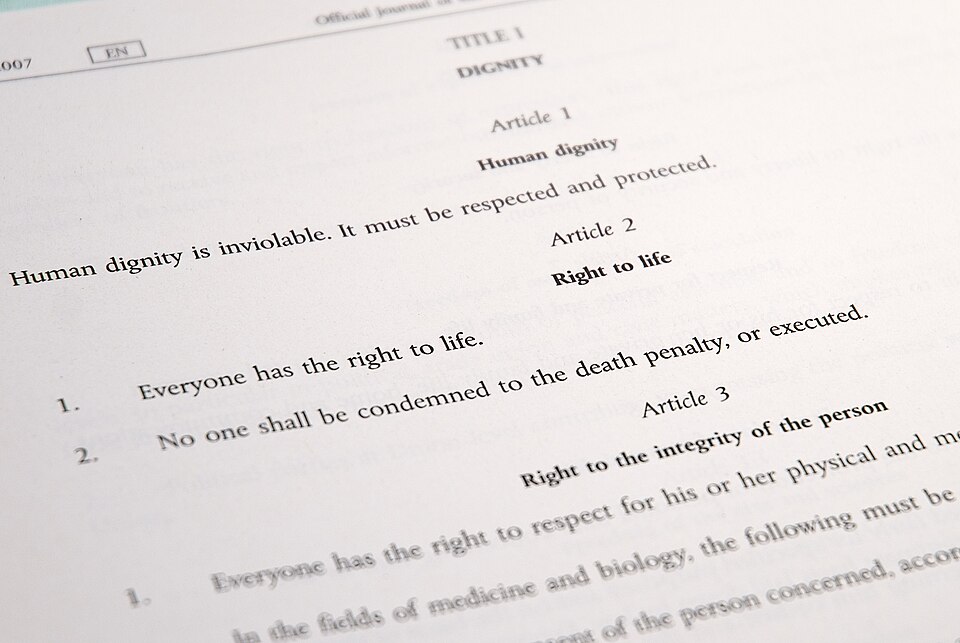
Long before there were flags, anthems, or a single currency, there was an idea: that Europe's endless wars might be cured not by treaties of peace alone, but by weaving nations' economies so tightly together that war would become physically impossible. The seeds were planted early. In 1920, John Maynard Keynes proposed a European customs union to help the continent's shattered post-war economies. In 1923, Richard von Coudenhove-Kalergi founded the Paneuropean Union, and in 1929 French Prime Minister Aristide Briand, a Nobel Peace Prize laureate, stood before the League of Nations in Geneva and called for a federal Europe to end the historic enmity between France and Germany.
Then came a second world war, more devastating than the first, and with it a renewed urgency. In 1941, exiled European resistance leaders gathered in London to sign the Declaration of St James's Palace, followed by the Atlantic Charter, which laid groundwork for institutions like the United Nations and the Bretton Woods system. By 1943, at the Moscow and Tehran conferences, Allied leaders were already sketching plans for postwar European institutions, formalized at Yalta in 1944 with a European Advisory Commission.
When the guns finally fell silent, a conviction took hold across the continent: that extreme nationalism itself had caused the catastrophe, and only integration could prevent its return. On 19 September 1946, Winston Churchill stood at the University of Zürich and called for a 'European Union' and a 'Council of Europe,' echoing appeals he had made since 1930. Around the same time, the Union of European Federalists held its Hertenstein Congress. Tensions with the Soviet Union were also sharpening — the rigged 1947 Polish election alarmed the West, prompting France and Britain to sign the Treaty of Dunkirk for mutual defense, and the United States to announce the Truman Doctrine.
The practical breakthrough came in 1951. France and West Germany, the two nations whose rivalry had ignited both world wars, agreed to place their coal and steel industries under joint management — the very resources that had fueled their arsenals. This was the European Coal and Steel Community, joined by Italy and the Benelux countries: Belgium, the Netherlands, and Luxembourg. Its founders called it 'a first step in the European federation.'
Six years later, in 1957, these same six nations signed the Treaty of Rome, creating the European Economic Community to build a customs union and common market, alongside the European Atomic Energy Community (Euratom) for nuclear cooperation. In 1965, the Merger Treaty (signed in Brussels) folded these bodies into a single framework known as the European Communities.
More from History

The Morning Bingham Climbed to Machu Picchu
On a cold July morning in 1911, an American historian scrambled up a jungle-choked ridge above the Urubamba River — and by afternoon, a forgotten Inca citadel would belong to the world.

The Last Half-Hour of the Hindenburg
It was already half a day late, and the public had been told to keep away — but at seven o'clock that evening, the Hindenburg finally turned toward its mooring mast for the last time.

The Last Hours of Pompeii: August 24, 79 AD
By noon it was just another hot day beside the Bay of Naples. By evening, an entire mountain had rewritten the fate of thousands.

The Longest Walk: Mandela's Last Steps to Freedom
After 27 years behind bars, a 71-year-old man had to relearn how to walk out of a prison gate — into a waiting world of cameras, crowds, and a country holding its breath.

The Document Lincoln Signed on the First Day of 1863
On a single January morning, a president's pen would change the legal status of more than three million people — if the ink held and his hand did not shake.

The Day of the Dream: August 28, 1963
Two hundred and fifty thousand people converged on the National Mall that morning — by nightfall, one voice from the steps of the Lincoln Memorial would echo for generations.