Maya Civilization: The Cities the Jungle Swallowed
Long before Europeans crossed the Atlantic, kings who claimed to speak with gods raised stone cities in the jungle — cities whose fall left behind pyramids the forest quietly reclaimed.
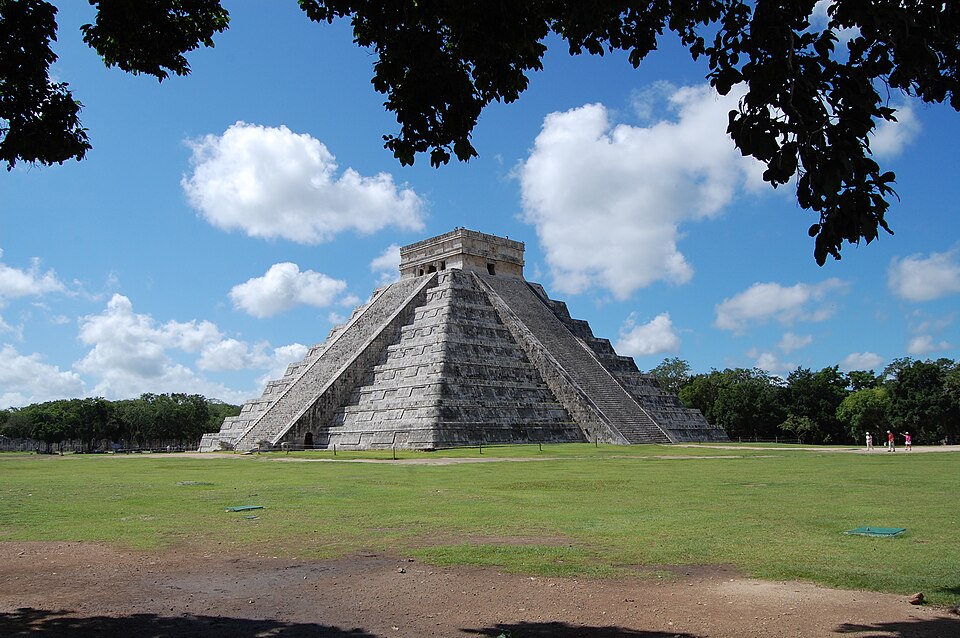
Deep in the lowlands of what is now southeastern Mexico, Guatemala, Belize, and parts of Honduras and El Salvador, a civilization rose that would leave behind some of the most sophisticated writing, mathematics, and astronomy of the ancient world. The Maya were never a single unified empire but a constellation of city-states, sharing language families, religious beliefs, and a script — the most advanced writing system developed anywhere in the pre-Columbian Americas.
Their story stretches back further than most realize. Before 2000 BC, in the Archaic period, small communities in the Maya region were already experimenting with agriculture. By the Preclassic period, roughly 2000 BC to 250 AD, these communities had grown into complex societies cultivating maize, beans, squash, and chili peppers — staples that would define Maya life for millennia. The first true cities appeared around 750 BC, and within two centuries they were building monumental temples faced with elaborate stucco. By the 3rd century BC, hieroglyphic writing was already in use.
The Late Preclassic saw the rise of great urban centers in the Petén Basin, while the highland city of Kaminaljuyu grew into a regional power. Then, around 250 AD, came the Classic period — the era for which the Maya are best remembered. Rulers began erecting sculpted stone monuments inscribed with Long Count dates, a calendrical system precise enough to track centuries. Trade networks knitted city-states together, and two rivals rose above the rest: Tikal and Calakmul, whose rivalry shaped generations of Maya politics.
Even this world was not isolated. Teotihuacan, the great city of central Mexico, intervened in Maya dynastic affairs, a reminder that the Maya existed within a wider Mesoamerican network that also included the Olmecs and later the Aztecs and Mixtecs. Maya kingship rested on the idea of the divine king — a ruler believed to mediate between the mortal world and the supernatural, expected to be both a successful war leader and a capable governor. Power usually passed from father to eldest son, though by the Late Classic the growing aristocracy had begun to erode the king's once-exclusive authority.
Maya cities were not planned in neat grids but grew organically, their ceremonial and administrative cores surrounded by sprawling residential districts, all linked by raised causeways. Palaces, pyramid-temples, ballcourts, and structures aligned for astronomical observation rose from the forest floor. The Maya elite recorded history and ritual in screenfold books — almost all destroyed by Spanish colonizers, leaving only three uncontested examples today — and in texts carved onto stelae and painted onto ceramics. Their calendar system interlocked multiple cycles with remarkable precision, and their mathematics included one of the earliest known uses of an explicit zero in human history. Religious practice included human sacrifice.
More from History

The Morning Bingham Climbed to Machu Picchu
On a cold July morning in 1911, an American historian scrambled up a jungle-choked ridge above the Urubamba River — and by afternoon, a forgotten Inca citadel would belong to the world.

The Last Half-Hour of the Hindenburg
It was already half a day late, and the public had been told to keep away — but at seven o'clock that evening, the Hindenburg finally turned toward its mooring mast for the last time.

The Last Hours of Pompeii: August 24, 79 AD
By noon it was just another hot day beside the Bay of Naples. By evening, an entire mountain had rewritten the fate of thousands.

The Longest Walk: Mandela's Last Steps to Freedom
After 27 years behind bars, a 71-year-old man had to relearn how to walk out of a prison gate — into a waiting world of cameras, crowds, and a country holding its breath.

The Document Lincoln Signed on the First Day of 1863
On a single January morning, a president's pen would change the legal status of more than three million people — if the ink held and his hand did not shake.

The Day of the Dream: August 28, 1963
Two hundred and fifty thousand people converged on the National Mall that morning — by nightfall, one voice from the steps of the Lincoln Memorial would echo for generations.