Mohács: The River Town That Broke and Ended an Empire
A quiet bend on the Danube's right bank became the stage for two battles that opened and closed an empire's rule over Hungary — separated by 161 years.
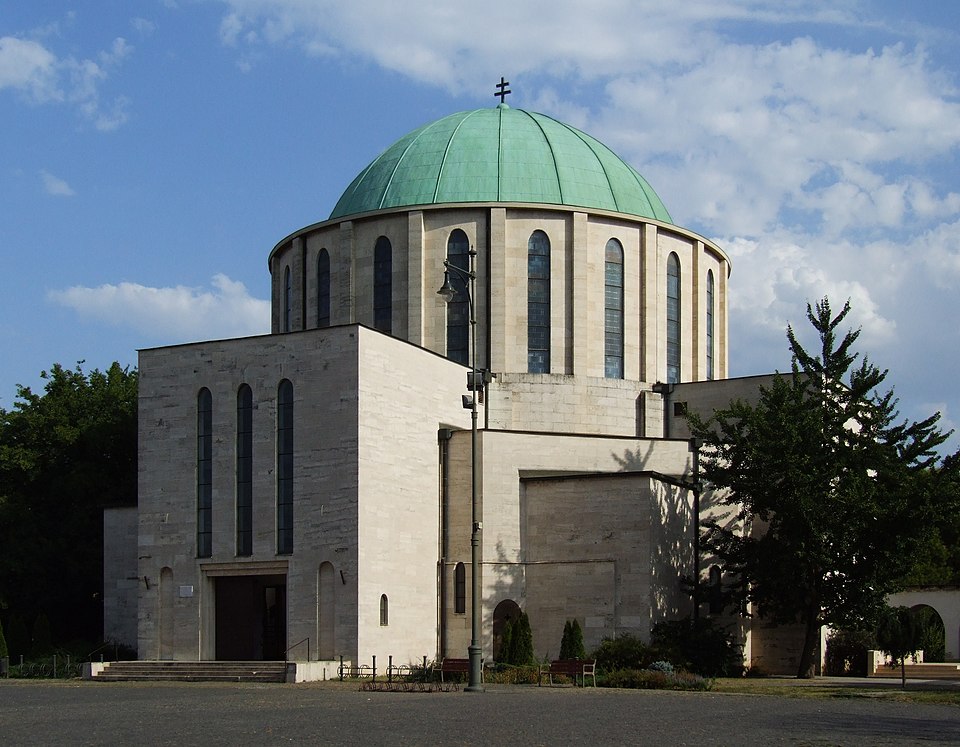
On the right bank of the Danube, where the Great Hungarian Plain begins, sits a town whose name is inseparable from catastrophe and reversal alike: Mohács. Long before it entered the history books as a battlefield, it was a Roman camp on the riverbank, and later, in the 6th and 7th centuries, fell under Avar rule. Its name first appears in written sources in 1093, in a land grant made by King László I to the Bishop of Pécs. By the 15th century it was noted simply as a market town — unremarkable, until 1526.
That year, the Battle of Mohács took place in the town's vicinity, marking the beginning of Ottoman domination over Hungary. The defeat reshaped the kingdom's fate, and Mohács itself was folded into Ottoman administration soon after, becoming the seat of the Sanjak of Mohács once Hungary was formally annexed and organized under the Pashalik of Buda in 1541.
For over 160 years, Mohács remained under Ottoman rule. Then, in 1687, a second battle near the same town brought that chapter to a close: the Habsburgs seized the region from the Ottomans, and Mohács was absorbed back into a restored Baranya county. Two battles, separated by more than a century and a half, had bookended an entire era — the same stretch of riverbank marking both the fall and the reclaiming of a kingdom.
In the centuries that followed, Mohács became a patchwork of peoples. Danube Swabian settlers, known locally as Stifolder, arrived in the 17th and 18th centuries from the Fulda district and came to form the majority of the town's inhabitants by the time of World War II. Census figures from 1910 capture this diversity vividly: of 56,909 people in the Mohács district, 21,951 spoke German, 20,699 Hungarian, 4,312 Serbian, and 421 Croatian, with thousands more speaking other languages.
That layered identity did not survive the mid-20th century intact. Under the terms of the 1945 Potsdam Agreement, most of the German-speaking Stifolder population was expelled to Allied-occupied Germany and Austria between 1945 and 1948 — a rupture that permanently altered the town's demographic character.
More from History

The Morning Bingham Climbed to Machu Picchu
On a cold July morning in 1911, an American historian scrambled up a jungle-choked ridge above the Urubamba River — and by afternoon, a forgotten Inca citadel would belong to the world.

The Last Half-Hour of the Hindenburg
It was already half a day late, and the public had been told to keep away — but at seven o'clock that evening, the Hindenburg finally turned toward its mooring mast for the last time.

The Last Hours of Pompeii: August 24, 79 AD
By noon it was just another hot day beside the Bay of Naples. By evening, an entire mountain had rewritten the fate of thousands.

The Longest Walk: Mandela's Last Steps to Freedom
After 27 years behind bars, a 71-year-old man had to relearn how to walk out of a prison gate — into a waiting world of cameras, crowds, and a country holding its breath.

The Document Lincoln Signed on the First Day of 1863
On a single January morning, a president's pen would change the legal status of more than three million people — if the ink held and his hand did not shake.

The Day of the Dream: August 28, 1963
Two hundred and fifty thousand people converged on the National Mall that morning — by nightfall, one voice from the steps of the Lincoln Memorial would echo for generations.