Nicopolis 1396: The Crusade That Broke Europe's Nerve
On the banks of the Danube, a glittering army of French knights, Hungarian lords, and Venetian sailors gathered to crush the Ottomans once and for all. Within hours, their confidence would turn to slaughter.
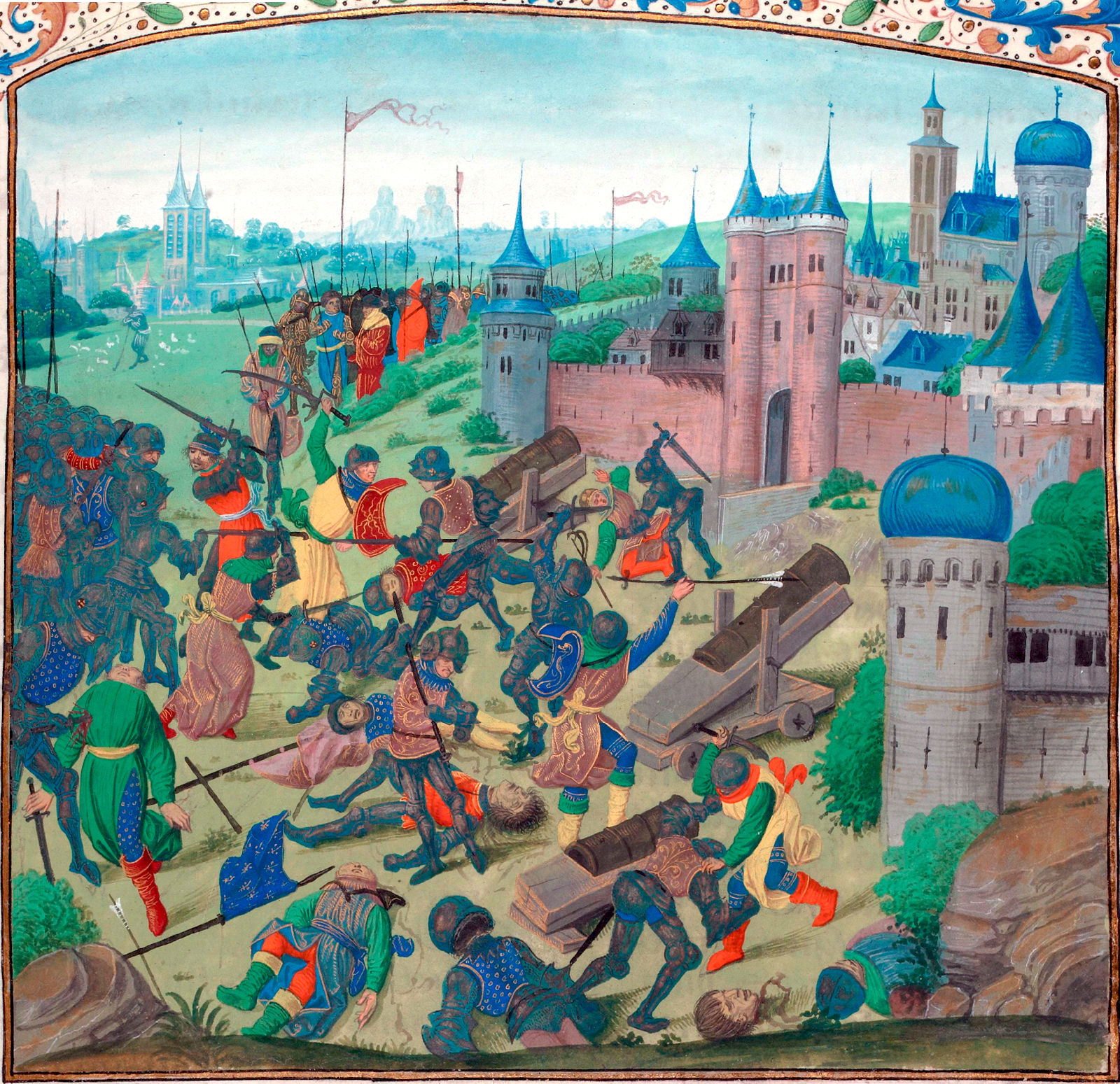
In 1396, the Danube fortress of Nicopolis stood as a symbol of everything Christian Europe feared and coveted. Three years earlier, the Ottomans had seized it from Bulgarian Tsar Ivan Shishman, ending his rule over what had briefly been his capital. His brother Ivan Stratsimir still clung to Vidin, but only as an Ottoman vassal paying tribute. To the boyars, despots, and rulers of the fracturing Balkans, this was intolerable — and to the wider Christian world, it looked like the last chance to halt an empire that had already crushed Serbia at Kosovo in 1389 and was now blockading Constantinople itself.
The crusade that formed in response was less a unified holy war than a convergence of separate anxieties. The Kingdom of Hungary, now sharing a direct border with the Ottomans, feared for its own survival. Venice worried that Ottoman control of the Balkans would strangle its hold on the Adriatic, Ionian, and Aegean seas. Genoa feared losing its Black Sea trading colonies — Caffa, Sinop, Amasra — and its citadel at Galata, which Sultan Bayezid had already besieged in 1395. Even Pope Boniface IX, presiding over a papacy split by schism between Rome and Avignon, proclaimed a new crusade in 1394, though his authority to summon one was a shadow of what it once had been.
What finally made the expedition possible was not piety but politics far from the Balkans. England and France, locked for decades in the Hundred Years' War, had drifted into truce; Richard II's proposed marriage to Charles VI's daughter Isabella in 1395 sealed a fragile peace. That peace freed French nobility to look eastward. Philip the Bold, Duke of Burgundy, sensed an opportunity for prestige rather than defense — as one historian observed, display mattered more to him than logistics or intelligence about the enemy. Burgundy dispatched his son, John of Nevers — later known as John the Fearless — with roughly 6,000 men, many of them Burgundian cavalry. German lords from the Rhineland, Bavaria, and Nuremberg added 3,000 more. King Sigismund of Hungary brought about 5,000 of his own men, and Wallachia's Voivode Mircea joined with his own forces, determined to fight despite being Orthodox among a largely Catholic host.
When the combined armies gathered at Buda in the summer of 1396, Sigismund is said to have looked upon their numbers and declared that even if the sky itself collapsed, their spears would hold it up. The true size of the army remains disputed — medieval chroniclers inflated figures to the hundreds of thousands, each side later claiming to have been outnumbered two to one to soften the shame of defeat.
The march down the Danube's left bank was orderly at first: Hungarians in the vanguard, then French and Burgundian knights, then Sigismund with the German and Hungarian rear. A separate Hungarian force crossed the Carpathians into Transylvania, while Mircea advanced along the river's eastern side as the allied Venetian, Genoese, and Hospitaller fleet sailed up from the Black Sea. Along the way, the crusaders struck Ottoman-held towns. At Vidin, they slaughtered the Ottoman garrison after storming the citadel, and some 200–300 French knights were dubbed for their part in the victory. At Rahova, the Ottoman commander offered to surrender peacefully if his men were spared; Sigismund agreed, but Burgundian and French nobles overruled him, massacring most of the Muslim and Orthodox inhabitants and taking the rest captive.
More from History

The Morning Bingham Climbed to Machu Picchu
On a cold July morning in 1911, an American historian scrambled up a jungle-choked ridge above the Urubamba River — and by afternoon, a forgotten Inca citadel would belong to the world.

The Last Half-Hour of the Hindenburg
It was already half a day late, and the public had been told to keep away — but at seven o'clock that evening, the Hindenburg finally turned toward its mooring mast for the last time.

The Last Hours of Pompeii: August 24, 79 AD
By noon it was just another hot day beside the Bay of Naples. By evening, an entire mountain had rewritten the fate of thousands.

The Longest Walk: Mandela's Last Steps to Freedom
After 27 years behind bars, a 71-year-old man had to relearn how to walk out of a prison gate — into a waiting world of cameras, crowds, and a country holding its breath.

The Document Lincoln Signed on the First Day of 1863
On a single January morning, a president's pen would change the legal status of more than three million people — if the ink held and his hand did not shake.

The Day of the Dream: August 28, 1963
Two hundred and fifty thousand people converged on the National Mall that morning — by nightfall, one voice from the steps of the Lincoln Memorial would echo for generations.