No One Burned in Salem
Everyone knows the Salem witches were burned at the stake. Almost no one knows that not a single one was — and the real method of death is far grimmer than the myth allows.
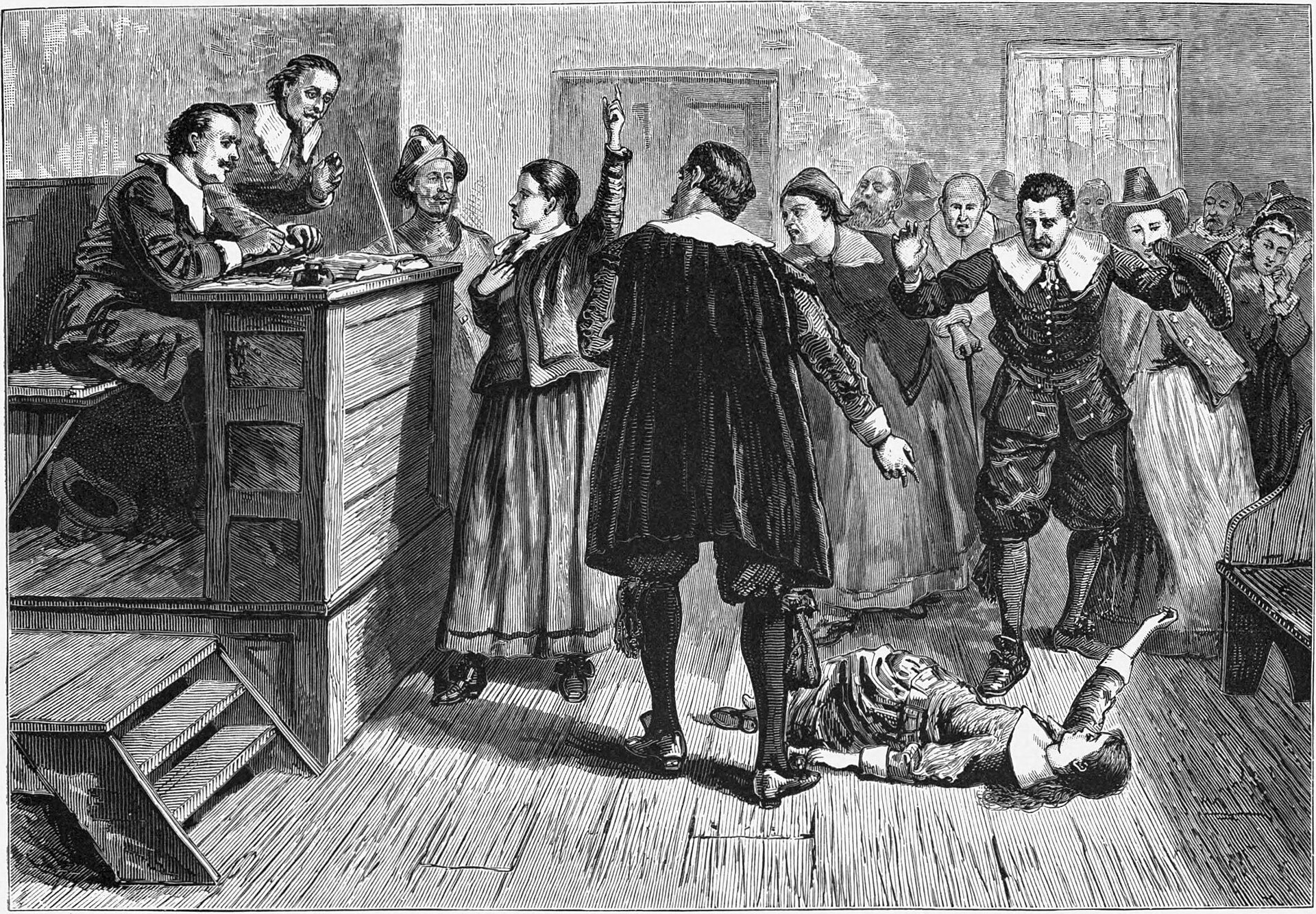
The image is so entrenched in popular culture that it feels like fact: pyres crackling on a Massachusetts hillside, accused witches consumed by flame. But this is false. Between February 1692 and May 1693, no one convicted in the Salem witch trials was burned at the stake. The nineteen people found guilty and executed were hanged, not burned.
The historical record is specific and consistent. Of those executed, fourteen were women and five were men, all put to death by hanging. One additional man, Giles Corey, refused to enter a plea to the charges against him and was instead pressed to death under heavy stones — a brutal but distinct method used to compel a plea, not a punishment for conviction. At least five more people died in the disease-ridden jails while awaiting trial, never reaching an execution at all.
So where does the burning myth come from? The confusion likely stems from Europe, where burning at the stake was indeed a common punishment for witchcraft in many countries during the early modern period, a phenomenon that claimed tens of thousands of lives across the continent. English common law, which governed colonial Massachusetts, treated witchcraft as a felony punishable by hanging, not burning. Popular imagination has simply imported the European image onto the American event, blending two related but distinct histories into one inaccurate composite.
The accusations themselves began with four young girls — Betty Parris, age 9, Abigail Williams, 11, Ann Putnam Jr., 12, and Elizabeth Hubbard, 17 — who claimed to be afflicted, suffering physical and mental harm supposedly inflicted by witchcraft. Their accusations spread rapidly beyond Salem Village, reaching Andover, Topsfield, and other New England communities. More than 200 people across roughly 25 communities were eventually accused.
The trials were conducted by a Court of Oyer and Terminer in 1692 and a Superior Court of Judicature in 1693, both sitting in Salem Town, where the hangings also took place. Thirty people were found guilty in total. The proceedings only ended when leading clergymen began raising serious doubts about the validity of 'spectral evidence' — testimony based on visions and dreams rather than physical proof — used to secure so many convictions.
More from History

The Morning Bingham Climbed to Machu Picchu
On a cold July morning in 1911, an American historian scrambled up a jungle-choked ridge above the Urubamba River — and by afternoon, a forgotten Inca citadel would belong to the world.

The Last Half-Hour of the Hindenburg
It was already half a day late, and the public had been told to keep away — but at seven o'clock that evening, the Hindenburg finally turned toward its mooring mast for the last time.

The Last Hours of Pompeii: August 24, 79 AD
By noon it was just another hot day beside the Bay of Naples. By evening, an entire mountain had rewritten the fate of thousands.

The Longest Walk: Mandela's Last Steps to Freedom
After 27 years behind bars, a 71-year-old man had to relearn how to walk out of a prison gate — into a waiting world of cameras, crowds, and a country holding its breath.

The Document Lincoln Signed on the First Day of 1863
On a single January morning, a president's pen would change the legal status of more than three million people — if the ink held and his hand did not shake.

The Day of the Dream: August 28, 1963
Two hundred and fifty thousand people converged on the National Mall that morning — by nightfall, one voice from the steps of the Lincoln Memorial would echo for generations.