Palmyra: City of the Desert Queen Zenobia
A caravan city rose from an oasis in the Syrian desert, grew rich enough to challenge Rome itself, and was ruled for a moment by a queen who dared to call herself empress.
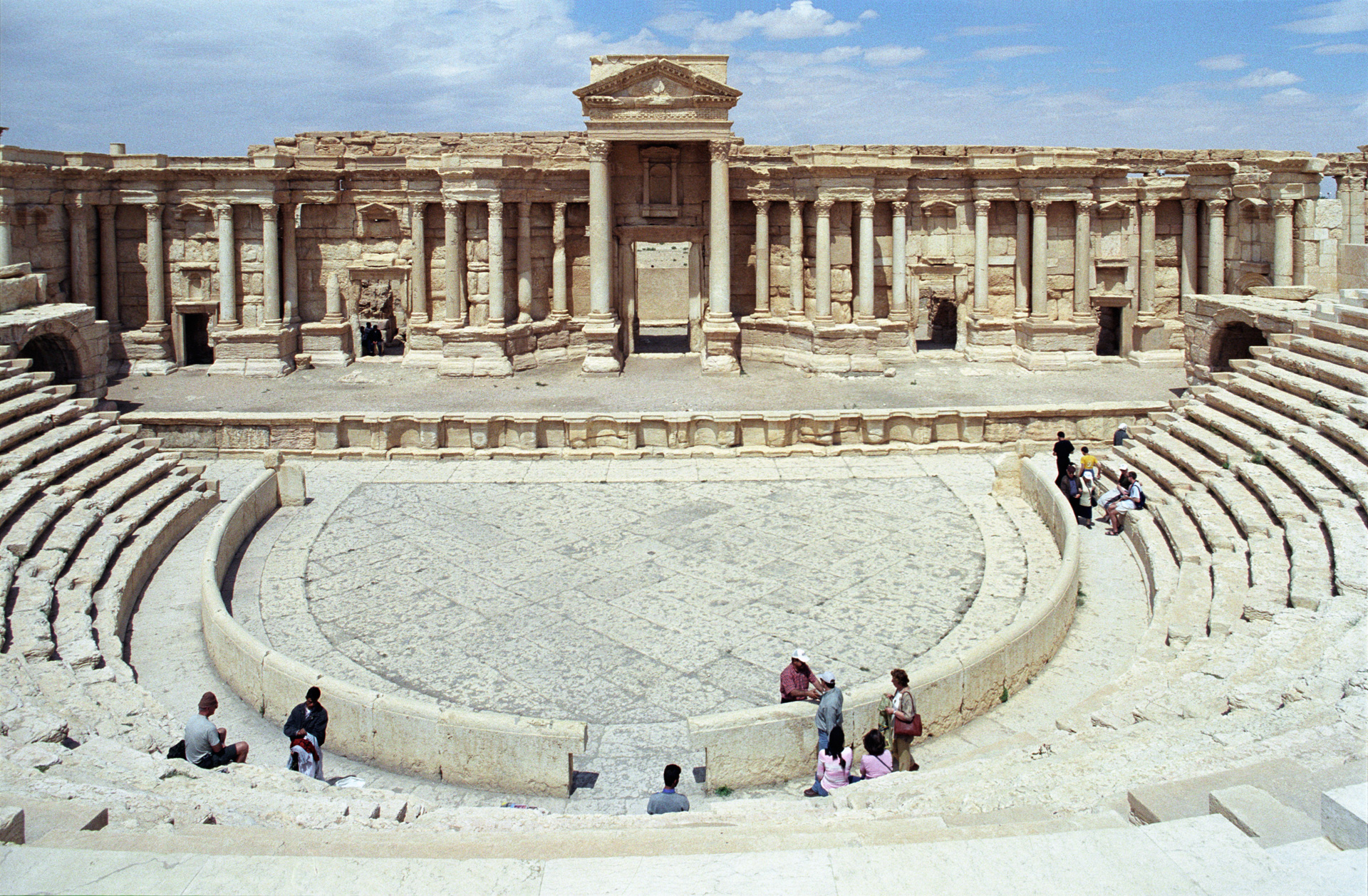
Two hundred and fifteen kilometers northeast of Damascus, where twenty varieties of palm trees ring a desert spring called Efqa, a city grew wealthy on something as simple as location. Palmyra sat on the routes that connected the Persian Empire to the Mediterranean ports of the Romans and Phoenicians, and its merchants built colonies along the Silk Road and operated caravans throughout the Roman world. Archaeological finds trace the site back to the Neolithic period, but the name Tadmor first appears in documents from the early second millennium BCE, recorded on 18th-century BC cuneiform tablets from Mari as 'Ta-ad-mi-ir.' Assyrian inscriptions of the 11th century BC call it 'Ta-ad-mar.' The Greek name Palmyra was first written down by Pliny the Elder in the first century AD, and its origin remains debated among linguists to this day.
The Palmyrenes themselves were a blend of Amorites, Arameans, and Arabs, organized around kinship and clans. They spoke Palmyrene Aramaic at home but used Koine Greek for trade and diplomacy, and their art and architecture fused Greek, Roman, and Iranian Parthian influences, visible even in the clothing styles of their statue busts. Their wealth funded the Great Colonnade, the Temple of Bel, and distinctive tower tombs that still rise from the desert floor. The Hebrew Tanakh even names Tadmor a desert city founded by King Solomon, a tradition the Roman-Jewish historian Flavius Josephus repeated, calling the city by its Greek name.
Rome's shadow fell early. In 41 BC, an army under Marcus Antonius tried to seize Palmyra but failed halfheartedly, and the Palmyrenes escaped across the Euphrates. It was the first sign of the threat to come. Under Tiberius, between 14 BC and 37 AD, Palmyra was absorbed into the Roman province of Syria, yet it kept trading between Iran, China, India, and Rome. In 129 AD, Emperor Hadrian visited and declared it a free city, renaming it Palmyra Hadriana.
By the early third century, the rising Sasanian Empire on the Euphrates and Tigris threatened Palmyra's trade, and Emperor Caracalla stationed a Roman garrison there. Emperor Valerian appointed the Palmyrene prince Septimius Odaenathus governor of Syria. When Valerian was captured by the Sasanians and died at Bishapur in 260, Odaenathus struck back, attacking the Sasanian capital Ctesiphon twice and defeating Shapur I. He reached the height of Palmyrene power — only to be assassinated by his nephew Maconius.
Power passed to his wife, Zenobia, and their son Vabalathus. Zenobia broke from Roman authority and expanded Palmyra's reach to Bostra in southern Syria and into western Egypt, founding a short-lived Palmyrene Empire. She soon took Antioch in the north, and within a short span her domain covered southern and eastern Anatolia, part of the Euphrates-Tigris basin, Syria, Palestine, the Sinai Peninsula, and much of Egypt.
More from History

The Morning Bingham Climbed to Machu Picchu
On a cold July morning in 1911, an American historian scrambled up a jungle-choked ridge above the Urubamba River — and by afternoon, a forgotten Inca citadel would belong to the world.

The Last Half-Hour of the Hindenburg
It was already half a day late, and the public had been told to keep away — but at seven o'clock that evening, the Hindenburg finally turned toward its mooring mast for the last time.

The Last Hours of Pompeii: August 24, 79 AD
By noon it was just another hot day beside the Bay of Naples. By evening, an entire mountain had rewritten the fate of thousands.

The Longest Walk: Mandela's Last Steps to Freedom
After 27 years behind bars, a 71-year-old man had to relearn how to walk out of a prison gate — into a waiting world of cameras, crowds, and a country holding its breath.

The Document Lincoln Signed on the First Day of 1863
On a single January morning, a president's pen would change the legal status of more than three million people — if the ink held and his hand did not shake.

The Day of the Dream: August 28, 1963
Two hundred and fifty thousand people converged on the National Mall that morning — by nightfall, one voice from the steps of the Lincoln Memorial would echo for generations.