Poyekhali: The 108 Minutes That Made Gagarin First
A young pilot straps into a locked cockpit he isn't allowed to fly, whispers 'let's go,' and becomes the first human to leave the world behind — for exactly 108 minutes.
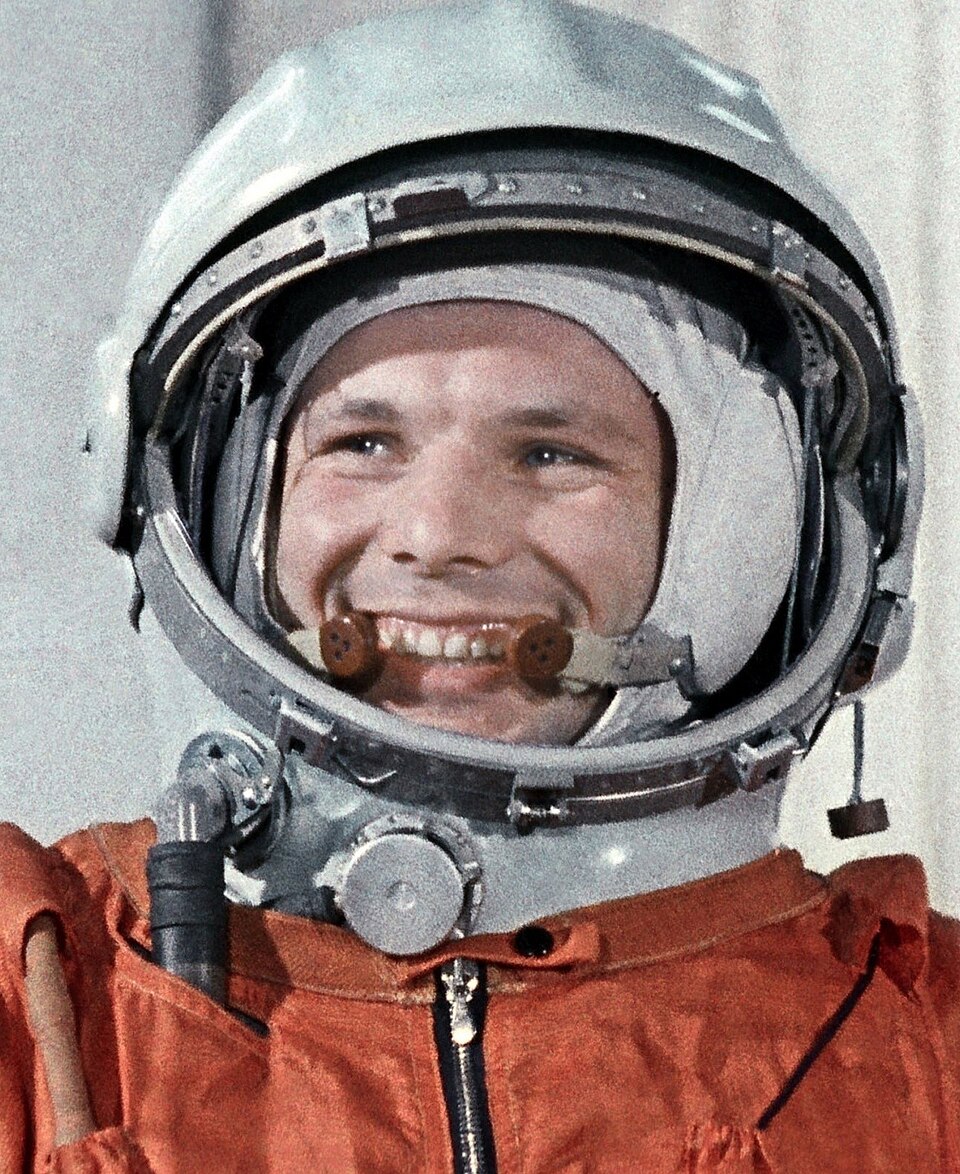
Minutes before dawn's rocket ignited at Baikonur, Yuri Gagarin stepped in front of a microphone and spoke to the press. 'Dear friends, known and unknown to me, dear fellow countrymen, people of all the world,' he said, describing how his whole life now felt condensed into a single moment, and how he trusted he'd find the strength to do what was expected of him. There was no rehearsal for what came next, only procedure — and procedure, on 12 April 1961, was about to be tested for the first time by a human body in orbit.
Inside the Vostok 3KA capsule, a camera fed Gagarin's image to screens at mission control. Sergei Korolev, the chief designer, spoke into his own microphone, calling Gagarin by his radio codename: 'Dawn is calling Cedar. The countdown is about to begin.' Gagarin answered simply that he felt good, his spirits were fine, and he was ready to go. Because it had been less than a year since U-2 pilot Francis Gary Powers was shot down over Soviet territory, an engineer named Gherman Lebedev had hand-painted the letters CCCP onto Gagarin's helmet — insurance against being mistaken for a spy if he came down somewhere unexpected.
At 06:07 UTC, Vostok 1 lifted off from Baikonur Cosmodrome in the Kazakh SSR. Korolev's voice counted through the stages — 'Preliminary stage... intermediate... main... LIFTOFF! We wish you a good flight. Everything is fine' — and Gagarin answered with the word that would outlive the mission itself: 'Poyekhali!' Let's go. Two minutes later, at 06:09, the four strap-on boosters exhausted their fuel and fell away from the core rocket. A minute after that, the protective shroud covering the capsule was jettisoned, opening the window beneath Gagarin's feet and exposing the Vzor optical device he'd use to judge his orientation against the Earth below.
For the next twenty-five minutes, ground control had no way of knowing whether the spacecraft had settled into a stable orbit. The uncertainty was not for lack of monitoring but a structural fact of the mission: every one of Vostok's tracking stations sat inside Soviet territory, with no ships at sea to extend the network further. Once confirmed, Gagarin's single orbit carried him to a peak altitude of 327 kilometers and dipped as low as 181 kilometers above the Earth — a brief, solitary lap around the planet no human had completed before.
Control of the spacecraft itself belonged almost entirely to automation and to the ground. Doctors and engineers, unsure how weightlessness might affect a person's judgment or reflexes, had locked Gagarin out of manual control. As a safeguard, a three-digit code — 1-2-5 — was sealed in an onboard envelope for use only in emergency, though Kamanin and others had already quietly told Gagarin the numbers before he ever climbed aboard.
More from History

The Morning Bingham Climbed to Machu Picchu
On a cold July morning in 1911, an American historian scrambled up a jungle-choked ridge above the Urubamba River — and by afternoon, a forgotten Inca citadel would belong to the world.

The Last Half-Hour of the Hindenburg
It was already half a day late, and the public had been told to keep away — but at seven o'clock that evening, the Hindenburg finally turned toward its mooring mast for the last time.

The Last Hours of Pompeii: August 24, 79 AD
By noon it was just another hot day beside the Bay of Naples. By evening, an entire mountain had rewritten the fate of thousands.

The Longest Walk: Mandela's Last Steps to Freedom
After 27 years behind bars, a 71-year-old man had to relearn how to walk out of a prison gate — into a waiting world of cameras, crowds, and a country holding its breath.

The Document Lincoln Signed on the First Day of 1863
On a single January morning, a president's pen would change the legal status of more than three million people — if the ink held and his hand did not shake.

The Day of the Dream: August 28, 1963
Two hundred and fifty thousand people converged on the National Mall that morning — by nightfall, one voice from the steps of the Lincoln Memorial would echo for generations.