Preveza: The Sea Battle That Made Barbarossa Master of the Mediterranean
A vastly outnumbered Ottoman fleet sailed toward a Holy League armada of over a hundred galleys and dozens of galleons carrying some sixty thousand troops — and by nightfall, the balance of Mediterranean power had shifted for thirty years.
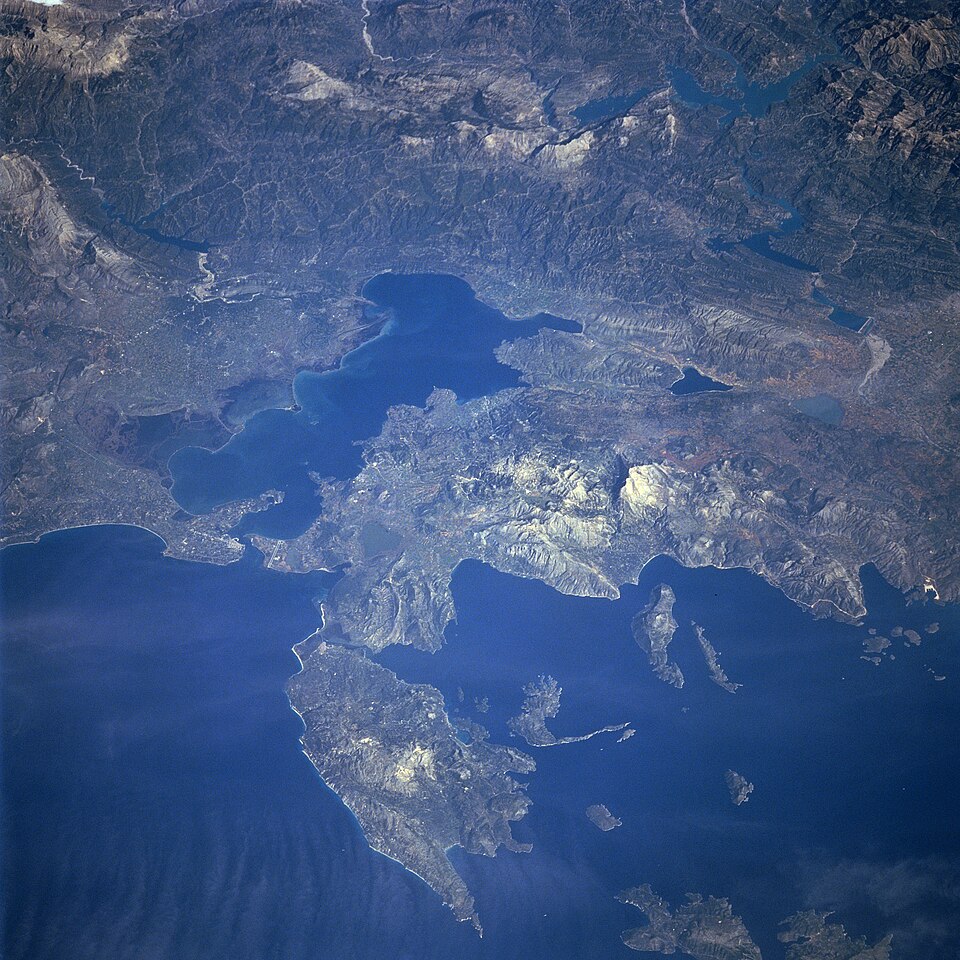
On the morning of 28 September 1538, near the Ionian town of Preveza, the Genoese admiral Andrea Doria watched an unlikely sight: the Ottoman fleet under Hayreddin Barbarossa was sailing straight toward him, though it was far smaller than his own. Doria commanded a Holy League assembled by Pope Paul III — a coalition of the Papal States, Habsburg Spain, Genoa, Venice, and the Knights of Malta, meant to crush the corsair-admiral who had spent the previous year seizing Aegean and Ionian islands including Syros, Aegina, Ios, Paros, Tinos, Karpathos, Kasos, and Naxos, and had besieged Venetian Corfu and raided Spanish Calabria.
The Holy League's numbers were staggering: sources describe a fleet of well over a hundred vessels — a mix of galleys, galleons, carracks and smaller craft, numbering by some counts over three hundred sail — carrying roughly sixty thousand troops. Barbarossa, by contrast, commanded around 120-150 vessels with only about eight thousand troops aboard. Yet the coalition was riven by rivalry. Venice and Genoa had a long history of enmity, Charles V resented Paul III's neutrality in his war with France, and command was split among Doria, the Papal commander Marco Grimani, and the Venetian Vincenzo Cappello.
Before Doria even arrived, Grimani had tried landing troops near the Fortress of Preveza and was repelled by Ottoman forces under Murat Reis, retreating to Corfu. Barbarossa, then at Kos, sailed west, capturing Kefalonia along the way before reaching Preveza. There, his lieutenant Sinan Reis proposed placing troops at Actium, across the Gulf of Arta — a plan Barbarossa initially resisted but which proved decisive, as Ottoman guns at Actium could pin the Holy League fleet away from shore.
Holy League attempts to land troops near Actium and Preveza on 25 and 26 September were both driven back by Murat Reis. Fearing an unfavorable wind might drive his ships onto Ottoman-held coasts, Doria withdrew his fleet thirty miles south on the night of 27-28 September, anchoring at Sessola near Lefkada. There, his commanders decided their best remaining option was to strike toward Lepanto and force Barbarossa into open battle.
At dawn, Doria was startled to see the Ottomans already advancing south to meet him. Turgut Reis led six large galliots hugging the coastline on the left wing. Caught off guard by such boldness from a numerically inferior force, Doria took three hours to weigh anchor despite pressure from Grimani and Cappello. When the fleets finally engaged off Preveza, the absence of wind became decisive: the enormous Venetian flagship Galeone di Venezia sat becalmed four miles from shore and ten miles from Sessola, surrounded by Ottoman galleys and enduring hours of fierce combat before the wind finally rose.
More from History

The Morning Bingham Climbed to Machu Picchu
On a cold July morning in 1911, an American historian scrambled up a jungle-choked ridge above the Urubamba River — and by afternoon, a forgotten Inca citadel would belong to the world.

The Last Half-Hour of the Hindenburg
It was already half a day late, and the public had been told to keep away — but at seven o'clock that evening, the Hindenburg finally turned toward its mooring mast for the last time.

The Last Hours of Pompeii: August 24, 79 AD
By noon it was just another hot day beside the Bay of Naples. By evening, an entire mountain had rewritten the fate of thousands.

The Longest Walk: Mandela's Last Steps to Freedom
After 27 years behind bars, a 71-year-old man had to relearn how to walk out of a prison gate — into a waiting world of cameras, crowds, and a country holding its breath.

The Document Lincoln Signed on the First Day of 1863
On a single January morning, a president's pen would change the legal status of more than three million people — if the ink held and his hand did not shake.

The Day of the Dream: August 28, 1963
Two hundred and fifty thousand people converged on the National Mall that morning — by nightfall, one voice from the steps of the Lincoln Memorial would echo for generations.