Suez 1956: The Hour the Empires Ran Out of Road
Three warplane carriers, a secret pact signed outside Paris, and a phone call from Moscow threatening nuclear fire — in four months, two of the world's oldest empires learned they no longer ran the world.
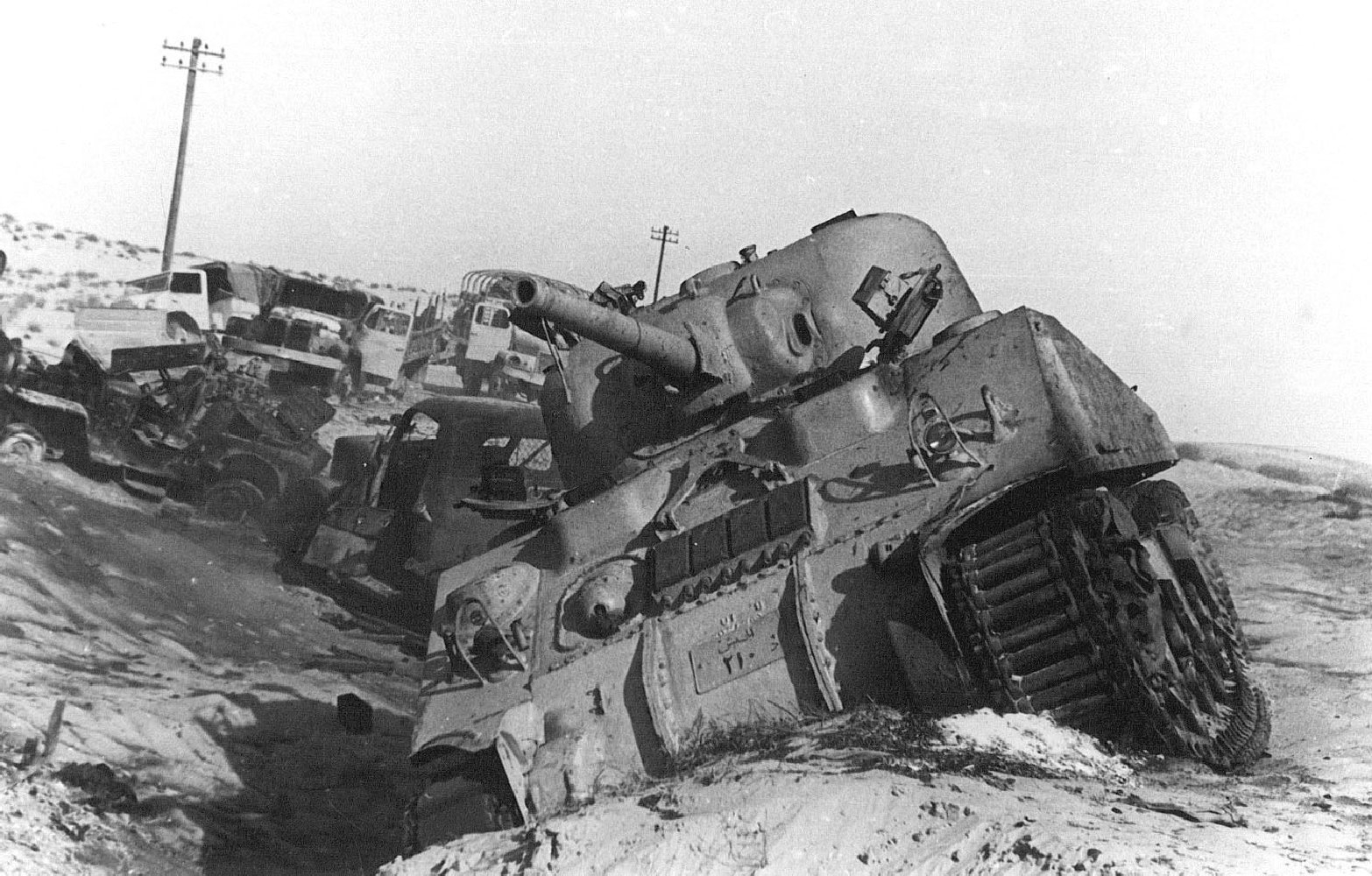
On 29 October 1956, Israeli tanks rolled into the Sinai Peninsula. It looked, at first, like a regional skirmish over shipping rights through the Straits of Tiran, which Egypt had blockaded for eight years. But the invasion was the visible tip of a plan drawn up days earlier in near-total secrecy, in the town of Sèvres outside Paris, where representatives of Britain, France and Israel had agreed on a script: Israel would strike first, and Britain and France would then intervene as 'peacekeepers,' separating the combatants while quietly seizing the Suez Canal for themselves.
The canal had been the fault line for nearly a century. Opened in 1869 with French and Egyptian money, it became a British strategic asset after London bought a 44% stake in 1875 and then militarily occupied Egypt in 1882. By the 1950s it was the shortest route for Middle Eastern oil bound for Western Europe — Britain and France together imported roughly 1.2 million barrels a day through it by tanker. Under a company chartered in Egypt but effectively run by Western shareholders, the canal generated enormous profits that never returned to Cairo.
Egypt itself had been transformed. The 1952 coup by the Free Officers Movement, led by Muhammad Neguib and Gamal Abdel Nasser, toppled King Farouk and ended the monarchy. Nasser, seeking to modernise Egypt and build the Aswan Dam, turned to the Soviet bloc for arms and financing after Washington and London refused him credit — partly because Egypt had bought weapons from Czechoslovakia and backed anti-Israeli militants. When Western financing for the dam collapsed, Nasser answered on 26 July 1956 by nationalising the Suez Canal Company, offering compensation to shareholders but stripping Britain and France of their prize asset.
London and Paris considered this an unacceptable provocation. A conference in London failed to resolve the dispute, so British Prime Minister Anthony Eden travelled to Paris, and the secret Sèvres agreement was struck. On 31 October, a day after Israel's invasion, Britain and France issued a joint ultimatum and began bombing Cairo, then landed paratroopers. Militarily, the operation succeeded almost immediately — British and French forces overwhelmed Egyptian units and seized control of the canal zone with striking speed.
But the political ground shifted beneath them within days. Both superpowers of the Cold War, for once aligned, condemned the invasion. The Soviet Union threatened nuclear strikes against Paris and London if the invading forces did not withdraw. The United States, under President Eisenhower, refused to back its own NATO allies, wary of a wider East-West confrontation and of pushing Arab states further toward Moscow. Isolated and financially pressured by Washington, Britain and France announced a ceasefire and completed their withdrawal by December. Israeli forces lingered in Sinai and Gaza until March 1957, having achieved their goal of freedom of navigation through the Straits of Tiran, though the canal itself remained closed to shipping from October 1956 to March 1957.
More from History

The Morning Bingham Climbed to Machu Picchu
On a cold July morning in 1911, an American historian scrambled up a jungle-choked ridge above the Urubamba River — and by afternoon, a forgotten Inca citadel would belong to the world.

The Last Half-Hour of the Hindenburg
It was already half a day late, and the public had been told to keep away — but at seven o'clock that evening, the Hindenburg finally turned toward its mooring mast for the last time.

The Last Hours of Pompeii: August 24, 79 AD
By noon it was just another hot day beside the Bay of Naples. By evening, an entire mountain had rewritten the fate of thousands.

The Longest Walk: Mandela's Last Steps to Freedom
After 27 years behind bars, a 71-year-old man had to relearn how to walk out of a prison gate — into a waiting world of cameras, crowds, and a country holding its breath.

The Document Lincoln Signed on the First Day of 1863
On a single January morning, a president's pen would change the legal status of more than three million people — if the ink held and his hand did not shake.

The Day of the Dream: August 28, 1963
Two hundred and fifty thousand people converged on the National Mall that morning — by nightfall, one voice from the steps of the Lincoln Memorial would echo for generations.