Ten Minutes Past Ten: The Morning Sarajevo Changed History
A bomb bounces off a folded car roof, a cyanide pill fails to kill, and a wrong turn puts an archduke within arm's reach of a nineteen-year-old with a pistol. All of it happens before lunch.
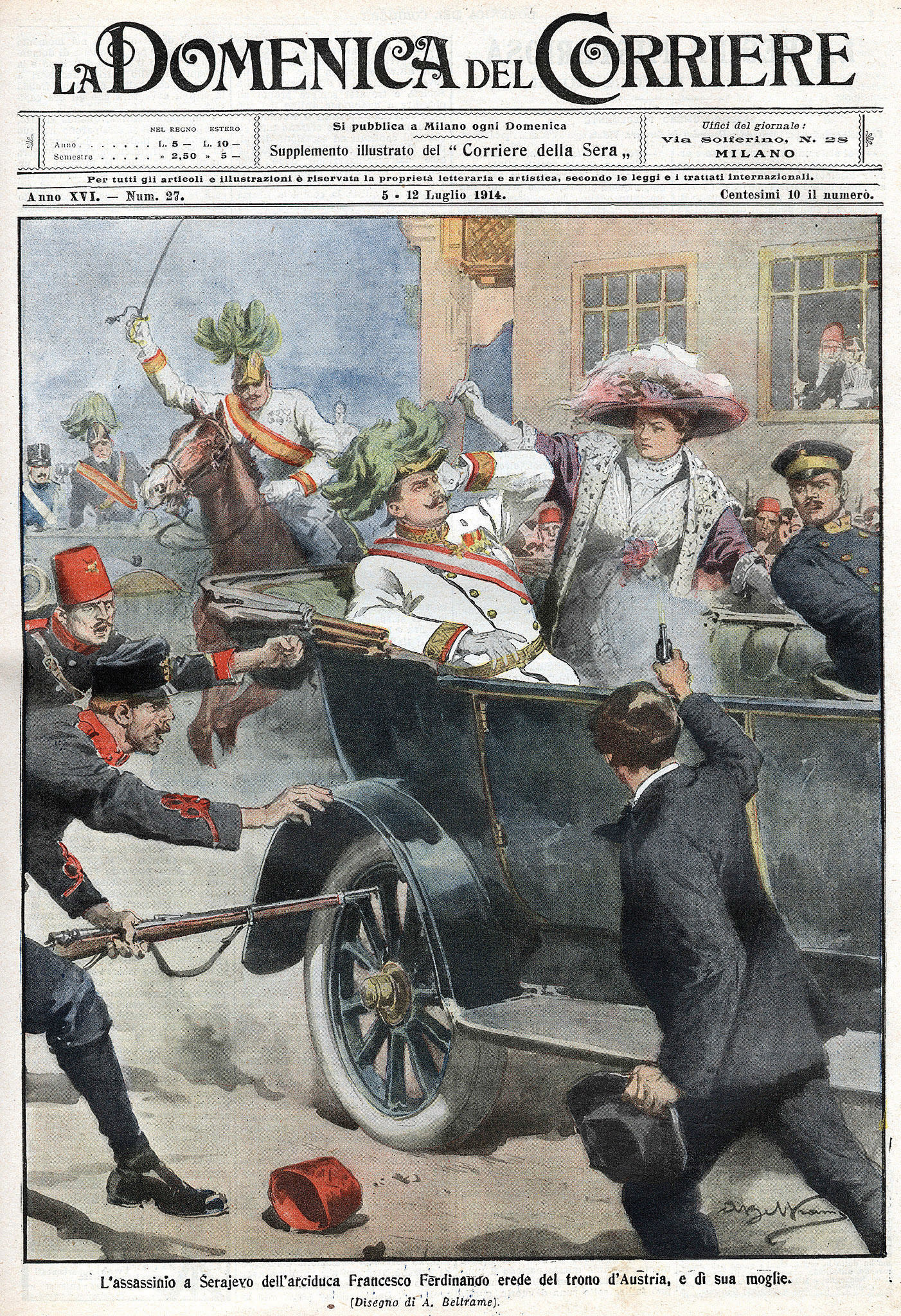
At 1:15 in the morning of 28 June 1914, the machinery of an assassination was already set in motion, though the city of Sarajevo still slept. By dawn, Danilo Ilić was walking the length of the planned motorcade route, positioning his six young conspirators along the streets and quietly trying to steady their nerve. Muhamed Mehmedbašić, Vaso Čubrilović, Nedeljko Čabrinović, Cvjetko Popović, Trifko Grabež and Gavrilo Princip — five Bosnian Serbs and one Bosnian Muslim, all Austro-Hungarian citizens, none older than twenty except Mehmedbašić — took their places, each armed with a bomb, a pistol, or both, supplied and trained by Major Vojislav Tankosić of Serbia's Black Hand network.
Archduke Franz Ferdinand, heir to the Austro-Hungarian throne, and his wife Sophie, Duchess of Hohenberg, arrived that morning by train from the Ilidža spa outside the city. Governor Oskar Potiorek met them at the Sarajevo station, where six open automobiles waited. A mistake in the boarding order left the special security officers who should have ridden with the Archduke stranded behind; instead, three local policemen crowded into the first car. Franz Ferdinand, Sophie, Potiorek and Lieutenant Colonel Count Franz von Harrach climbed into the third vehicle, a Gräf & Stift 28/32 PS tourer with its top folded down.
The published itinerary was no secret: a brief inspection of the military barracks, then a drive along the Appel Quay to the town hall, departing the barracks at ten o'clock. Sarajevo's police force numbered only sixty on duty that Sunday, and General Michael von Appel's suggestion that troops line the route had been rejected for fear of unsettling loyal citizens. The motorcade rolled out largely unguarded.
The convoy passed Mehmedbašić first, stationed by Ilić outside the Mostar Cafe with a bomb in hand. He froze and did nothing. Next came Čubrilović, armed with a pistol and a bomb, positioned beside him — he too let the cars pass. Further along the route, near the Miljacka River, waited Čabrinović.
At 10:10, as Franz Ferdinand's car drew level, Čabrinović hurled his bomb. It struck the folded-back roof of the car and bounced into the street before detonating beneath the following vehicle, gouging a hole about a foot wide and six and a half inches deep, wounding sixteen to twenty bystanders, and bringing that car to a halt.
More from History

The Morning Bingham Climbed to Machu Picchu
On a cold July morning in 1911, an American historian scrambled up a jungle-choked ridge above the Urubamba River — and by afternoon, a forgotten Inca citadel would belong to the world.

The Last Half-Hour of the Hindenburg
It was already half a day late, and the public had been told to keep away — but at seven o'clock that evening, the Hindenburg finally turned toward its mooring mast for the last time.

The Last Hours of Pompeii: August 24, 79 AD
By noon it was just another hot day beside the Bay of Naples. By evening, an entire mountain had rewritten the fate of thousands.

The Longest Walk: Mandela's Last Steps to Freedom
After 27 years behind bars, a 71-year-old man had to relearn how to walk out of a prison gate — into a waiting world of cameras, crowds, and a country holding its breath.

The Document Lincoln Signed on the First Day of 1863
On a single January morning, a president's pen would change the legal status of more than three million people — if the ink held and his hand did not shake.

The Day of the Dream: August 28, 1963
Two hundred and fifty thousand people converged on the National Mall that morning — by nightfall, one voice from the steps of the Lincoln Memorial would echo for generations.