Ten Weeks at the Bottom of the World
Two nations that had never declared war on each other sent fleets across thousands of miles of ocean to fight over a windswept archipelago few had ever visited. What began as an invasion ended in a surrender that toppled a dictatorship.
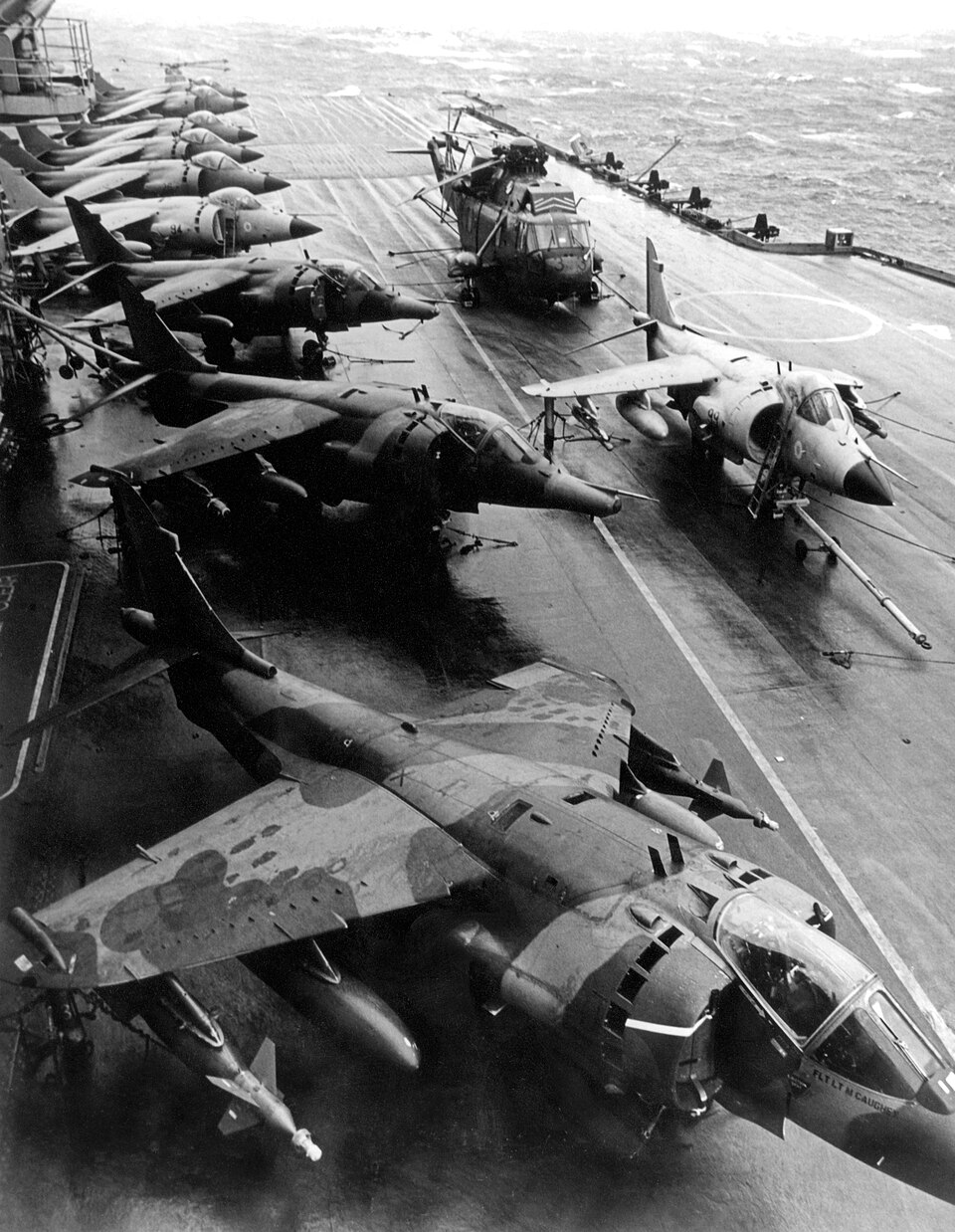
For decades, the Falkland Islands sat at the edge of diplomatic attention, a remote cluster of land in the South Atlantic that both Argentina and the United Kingdom claimed as their own. Argentina insisted the islands, which it called Malvinas, were rightfully its territory, inherited through succession from Spain. Britain maintained it had held sovereignty since 1841, and pointed to the Falkland Islanders themselves, mostly descendants of British settlers, who overwhelmingly wished to remain British. In 1965 the United Nations urged the two sides to settle the dispute, but talks dragged on fruitlessly for years.
Britain's own Foreign and Commonwealth Office privately saw the islands as more trouble than they were worth, a drag on trade ambitions in South America, and was willing to consider ceding them. When this leaked in 1968, a determined parliamentary lobby sympathetic to the islanders blocked the plan. Negotiators tried other routes, including a 1971 Communications Agreement that gave Argentina an airlink to the islands and later a monopoly for its state oil company, YPF, hoping economic dependency might soften islander resistance. It didn't work.
Tensions flared again in 1977, when Prime Minister James Callaghan secretly dispatched two frigates and the nuclear submarine HMS Dreadnought to the South Atlantic under the codename Operation Journeyman, responding to Argentina's occupation of Southern Thule. Talks resumed that December but went nowhere. In 1980, Minister of State Nicholas Ridley tried to sell islanders on a 'leaseback' scheme, an idea that collapsed under fierce local opposition. Ridley reportedly warned colleagues that night: if Britain didn't act, Argentina would invade, and there was little Britain could do about it.
In Argentina, the military government—known as the National Reorganisation Process—was collapsing under economic stagnation and civil unrest. In December 1981, a new junta took power, led by General Leopoldo Galtieri, Air Brigadier Basilio Lami Dozo, and Admiral Jorge Anaya. Anaya, the chief architect of a military solution to the sovereignty dispute, believed Britain would never respond with force. Galtieri's government saw an invasion as a way to rally patriotic sentiment and distract from domestic troubles.
On 2 April 1982, Argentine forces invaded and occupied the Falkland Islands; the next day, they took South Georgia as well. Britain responded on 5 April by dispatching a naval task force to confront the Argentine Navy and Air Force and to retake the islands by amphibious assault. The undeclared war that followed lasted 74 days. Britain secured strong diplomatic backing from the United Nations and the European Economic Community, while economic pressure was applied against Argentina.
More from History

The Morning Bingham Climbed to Machu Picchu
On a cold July morning in 1911, an American historian scrambled up a jungle-choked ridge above the Urubamba River — and by afternoon, a forgotten Inca citadel would belong to the world.

The Last Half-Hour of the Hindenburg
It was already half a day late, and the public had been told to keep away — but at seven o'clock that evening, the Hindenburg finally turned toward its mooring mast for the last time.

The Last Hours of Pompeii: August 24, 79 AD
By noon it was just another hot day beside the Bay of Naples. By evening, an entire mountain had rewritten the fate of thousands.

The Longest Walk: Mandela's Last Steps to Freedom
After 27 years behind bars, a 71-year-old man had to relearn how to walk out of a prison gate — into a waiting world of cameras, crowds, and a country holding its breath.

The Document Lincoln Signed on the First Day of 1863
On a single January morning, a president's pen would change the legal status of more than three million people — if the ink held and his hand did not shake.

The Day of the Dream: August 28, 1963
Two hundred and fifty thousand people converged on the National Mall that morning — by nightfall, one voice from the steps of the Lincoln Memorial would echo for generations.