Teutoburg Forest: The Ambush That Stopped Rome
Three legions marched into the German woods trusting a man Rome itself had trained. They would never march out.
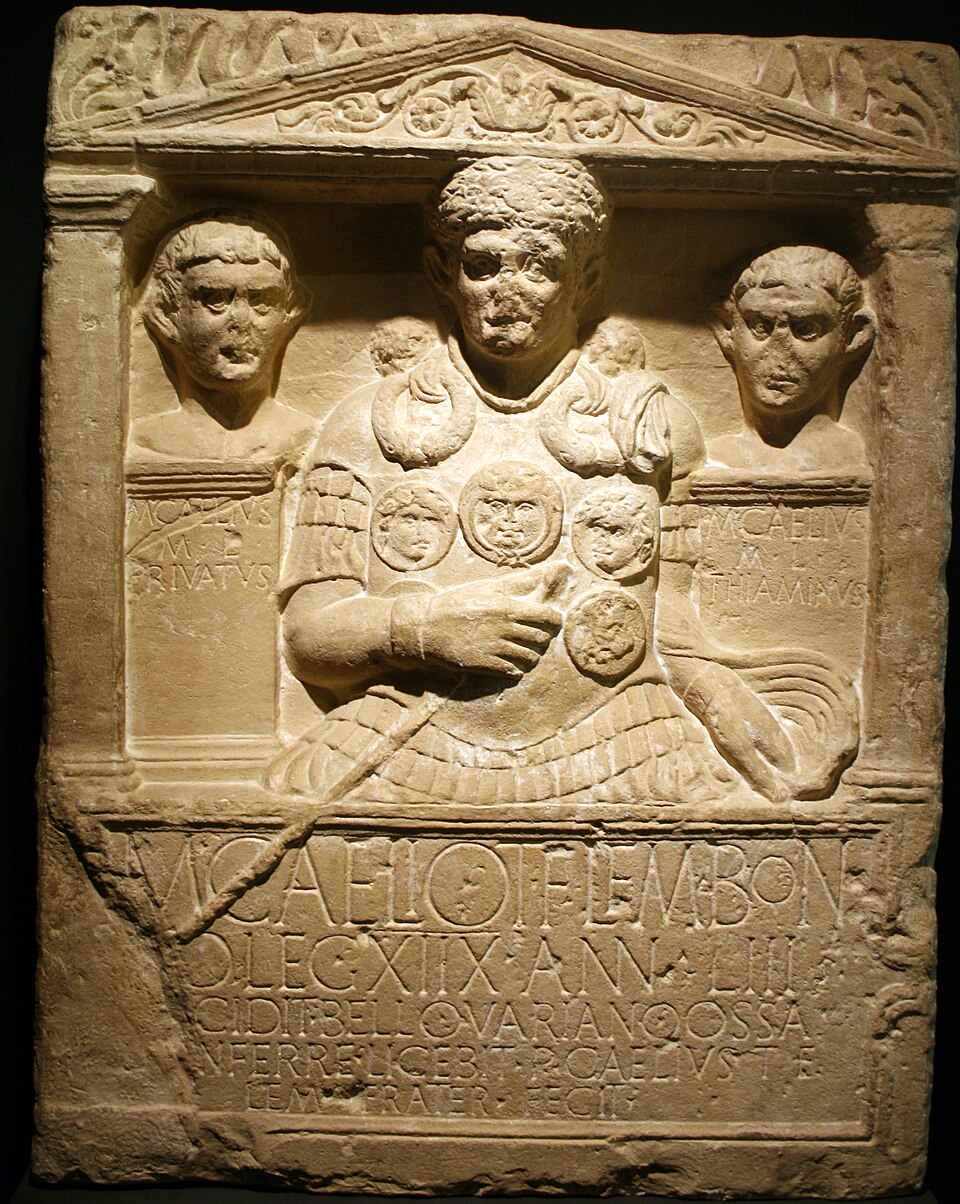
In September of the year 9 CE, somewhere in the tangled forests of northern Germania, possibly near what is now Kalkriese, three Roman legions vanished from history in a matter of days. Their commander, Publius Quinctilius Varus, had every reason to feel secure. He was an accomplished administrator, a former quaestor appointed at an unusually young age, a onetime legion commander, and governor of both Africa and the prestigious province of Syria. Now he oversaw Rome's remaining forces along the Rhine frontier, a region Augustus hoped to fully absorb into the Empire.
The path to that catastrophe had been building for decades. Julius Caesar had crossed the Rhine twice during the Gallic Wars without decisive results, and after his death Gaul slipped in and out of Roman control amid civil war. When Augustus reorganized the Republic into an Empire in 27 BCE, he divided Gaul into provinces and stationed troops near the Rhine, though whether he intended the river as a permanent border or merely a staging ground for further conquest remains debated. Roman arms did not always prevail — the Lollian disaster of 16 BCE proved the Germans could still humiliate Roman forces.
Augustus responded by reorganizing the legions and sending his stepson Drusus to campaign against the Germanic tribes from 11 to 9 BCE. Drusus won a string of victories before his untimely death in a riding accident in 9 BCE. His brother Tiberius took over, pushed Roman influence further, then withdrew into political exile. Lucius Domitius Ahenobarbus succeeded him, crossing the Elbe — the only Roman general ever to do so — and suppressing local revolts. By the turn of the century, cross-border trade flourished and Rome believed Germania was largely pacified.
That confidence proved fatal. In 6 CE, Rome assembled a massive force of thirteen legions, roughly 100,000 men, to move against Maroboduus, king of the Marcomanni. But before that campaign could conclude, a much larger crisis erupted: the Bellum Batonianum, the Great Illyrian Revolt in the Balkans, led by Bato the Daesitiate, Bato the Breucian, and Pinnes of Pannonia. Tiberius was forced to make peace with Maroboduus and divert eight legions to crush the Balkan rebellion, draining Roman strength from the Rhine.
That left only three legions under Varus to hold the German frontier — and it was precisely this weakness that the Germanic tribes exploited. At the center of the plot stood Arminius, a Germanic chieftain who had received Roman citizenship and a Roman military education. That education was his weapon: Arminius understood Roman tactics, command structure, and logistics intimately, and he used that knowledge to lead an alliance of Germanic peoples into deceiving Varus completely.
More from History

The Morning Bingham Climbed to Machu Picchu
On a cold July morning in 1911, an American historian scrambled up a jungle-choked ridge above the Urubamba River — and by afternoon, a forgotten Inca citadel would belong to the world.

The Last Half-Hour of the Hindenburg
It was already half a day late, and the public had been told to keep away — but at seven o'clock that evening, the Hindenburg finally turned toward its mooring mast for the last time.

The Last Hours of Pompeii: August 24, 79 AD
By noon it was just another hot day beside the Bay of Naples. By evening, an entire mountain had rewritten the fate of thousands.

The Longest Walk: Mandela's Last Steps to Freedom
After 27 years behind bars, a 71-year-old man had to relearn how to walk out of a prison gate — into a waiting world of cameras, crowds, and a country holding its breath.

The Document Lincoln Signed on the First Day of 1863
On a single January morning, a president's pen would change the legal status of more than three million people — if the ink held and his hand did not shake.

The Day of the Dream: August 28, 1963
Two hundred and fifty thousand people converged on the National Mall that morning — by nightfall, one voice from the steps of the Lincoln Memorial would echo for generations.