The American Civil War: A Nation Divided
The American Civil War began with a single cannon shot at Fort Sumter, but its roots ran deep through decades of division. What started as a conflict over slavery became a war that reshaped the nation's future.
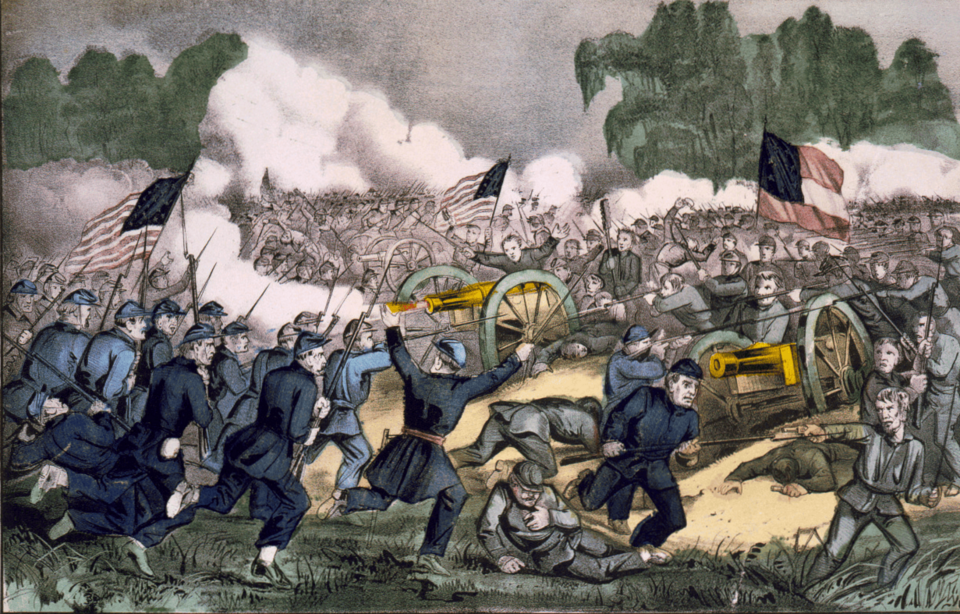
The American Civil War was a clash between the Union and the Confederacy, two sides of a nation torn apart by the issue of slavery. For decades, the United States had been divided over the morality and economics of slavery. The North, with its growing industrial economy, saw slavery as an outdated system, while the South, reliant on agriculture and enslaved labor, viewed it as essential to their way of life. This divide came to a head when Abraham Lincoln, a Republican who opposed the expansion of slavery, won the 1860 presidential election. The South, fearing the end of slavery, responded by seceding from the Union and forming the Confederate States of America.
The war began on April 12, 1861, when Confederate forces bombarded Fort Sumter in South Carolina, a Union-held fortress. This attack ignited a wave of patriotism across both the North and South, with millions enlisting in the military. The Confederacy, led by Jefferson Davis, claimed to be fighting for states' rights and the preservation of slavery. The Union, under Lincoln, aimed to preserve the United States as a single nation. The conflict quickly escalated, with battles spreading across the South and the nation on the brink of total war.
In the early years of the war, the Union made significant gains in the western theater, while the eastern front remained inconclusive. The war took a new direction in 1863 when Lincoln issued the Emancipation Proclamation, declaring all enslaved people in Confederate states to be free. This marked slavery as a central Union war goal and shifted the focus of the war toward abolishing the institution. Meanwhile, Union forces under Ulysses S. Grant and William Tecumseh Sherman made decisive advances, including the fall of Vicksburg and the destruction of the Confederacy's river navy.
The war became increasingly brutal as both sides employed industrialized warfare. Railroads, telegraphs, and mass-produced weapons transformed the battlefield, leading to unprecedented casualties. By 1864, the Union had tightened its naval blockade, cutting off the Confederacy from essential supplies. The fall of Atlanta and Sherman's March to the Sea marked a turning point, as the South's resources and morale began to wane. Amid these campaigns came the Battle of Gettysburg, where Confederate General Robert E. Lee's invasion of the North ended in defeat.
The war reached its climax with the Siege of Petersburg, a ten-month siege that guarded the gateway to Richmond, the Confederate capital, which the Confederates ultimately abandoned. On April 9, 1865, General Robert E. Lee surrendered to General Ulysses S. Grant at Appomattox Court House, effectively ending the war. Lincoln, who had long championed the Union's cause, was shot by an assassin on April 14 and died the next day, leaving a nation in mourning. The war left an estimated 700,000 soldiers dead, along with an undetermined number of civilian deaths, making it the deadliest conflict in American history.
More from History

The Morning Bingham Climbed to Machu Picchu
On a cold July morning in 1911, an American historian scrambled up a jungle-choked ridge above the Urubamba River — and by afternoon, a forgotten Inca citadel would belong to the world.

The Last Half-Hour of the Hindenburg
It was already half a day late, and the public had been told to keep away — but at seven o'clock that evening, the Hindenburg finally turned toward its mooring mast for the last time.

The Last Hours of Pompeii: August 24, 79 AD
By noon it was just another hot day beside the Bay of Naples. By evening, an entire mountain had rewritten the fate of thousands.

The Longest Walk: Mandela's Last Steps to Freedom
After 27 years behind bars, a 71-year-old man had to relearn how to walk out of a prison gate — into a waiting world of cameras, crowds, and a country holding its breath.

The Document Lincoln Signed on the First Day of 1863
On a single January morning, a president's pen would change the legal status of more than three million people — if the ink held and his hand did not shake.

The Day of the Dream: August 28, 1963
Two hundred and fifty thousand people converged on the National Mall that morning — by nightfall, one voice from the steps of the Lincoln Memorial would echo for generations.