The Apple That Never Fell (Quite Like That)
Everyone knows the story: an apple drops, Isaac Newton's head gets bonked, gravity is born. But scour the record of his actual life and work, and something curious happens — the apple simply isn't there.
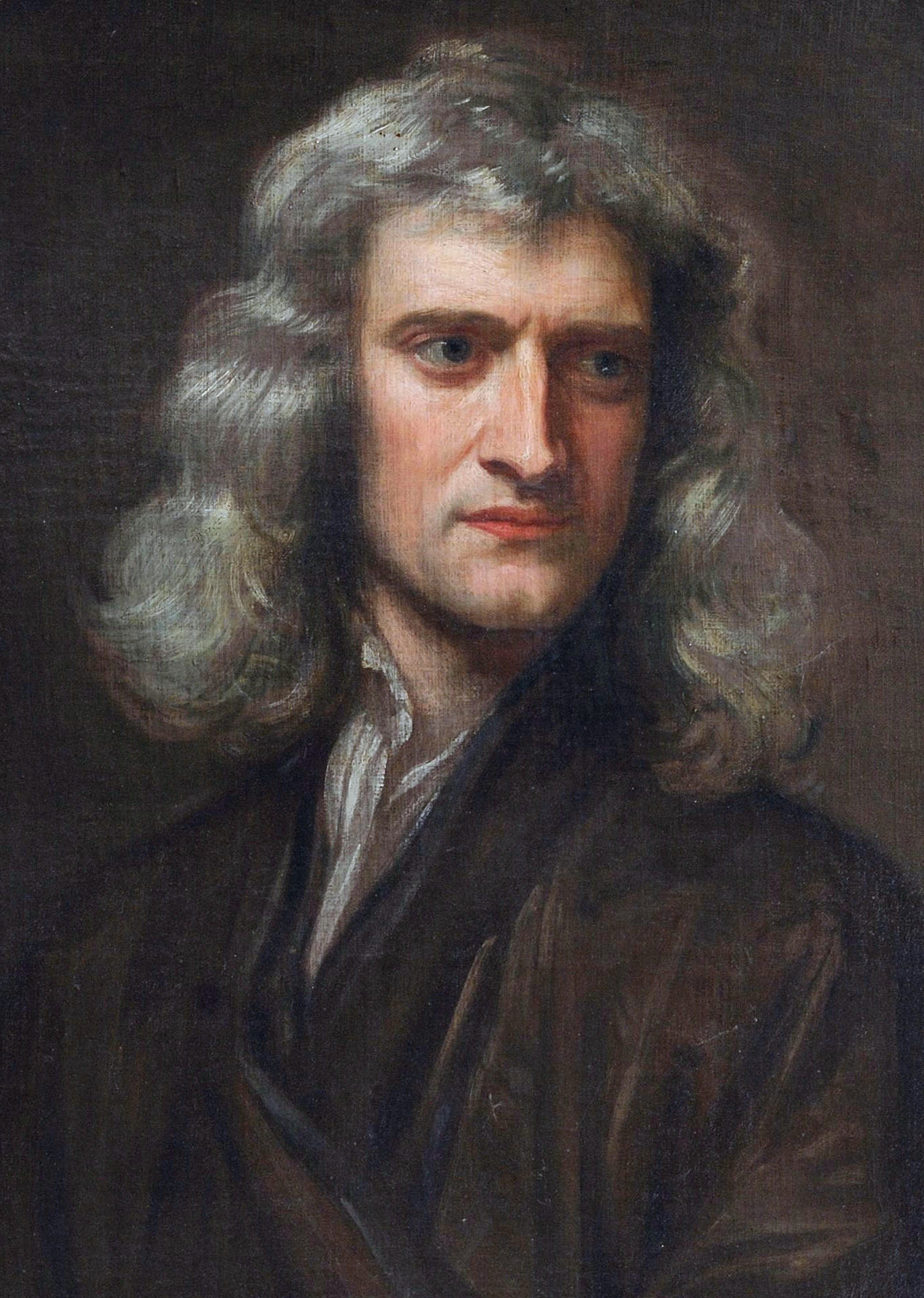
The image is one of the most famous in the history of science: a young man lounging beneath a tree, an apple striking his skull, and in a flash of pain and genius, the law of universal gravitation springs fully formed into his mind. It is a tidy, charming story — the kind that makes complex physics feel like a punchline. And it is precisely the kind of story that invites scrutiny.
What the documented record actually shows is a far less cinematic sequence of events. Newton was born in 1642 at Woolsthorpe Manor in Lincolnshire, and it was to that same family farm that he returned between 1665 and 1667, when an outbreak of plague forced Cambridge's Trinity College to close its doors. Those two years away from university, spent largely in quiet isolation on the family estate, turned out to be extraordinarily productive. It was during this period that Newton began seriously working through the mathematics that would become calculus, and it was during this period that he started thinking deeply about gravity.
Notice what is missing from that account: any mention of an apple striking him. Neither the English nor the Turkish biographical record recounts a falling apple, a bump on the head, or a single decisive moment of revelation. What exists instead is a two-year stretch of sustained, patient thought — on differential and integral calculus, on the behavior of light passed through a prism in a darkened room, and separately, on the forces governing motion both on Earth and in the heavens.
This matters because the apple myth compresses years of grinding intellectual labor into a single lightning-bolt instant. Newton's actual achievement, as the record shows, was to demonstrate mathematically that the same laws governing a falling object on Earth also governed the motion of the Moon and planets — a synthesis he did not casually stumble into but built through his 1687 masterwork, the Principia Mathematica. That book unified terrestrial and celestial mechanics for the first time, derived Kepler's laws of planetary motion from first principles, and laid out the three laws of motion that would dominate physics for centuries.
More from History

The Morning Bingham Climbed to Machu Picchu
On a cold July morning in 1911, an American historian scrambled up a jungle-choked ridge above the Urubamba River — and by afternoon, a forgotten Inca citadel would belong to the world.

The Last Half-Hour of the Hindenburg
It was already half a day late, and the public had been told to keep away — but at seven o'clock that evening, the Hindenburg finally turned toward its mooring mast for the last time.

The Last Hours of Pompeii: August 24, 79 AD
By noon it was just another hot day beside the Bay of Naples. By evening, an entire mountain had rewritten the fate of thousands.

The Longest Walk: Mandela's Last Steps to Freedom
After 27 years behind bars, a 71-year-old man had to relearn how to walk out of a prison gate — into a waiting world of cameras, crowds, and a country holding its breath.

The Document Lincoln Signed on the First Day of 1863
On a single January morning, a president's pen would change the legal status of more than three million people — if the ink held and his hand did not shake.

The Day of the Dream: August 28, 1963
Two hundred and fifty thousand people converged on the National Mall that morning — by nightfall, one voice from the steps of the Lincoln Memorial would echo for generations.