The Birth of a Republic
In a small hall in Ankara, a single act would change the fate of a nation. On 29 October 1923, the Republic of Turkey was proclaimed, marking the end of an empire and the beginning of a new era.
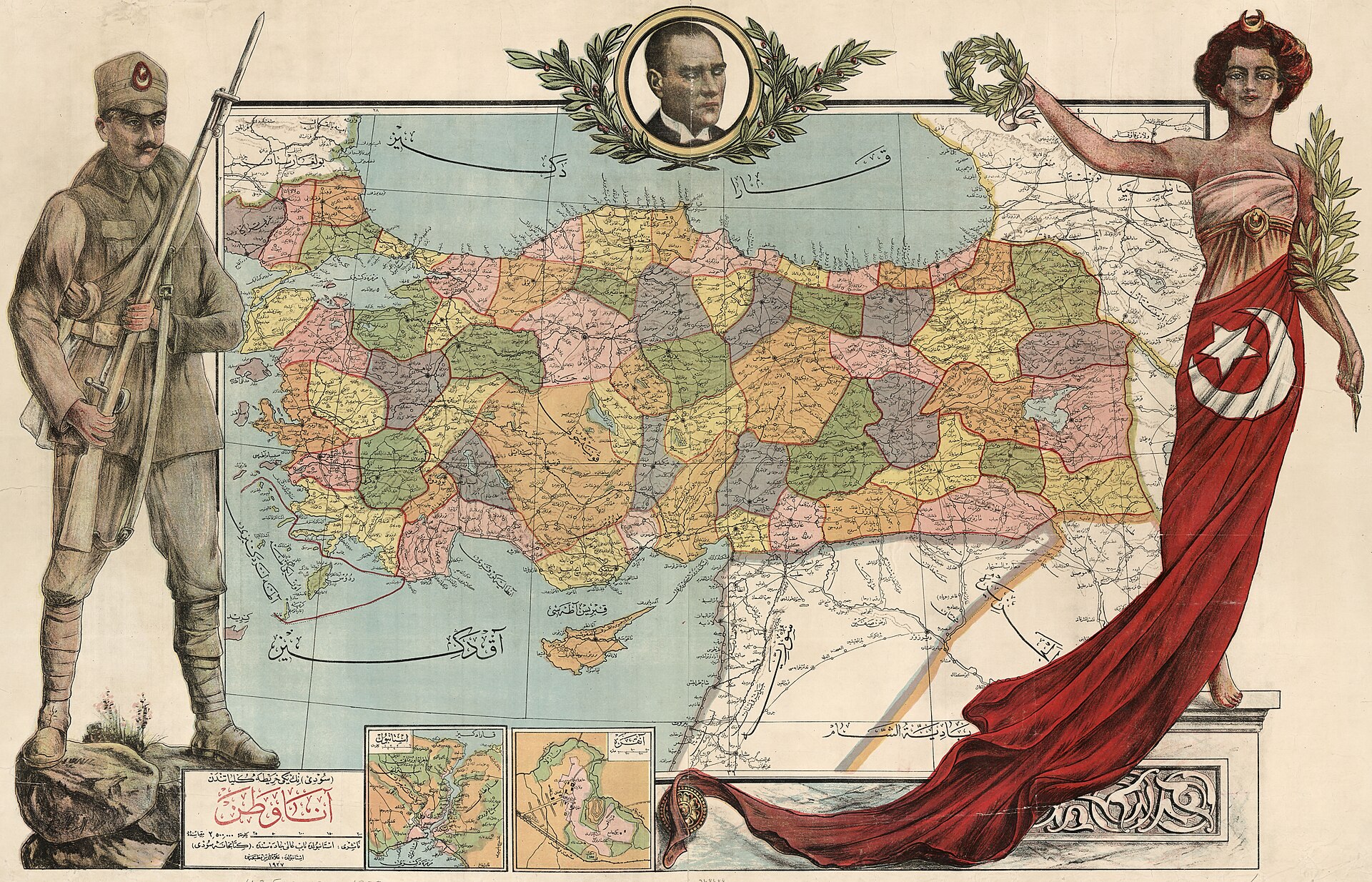
The Ottoman Empire had ruled for centuries, its power centralized under the sultan. But by 1923 the empire had collapsed, broken by World War I and swept aside by the Turkish War of Independence. Mustafa Kemal Atatürk, the leader of the nationalist movement, saw the need for radical change. The Grand National Assembly, convened in Ankara in 1920, had already taken control from the crumbling Ottoman government, and on 1 November 1922 it had abolished the sultanate itself. Now Atatürk aimed to define the new state openly as a republic, a system that would place sovereignty firmly in the hands of the people.
The idea of a republic was not new to Ottoman thinkers, but it had never been fully realized. The constitution of 1921 had declared that sovereignty belonged to the nation, yet it left the form of government undefined—and it did not even name a capital. On 13 October 1923, a single-article law made Ankara the capital of the state, settling the long dispute over Istanbul and marking a first step toward the republic. Atatürk believed that only a republic would bring stability and progress, and he prepared a constitutional amendment that would officially declare Turkey one.
The path to the proclamation was not smooth. The Grand National Assembly was riven by internal conflicts, and in October 1923 the government fell into crisis, with ministers struggling to work together. Mustafa Kemal saw the deadlock as an opportunity. On 25 October he gathered the cabinet at Çankaya, where it was decided that the ministers would resign. Then, at a dinner at the Çankaya Mansion on the evening of 28 October, he told his guests, 'Gentlemen! We shall declare the republic tomorrow.' After dinner, he and İsmet Pasha drafted the constitutional amendment together.
On the morning of 29 October, the People's Party Group met in the parliament to discuss the cabinet change. The debate was deadlocked until Atatürk, asked to resolve the crisis, took the floor. He argued that if the form of government became a republic, such crises would not recur, and he presented his constitutional amendment. His words carried the room, and the group accepted the proposal, first as a whole and then article by article. The assembly now stood on the brink of a historic decision.
More from History

The Morning Bingham Climbed to Machu Picchu
On a cold July morning in 1911, an American historian scrambled up a jungle-choked ridge above the Urubamba River — and by afternoon, a forgotten Inca citadel would belong to the world.

The Last Half-Hour of the Hindenburg
It was already half a day late, and the public had been told to keep away — but at seven o'clock that evening, the Hindenburg finally turned toward its mooring mast for the last time.

The Last Hours of Pompeii: August 24, 79 AD
By noon it was just another hot day beside the Bay of Naples. By evening, an entire mountain had rewritten the fate of thousands.

The Longest Walk: Mandela's Last Steps to Freedom
After 27 years behind bars, a 71-year-old man had to relearn how to walk out of a prison gate — into a waiting world of cameras, crowds, and a country holding its breath.

The Document Lincoln Signed on the First Day of 1863
On a single January morning, a president's pen would change the legal status of more than three million people — if the ink held and his hand did not shake.

The Day of the Dream: August 28, 1963
Two hundred and fifty thousand people converged on the National Mall that morning — by nightfall, one voice from the steps of the Lincoln Memorial would echo for generations.