The Capture of Rome
On a crisp September morning in 1870, the fate of a city and a nation hung in the balance. Rome, the heart of the Catholic world, stood on the brink of being seized by the Kingdom of Italy—a moment that would reshape the course of history.
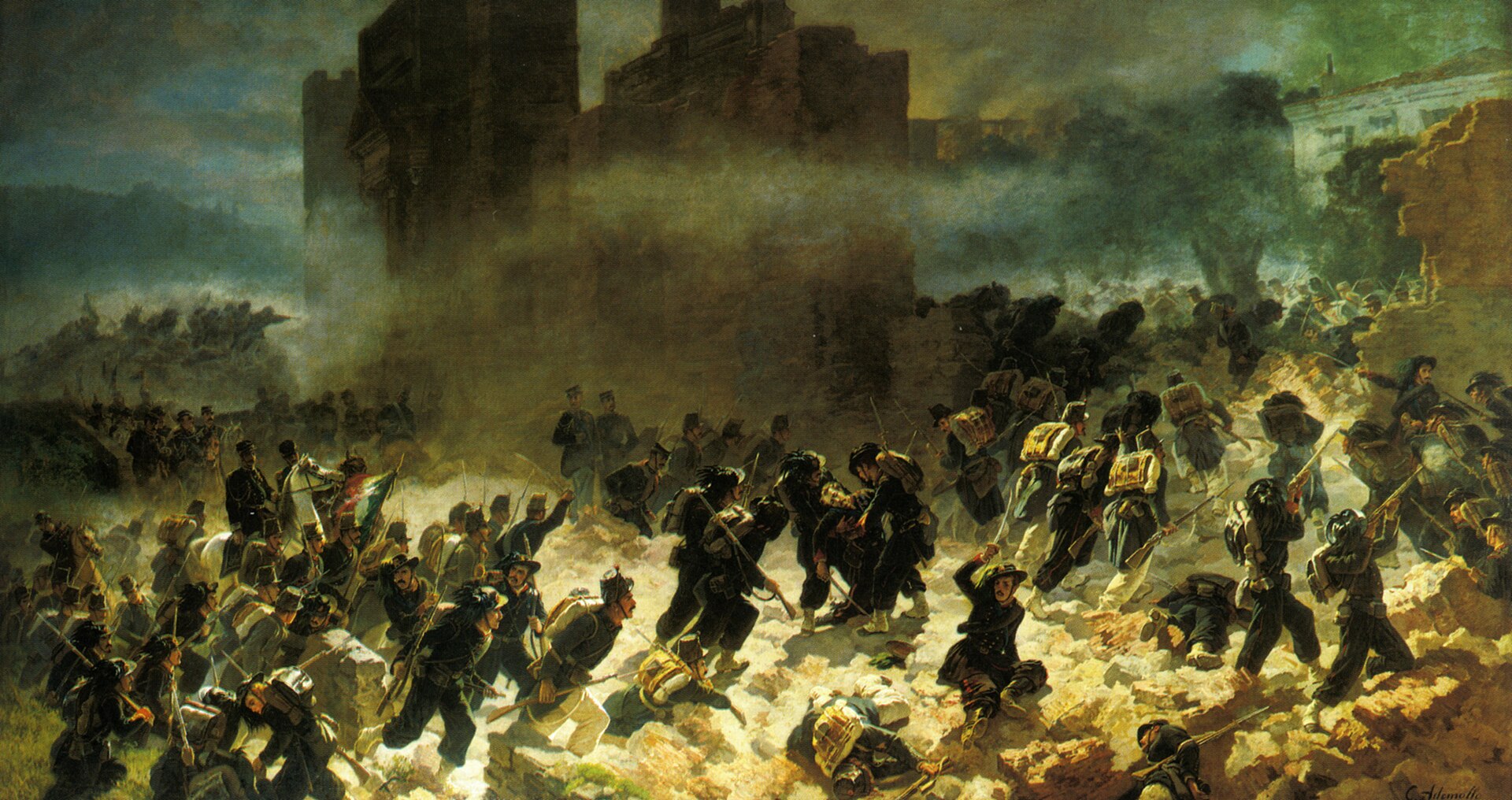
For centuries, Rome had been a symbol of papal authority, a city that defied the tides of time. But by 1870, it was also a battleground. The Papal States, once a vast territory, had been reduced to a small enclave, its borders shrinking under the pressures of Italian unification. The French had long held a garrison in Rome, a symbol of the Pope’s resistance to losing his temporal power. Yet, as tensions mounted, France’s presence was about to be withdrawn, leaving Rome vulnerable to the ambitions of the Italian state.
The Italian government had long viewed Rome as the natural capital of a unified Italy. Camillo Cavour, the first Prime Minister, had insisted that Rome’s inclusion was essential for national unity. But with the French garrison in place, the city remained beyond Italy’s reach. When Napoleon III recalled his troops in early August, the stage was set for a dramatic shift. The removal of French forces left the Pope exposed and the Italian army with a clear path forward.
King Victor Emmanuel II, eager to complete the unification of Italy, sent Count Gustavo Ponza di San Martino to Rome with a proposal. The offer was meant to be a compromise, allowing the Italian army to enter the city under the guise of protection. Yet, Pope Pius IX, defiant and unyielding, rejected the terms. His anger was palpable, and his rejection of the offer only deepened the resolve of the Italian government to proceed. The Pope’s refusal marked a turning point, signaling the end of papal control over Rome.
With the French garrison gone, the Italian army moved swiftly. General Raffaele Cadorna led the charge, his forces advancing through the Papal States. The Papal defenders, though numerous, were outmatched. The Swiss Guard, the Palatine Guard, and the Papal Zouaves—volunteers from across Europe—stood their ground, but the sheer scale of the Italian forces made resistance futile. The city’s civilian population, largely indifferent to the conflict, did little to support the Pope’s cause, further isolating the defenders.
More from History

The Morning Bingham Climbed to Machu Picchu
On a cold July morning in 1911, an American historian scrambled up a jungle-choked ridge above the Urubamba River — and by afternoon, a forgotten Inca citadel would belong to the world.

The Last Half-Hour of the Hindenburg
It was already half a day late, and the public had been told to keep away — but at seven o'clock that evening, the Hindenburg finally turned toward its mooring mast for the last time.

The Last Hours of Pompeii: August 24, 79 AD
By noon it was just another hot day beside the Bay of Naples. By evening, an entire mountain had rewritten the fate of thousands.

The Longest Walk: Mandela's Last Steps to Freedom
After 27 years behind bars, a 71-year-old man had to relearn how to walk out of a prison gate — into a waiting world of cameras, crowds, and a country holding its breath.

The Document Lincoln Signed on the First Day of 1863
On a single January morning, a president's pen would change the legal status of more than three million people — if the ink held and his hand did not shake.

The Day of the Dream: August 28, 1963
Two hundred and fifty thousand people converged on the National Mall that morning — by nightfall, one voice from the steps of the Lincoln Memorial would echo for generations.