The Cloud People of Monte Albán
Long before the Aztecs rose to power, a people who called themselves 'those of the clouds' were carving the first true city out of a Oaxacan mountaintop.
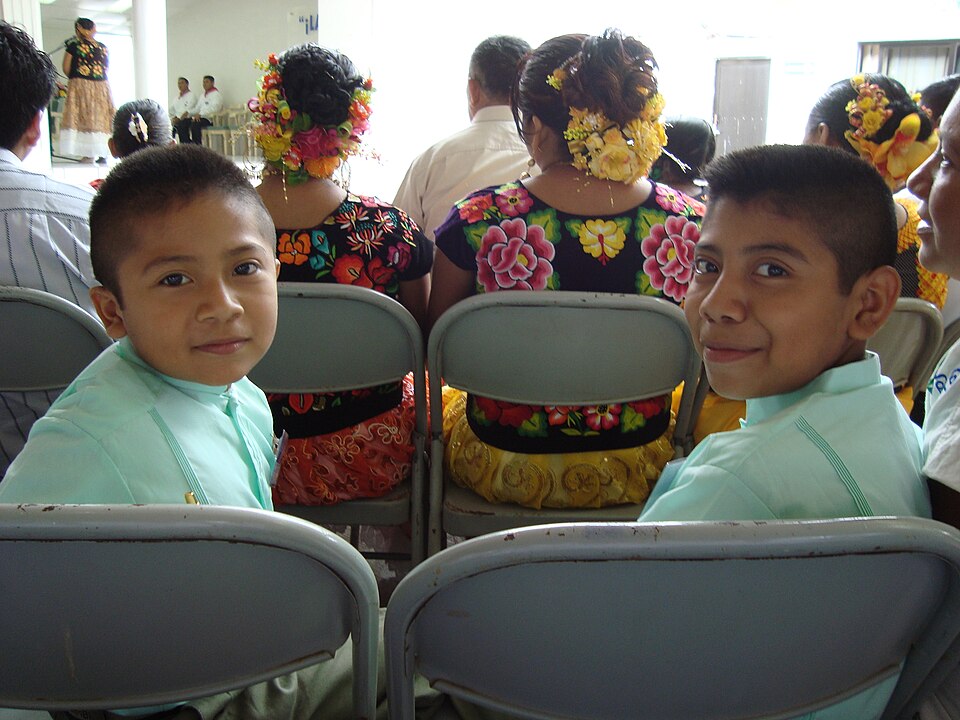
High above the Valley of Oaxaca, where the air thins and clouds seem to settle rather than pass, a people built one of Mesoamerica's earliest cities. They called themselves Bën Za — 'People of the Clouds' — and the name the wider world came to use, Zapotec, is thought by some scholars to descend not simply from the Nahuatl word for the sapote fruit, but from a hybrid term joining 'za' (cloud) with 'pochteca' (merchant): cloud-merchants, perhaps, moving between earth and sky.
Archaeological evidence places settlement at Monte Albán as far back as 1150 BCE, though the Zapotec civilization proper is generally dated from around 500 to 300 BCE, the beginning of what researchers call the Monte Albán I period. From there, scholars trace five successive Monte Albán periods stretching all the way to the Spanish conquest in 1521 CE — a civilizational arc lasting two thousand years.
The earliest, Formative stage, from about 500 BCE to 200 CE, saw the Zapotecs shift into settled agricultural life, laying the groundwork for everything that followed. Around 200 to 250 CE, distinctive pottery bearing Maya influence appeared at Monte Albán. Then, from 200 to 900 CE, came the Classic stage — a period of surging political organization and religious life, when the state and its priesthood grew deeply intertwined.
Finally, from about 900 to 1521 CE, a 'Militaristic stage' set in, as warfare and what has been described as 'cults of war' came to dominate Zapotec society. Some scholars believe Monte Albán itself was abandoned as a city between 700 and 1000 CE. In the centuries that followed, the Zapotecs found themselves at war with the Mixtecs, who had been pushed south by the Toltecs and Chichimecs, and lost the city of Mitla to them. Facing the shared threat of the Aztecs, the two peoples signed a peace treaty in 1280 CE, sealed by a marriage between members of both royal families — a lineage that produced Cocijo-pij, the last Zapotec king, who witnessed the Spanish conquest before his death.
Zapotec religious life was inseparable from governance. A Zapotec lord was required to undergo religious training before taking power, and grand temples called yo hopèe — 'the house of the vital force' — housed priests known as Copa pitào, most drawn from the nobility, though commoners could also join the lower ranks of the priesthood. At the very top stood the ouija-tào, the 'great seer', a figure Spanish chroniclers of the sixteenth century likened to the Pope — yet one who lived not in Monte Albán itself but in Mitla, another major Zapotec center.
More from History

The Morning Bingham Climbed to Machu Picchu
On a cold July morning in 1911, an American historian scrambled up a jungle-choked ridge above the Urubamba River — and by afternoon, a forgotten Inca citadel would belong to the world.

The Last Half-Hour of the Hindenburg
It was already half a day late, and the public had been told to keep away — but at seven o'clock that evening, the Hindenburg finally turned toward its mooring mast for the last time.

The Last Hours of Pompeii: August 24, 79 AD
By noon it was just another hot day beside the Bay of Naples. By evening, an entire mountain had rewritten the fate of thousands.

The Longest Walk: Mandela's Last Steps to Freedom
After 27 years behind bars, a 71-year-old man had to relearn how to walk out of a prison gate — into a waiting world of cameras, crowds, and a country holding its breath.

The Document Lincoln Signed on the First Day of 1863
On a single January morning, a president's pen would change the legal status of more than three million people — if the ink held and his hand did not shake.

The Day of the Dream: August 28, 1963
Two hundred and fifty thousand people converged on the National Mall that morning — by nightfall, one voice from the steps of the Lincoln Memorial would echo for generations.