The Crusades: Two Hundred Years for Jerusalem
For nearly two centuries, kings, peasants, and popes marched east under one banner — the cross — chasing a city they believed belonged to God alone.
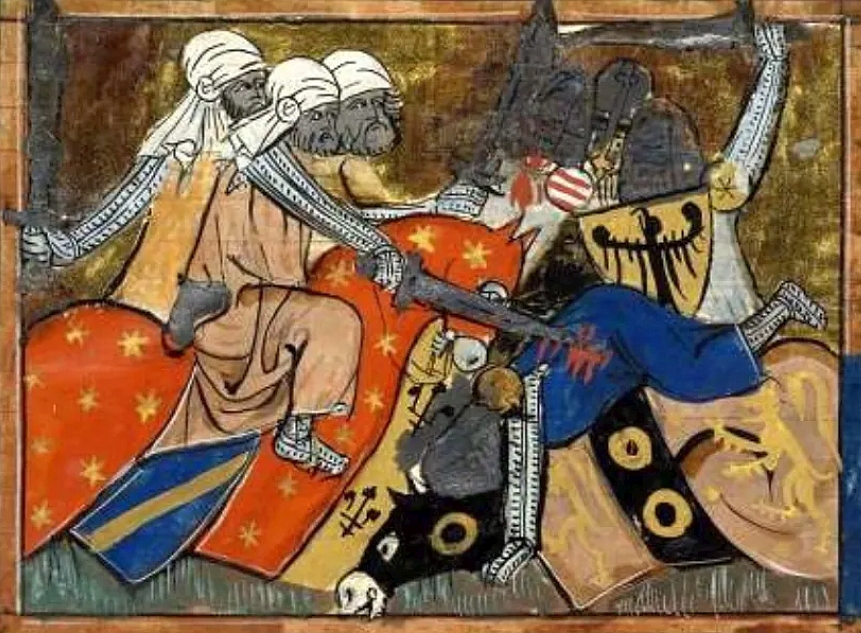
In November 1095, at the Council of Clermont in France, Pope Urban II stood before a gathered crowd and called Christians to arms. Jerusalem, he declared, must be reclaimed from Muslim rule. The response was electric: nobles, knights, peasants, and the desperate poor of Western Europe answered the summons, drawn by promises of spiritual salvation, the lure of new land, feudal duty, or simple hope for a better life amid famine and plague.
The Byzantine emperor Alexios I Komnenos had originally asked the papacy for military help against the Seljuk Turks, who had swept through Anatolia after their victory at Manzikert in 1071 and pushed into Syria and Palestine. Urban seized on this request but reshaped it into something far larger: an armed pilgrimage to seize Jerusalem itself, and to bring the 'heretical' Eastern Christians under Rome's authority.
The First Crusade, launched in 1096, unfolded in stages. Its earliest wave, the so-called People's Crusade, was made up largely of ordinary believers rather than trained soldiers, and it set out in August 1096 under the fervent monk Peter the Hermit. Better-organized armies of French, Norman, and Lombard nobles followed, arriving before Constantinople in 1097, where Alexios—wary of the massive armed host—forced them to swear to hand over any reconquered territory, including Antioch, before allowing them passage. Against long odds, the Crusaders captured Jerusalem in 1099, establishing four Crusader states: Edessa, Antioch, Jerusalem, and Tripoli.
Holding these gains proved far harder than winning them. The Crusade of 1101 ended in disaster, and for decades only smaller expeditions reinforced the Levant. When Edessa fell in 1144, the Second Crusade was called to save it, but it failed in 1148, draining enthusiasm across Latin Christendom just as the Muslim world was uniting under a formidable new leader.
That leader was Saladin, who brought Egypt and Muslim Syria under one rule and crushed the combined Crusader armies at the Battle of Hattin in 1187. The Crusader states barely survived thanks to the Third Crusade, though Jerusalem itself remained beyond reach. The Fourth Crusade, meant for Egypt, was diverted entirely—ending instead in the Sack of Constantinople and the founding of the Latin Empire in 1204, a betrayal of the crusading ideal that still echoes in history.
More from History

The Morning Bingham Climbed to Machu Picchu
On a cold July morning in 1911, an American historian scrambled up a jungle-choked ridge above the Urubamba River — and by afternoon, a forgotten Inca citadel would belong to the world.

The Last Half-Hour of the Hindenburg
It was already half a day late, and the public had been told to keep away — but at seven o'clock that evening, the Hindenburg finally turned toward its mooring mast for the last time.

The Last Hours of Pompeii: August 24, 79 AD
By noon it was just another hot day beside the Bay of Naples. By evening, an entire mountain had rewritten the fate of thousands.

The Longest Walk: Mandela's Last Steps to Freedom
After 27 years behind bars, a 71-year-old man had to relearn how to walk out of a prison gate — into a waiting world of cameras, crowds, and a country holding its breath.

The Document Lincoln Signed on the First Day of 1863
On a single January morning, a president's pen would change the legal status of more than three million people — if the ink held and his hand did not shake.

The Day of the Dream: August 28, 1963
Two hundred and fifty thousand people converged on the National Mall that morning — by nightfall, one voice from the steps of the Lincoln Memorial would echo for generations.