The Dawn of Liberation
On a stormy morning in June 1944, the Allies launched the largest seaborne invasion in history, changing the course of World War II forever.
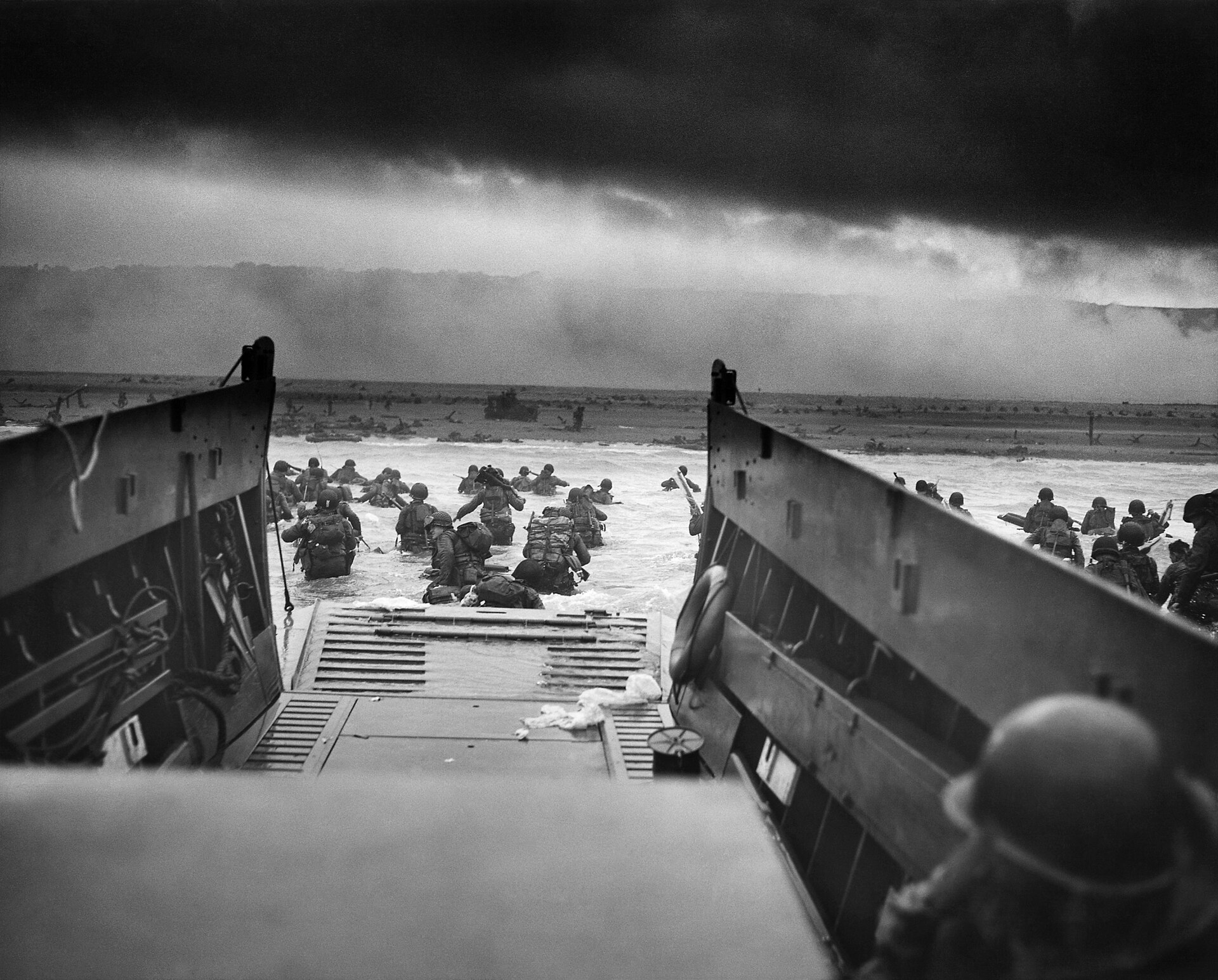
The Normandy landings, known as D-Day, marked the beginning of the Allied push to liberate Western Europe from Nazi control. On 6 June 1944, American, British, and Canadian forces stormed the beaches of Normandy in the largest seaborne invasion in history. The landing operation, codenamed Operation Neptune, opened Operation Overlord, the Allied invasion of Normandy, and was the culmination of years of planning and deception as the Allies sought to outmaneuver the German forces. The invasion was not just a military operation; it was a turning point that would determine the fate of millions.
The planning for the Normandy landings began in 1943, with the Allies working tirelessly to execute a complex plan. They devised elaborate deceptions, known as Operation Bodyguard, to mislead the Germans about the invasion's timing and location. The Germans considered the heavily fortified Pas-de-Calais, the closest point in continental Europe to Britain, to be the most likely landing zone, and the Allied deception played on that expectation. Preserving the element of surprise was critical to reducing the risk of a catastrophic failure.
The weather on the day selected for D-Day was not ideal, and the operation had to be delayed 24 hours. A further postponement would have meant a delay of at least two weeks, as the planners had requirements for the phase of the moon, the tides, and the time of day that meant only a few days each month were deemed suitable. These constraints underscored the complexity of the mission and the immense effort required to execute it.
The invasion began shortly after midnight on 6 June, with extensive aerial and naval bombardment preceding the airborne assault. Some 24,000 American, British, and Canadian airborne troops were landed behind enemy lines to secure key objectives and disrupt German defenses. The early morning aerial assault was followed by the amphibious landings at around 6:30 a.m., with Allied forces attempting to capture key towns and establish beachheads. The target 80-kilometre stretch of the Normandy coast was divided into five sectors—Utah, Omaha, Gold, Juno, and Sword—each with its own challenges and objectives.
The men who landed on the beaches faced immense difficulties, coming ashore under heavy fire from German gun emplacements overlooking the shore. The beaches were mined and covered with obstacles such as wooden stakes, metal tripods, and barbed wire, making the work of the beach-clearing teams dangerous and difficult. The highest number of casualties was at Omaha, with its high cliffs. Despite the challenges, the Allies managed to establish beachheads at each of the five landing sites on the first day.
More from History

The Morning Bingham Climbed to Machu Picchu
On a cold July morning in 1911, an American historian scrambled up a jungle-choked ridge above the Urubamba River — and by afternoon, a forgotten Inca citadel would belong to the world.

The Last Half-Hour of the Hindenburg
It was already half a day late, and the public had been told to keep away — but at seven o'clock that evening, the Hindenburg finally turned toward its mooring mast for the last time.

The Last Hours of Pompeii: August 24, 79 AD
By noon it was just another hot day beside the Bay of Naples. By evening, an entire mountain had rewritten the fate of thousands.

The Longest Walk: Mandela's Last Steps to Freedom
After 27 years behind bars, a 71-year-old man had to relearn how to walk out of a prison gate — into a waiting world of cameras, crowds, and a country holding its breath.

The Document Lincoln Signed on the First Day of 1863
On a single January morning, a president's pen would change the legal status of more than three million people — if the ink held and his hand did not shake.

The Day of the Dream: August 28, 1963
Two hundred and fifty thousand people converged on the National Mall that morning — by nightfall, one voice from the steps of the Lincoln Memorial would echo for generations.