The Door at Wittenberg: A Single Day in October 1517
On one autumn afternoon a hammer, a nail, and eighty sheets of paper set a continent on a collision course with itself. Nobody in Wittenberg that day could have guessed what the sound of pounding wood would come to mean.
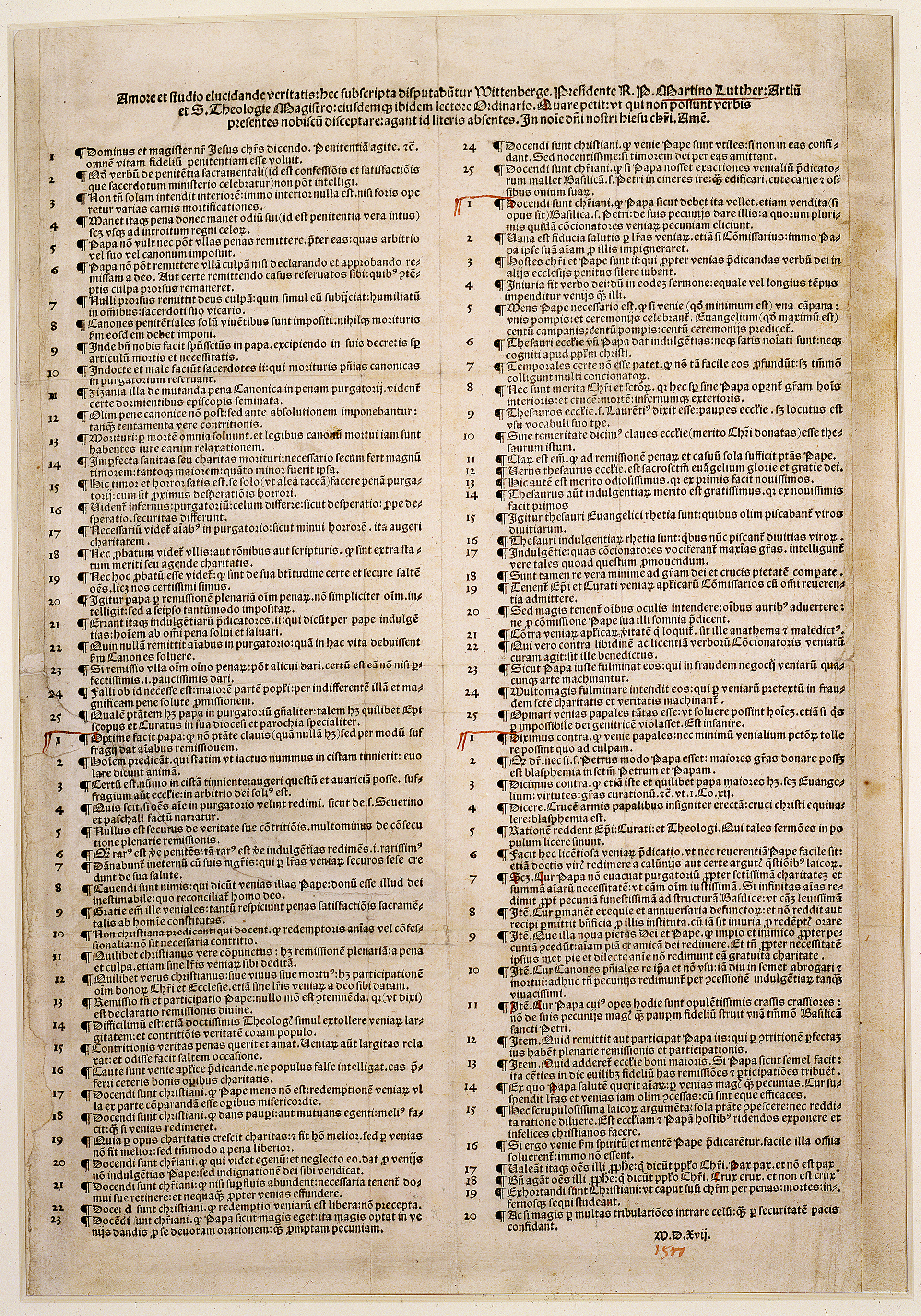
By the last day of October 1517, Martin Luther had spent months troubled by what he was hearing from his own parishioners in Wittenberg. Professor of moral theology at the town's university and its preacher, Luther watched people return from nearby towns clutching certificates of indulgence bought from the traveling preacher Johann Tetzel, convinced they no longer needed to repent to be forgiven their sins.
The indulgences Tetzel sold were extraordinary in scope. Authorized by Pope Leo X in 1515 to help fund the construction of St. Peter's Basilica in Rome, they promised to erase almost any sin — even adultery and theft — and were marketed with unusual zeal. Sales were banned in Wittenberg itself and other Saxon towns, so Luther's own congregants had to travel to purchase them, then come home believing their souls, and the souls of dead loved ones in purgatory, were instantly relieved.
Luther had already preached against this practice as early as 1514, but by 1517 his concern sharpened into something more formal. He had studied the theology of indulgences carefully, consulted experts, and drafted ninety-five propositions — a list meant for academic disputation, not necessarily a personal manifesto, but a direct challenge to the theory and practice of indulgences and their relationship to true repentance and papal authority.
On October 31, 1517, tradition holds that Luther carried this document to the door of All Saints' Church in Wittenberg — the Castle Church, or Schlosskirche — and nailed it there for public view. Church doors of the era served as informal notice boards for the university community, a place where scholars posted matters meant for debate. In this act, the Ninety-five Theses passed from private study into public argument.
The theses themselves moved through the logic of repentance and its price. The very first proposition invoked Christ's call in the Gospel of Matthew to 'repent,' arguing that true repentance was an inward, lifelong struggle of the Christian heart, not something settled by a purchased certificate. Later propositions, numbered 20 through 22, contended that only God could grant such general remission of penance, accusing the Church and the pope of overstepping their authority.
More from History

The Morning Bingham Climbed to Machu Picchu
On a cold July morning in 1911, an American historian scrambled up a jungle-choked ridge above the Urubamba River — and by afternoon, a forgotten Inca citadel would belong to the world.

The Last Half-Hour of the Hindenburg
It was already half a day late, and the public had been told to keep away — but at seven o'clock that evening, the Hindenburg finally turned toward its mooring mast for the last time.

The Last Hours of Pompeii: August 24, 79 AD
By noon it was just another hot day beside the Bay of Naples. By evening, an entire mountain had rewritten the fate of thousands.

The Longest Walk: Mandela's Last Steps to Freedom
After 27 years behind bars, a 71-year-old man had to relearn how to walk out of a prison gate — into a waiting world of cameras, crowds, and a country holding its breath.

The Document Lincoln Signed on the First Day of 1863
On a single January morning, a president's pen would change the legal status of more than three million people — if the ink held and his hand did not shake.

The Day of the Dream: August 28, 1963
Two hundred and fifty thousand people converged on the National Mall that morning — by nightfall, one voice from the steps of the Lincoln Memorial would echo for generations.