The Egyptian Queen Who Was Born in Syria
She ruled the Nile as queen and regent, minted coins in her own name, and was honored on the Rosetta Stone itself — yet the people of Alexandria never called her Egyptian.
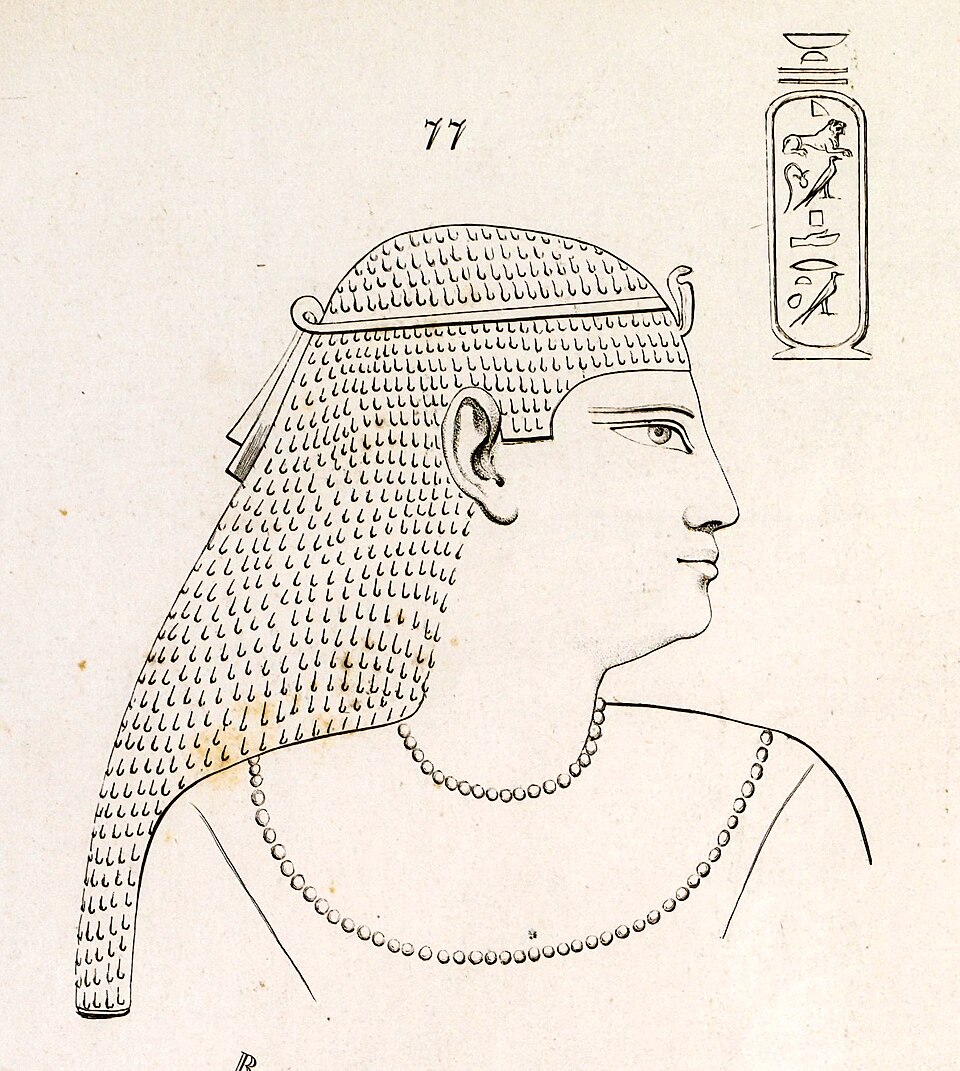
There is a persistent assumption that any woman who wore Egypt's crown and bore the name Cleopatra must, by definition, have been of Egyptian stock. Cleopatra I proves otherwise, and her own contemporaries never let anyone forget it.
She was born a Seleucid princess, daughter of Antiochus III the Great, King of the Seleucid Empire, and Queen Laodice III. Her homeland was the vast Hellenistic realm stretching across Syria and Asia Minor, not the Nile valley. In Alexandria itself, where she eventually reigned, she was known by a telling nickname: the Syrian.
How did a Seleucid princess end up on the Egyptian throne? The answer lies in geopolitics, not heritage. In 197 BC, Antiochus III seized a string of cities in Asia Minor that had belonged to Ptolemaic Egypt. Rome, backing Egyptian interests, negotiated with the Seleucid king at Lysimachia in 196 BC. Antiochus responded by offering peace — and his daughter's hand to the young Ptolemy V. The couple were betrothed in 195 BC and married in 193 BC at Raphia, when Ptolemy was about sixteen and Cleopatra roughly ten years old.
Later Ptolemaic propagandists tried to retroactively Egyptianize the arrangement, claiming Cleopatra had brought Coele-Syria as her dowry and that the territory therefore belonged to Egypt by right. But the historical record is not so tidy: it remains unclear whether any such dowry claim was ever real, and in practice Coele-Syria stayed firmly in Seleucid hands after the Battle of Panium in 198 BC. The marriage was diplomacy, not annexation — and it did not erase her origins in the eyes of Alexandrians.
Even as she was absorbed into Ptolemaic religious and political life — honored alongside her husband as one of the Theoi Epiphaneis, granted the ceremonial title of 'sister' to Ptolemy V in keeping with Egyptian royal custom, and awarded by a synod of priests at Memphis in 185 BC all the honors inscribed for Ptolemy V on the bilingual Rosetta Stone — her Syrian identity was never hidden or forgotten. She also held the title of vizier, a rare distinction shared by only one other Ptolemaic queen before her, Berenice II.
More from History

The Morning Bingham Climbed to Machu Picchu
On a cold July morning in 1911, an American historian scrambled up a jungle-choked ridge above the Urubamba River — and by afternoon, a forgotten Inca citadel would belong to the world.

The Last Half-Hour of the Hindenburg
It was already half a day late, and the public had been told to keep away — but at seven o'clock that evening, the Hindenburg finally turned toward its mooring mast for the last time.

The Last Hours of Pompeii: August 24, 79 AD
By noon it was just another hot day beside the Bay of Naples. By evening, an entire mountain had rewritten the fate of thousands.

The Longest Walk: Mandela's Last Steps to Freedom
After 27 years behind bars, a 71-year-old man had to relearn how to walk out of a prison gate — into a waiting world of cameras, crowds, and a country holding its breath.

The Document Lincoln Signed on the First Day of 1863
On a single January morning, a president's pen would change the legal status of more than three million people — if the ink held and his hand did not shake.

The Day of the Dream: August 28, 1963
Two hundred and fifty thousand people converged on the National Mall that morning — by nightfall, one voice from the steps of the Lincoln Memorial would echo for generations.