The Eleventh Hour of the Eleventh Day
In a railway carriage buried in a French forest, a handful of men signed away four years of slaughter — but the guns kept firing for six more hours.
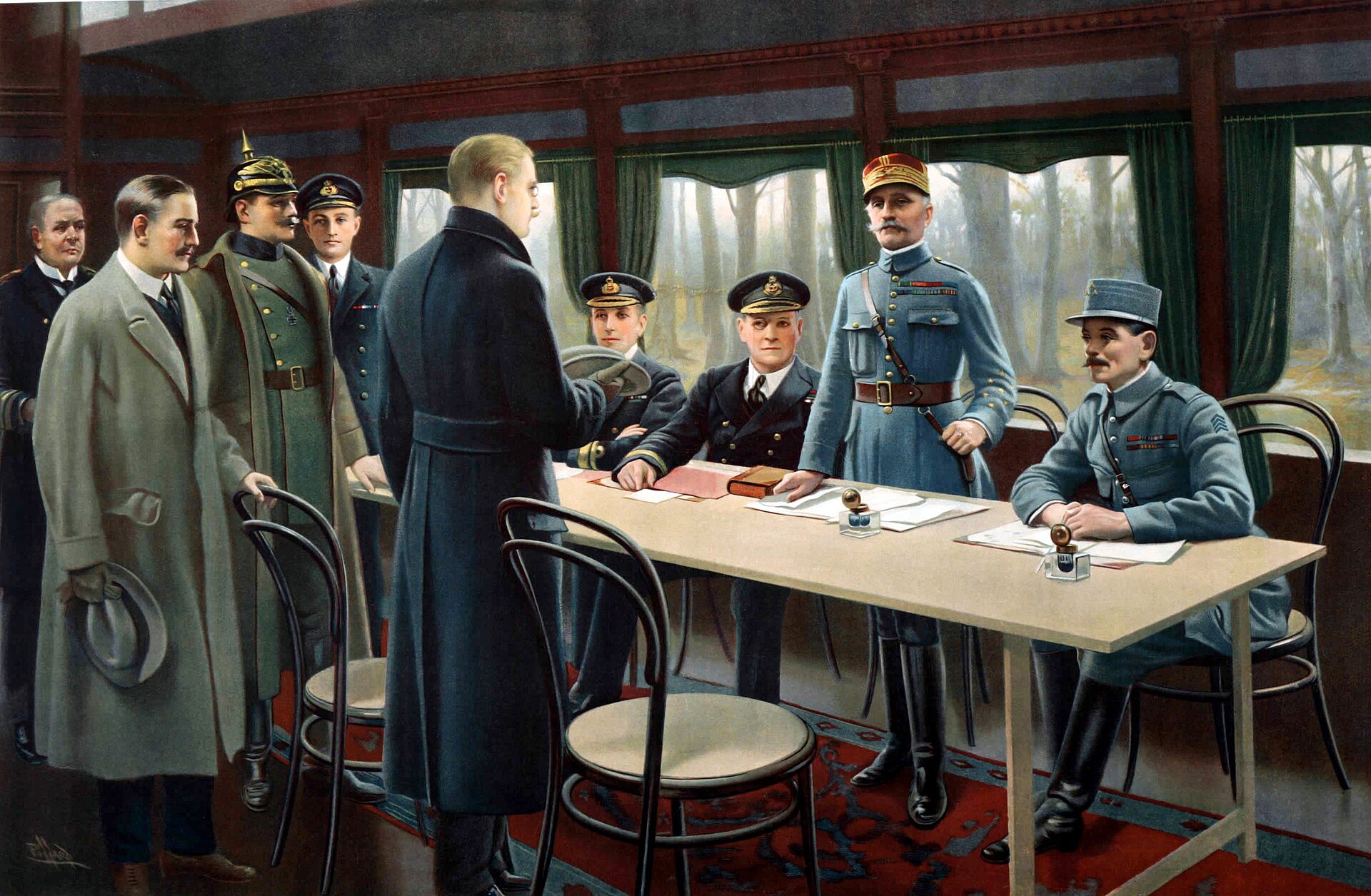
At five o'clock in the morning, inside a railroad car parked among the bare trees of the Compiègne Forest near Rethondes, the document was signed. Marshal Ferdinand Foch, Supreme Commander of the Allied armies, had spent the small hours across the table from the German delegation, hammering out terms that were largely his own drafting. The war that had consumed the world since 1914 was, on paper, over.
Yet the armistice did not take effect the moment ink met paper. Foch and the Allied high command fixed the hour with a strange, almost ceremonial precision: eleven o'clock, on the eleventh day, of the eleventh month. Between five and eleven, six hours stood between the signing and the silence — six hours in which the war, technically, still raged.
Along the Western Front that morning, men who would soon lay down their rifles for good picked them up one more time. Runners and telephone lines carried word of the signing back through headquarters to forward positions, but orders to hold fire until eleven sharp were, in many sectors, obeyed to the letter and no earlier. Commanders on both sides knew peace was coming within hours, and still sent men forward.
The fighting did not pause for the news. Attacks continued, shells fell, and men crossed open ground under machine-gun fire on what everyone now knew would be the last morning of the war. By the time the appointed hour arrived, 2,738 men had died since dawn — killed on a day when the outcome of the war had already been settled on paper hours before.
At eleven o'clock precisely, Paris time, the guns stopped. Along a front that stretched for hundreds of miles, the roar that had defined four years of existence for millions of soldiers simply ceased. Witnesses on that front would remember the sound of silence itself — an absence so total it felt, for a moment, unnatural.
More from History

The Morning Bingham Climbed to Machu Picchu
On a cold July morning in 1911, an American historian scrambled up a jungle-choked ridge above the Urubamba River — and by afternoon, a forgotten Inca citadel would belong to the world.

The Last Half-Hour of the Hindenburg
It was already half a day late, and the public had been told to keep away — but at seven o'clock that evening, the Hindenburg finally turned toward its mooring mast for the last time.

The Last Hours of Pompeii: August 24, 79 AD
By noon it was just another hot day beside the Bay of Naples. By evening, an entire mountain had rewritten the fate of thousands.

The Longest Walk: Mandela's Last Steps to Freedom
After 27 years behind bars, a 71-year-old man had to relearn how to walk out of a prison gate — into a waiting world of cameras, crowds, and a country holding its breath.

The Document Lincoln Signed on the First Day of 1863
On a single January morning, a president's pen would change the legal status of more than three million people — if the ink held and his hand did not shake.

The Day of the Dream: August 28, 1963
Two hundred and fifty thousand people converged on the National Mall that morning — by nightfall, one voice from the steps of the Lincoln Memorial would echo for generations.