The Empire the Bible Remembered but History Forgot
For centuries, the only trace of the Hittites was a handful of lines in the Hebrew Bible — until buried tablets in central Anatolia proved they had once rivaled Egypt itself.
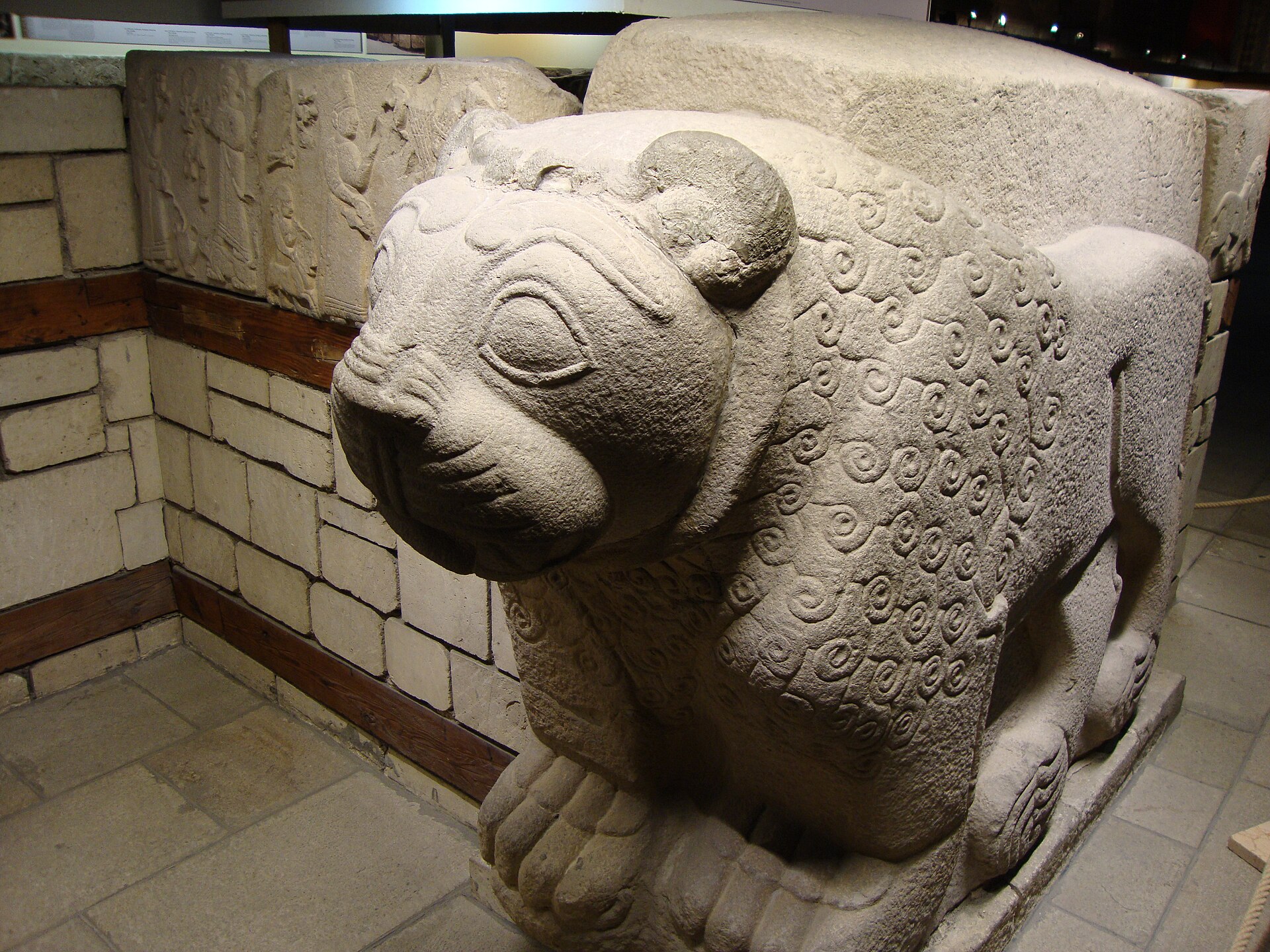
Long before archaeologists ever set spade to soil in central Anatolia, the Hittites existed only as a name in scripture. The Hebrew Bible spoke of Hittites who traded cedar, chariots, and horses with Israelites, who counted Uriah the Hittite among King David's mighty men, and who were friends and allies to Abraham in the Book of Genesis. To 19th-century scholars like Francis William Newman, this was a minor people — 'no Hittite king could have compared in power to the King of Judah,' he wrote, reflecting the era's dismissive view.
That skepticism collapsed as excavations in Anatolia revealed something far larger than a footnote nation. Archibald Sayce, studying the growing evidence, argued the Anatolian civilization deserved comparison not to Judah but to the divided Kingdom of Egypt — 'infinitely more powerful,' he insisted. The first hint of this lost world came in 1834, when French scholar Charles Texier stumbled upon ruins he could not yet identify as Hittite. Decades later, tablets unearthed at the karum of Kanesh, the site now called Kültepe, recorded trade between Assyrian merchants and a mysterious 'land of Hatti,' with names that were neither Hattic nor Assyrian, but distinctly Indo-European.
The people behind these tablets had likely originated from beyond the Black Sea, settling in north-central Anatolia in the early second millennium BC. There they built a sequence of polities: the kingdom of Kussara before 1750 BC, the city-state of Kanesh, or Neša, flourishing between roughly 1750 and 1650 BC, and eventually an empire centered on the capital Hattusa around 1650 BC. It was a king named Labarna who renamed himself Hattusili I — 'the man of Hattusa' — and moved the seat of power there, ending two centuries in which his people had simply called themselves Neshites, after Nesha.
The name 'Hittite' itself is something of a historical accident. The people called their land Hattusa, or Hatti in Akkadian, inheriting the name from the Hattians, an earlier population who spoke an unrelated language called Hattic. In their own tongue, nešili, they called themselves 'the people of the language of Nesa.' It was 19th-century archaeologists, noticing the biblical name, who first linked Hattusa's people to the Hittites of scripture — a connection that reshaped how the ancient Near East was understood.
At its height in the mid-14th century BC, under Šuppiluliuma I, the Hittite Empire commanded most of Anatolia along with parts of northern Syria and Upper Mesopotamia, standing shoulder to shoulder with the Hurri-Mitanni and Assyrian empires as one of the era's great powers. Between the 15th and 13th centuries BC, Hittite kings clashed with the New Kingdom of Egypt, the Middle Assyrian Empire, and Mitanni for dominance over the Near East, wielding chariots as one of their military strengths.
More from History

The Morning Bingham Climbed to Machu Picchu
On a cold July morning in 1911, an American historian scrambled up a jungle-choked ridge above the Urubamba River — and by afternoon, a forgotten Inca citadel would belong to the world.

The Last Half-Hour of the Hindenburg
It was already half a day late, and the public had been told to keep away — but at seven o'clock that evening, the Hindenburg finally turned toward its mooring mast for the last time.

The Last Hours of Pompeii: August 24, 79 AD
By noon it was just another hot day beside the Bay of Naples. By evening, an entire mountain had rewritten the fate of thousands.

The Longest Walk: Mandela's Last Steps to Freedom
After 27 years behind bars, a 71-year-old man had to relearn how to walk out of a prison gate — into a waiting world of cameras, crowds, and a country holding its breath.

The Document Lincoln Signed on the First Day of 1863
On a single January morning, a president's pen would change the legal status of more than three million people — if the ink held and his hand did not shake.

The Day of the Dream: August 28, 1963
Two hundred and fifty thousand people converged on the National Mall that morning — by nightfall, one voice from the steps of the Lincoln Memorial would echo for generations.