The Fall of Constantinople
In the spring of 1453, a city that had stood for over a thousand years fell to the Ottoman Empire. The walls that had protected Constantinople for centuries were breached, and the Byzantine Empire, which had endured for more than a millennium, was no more.
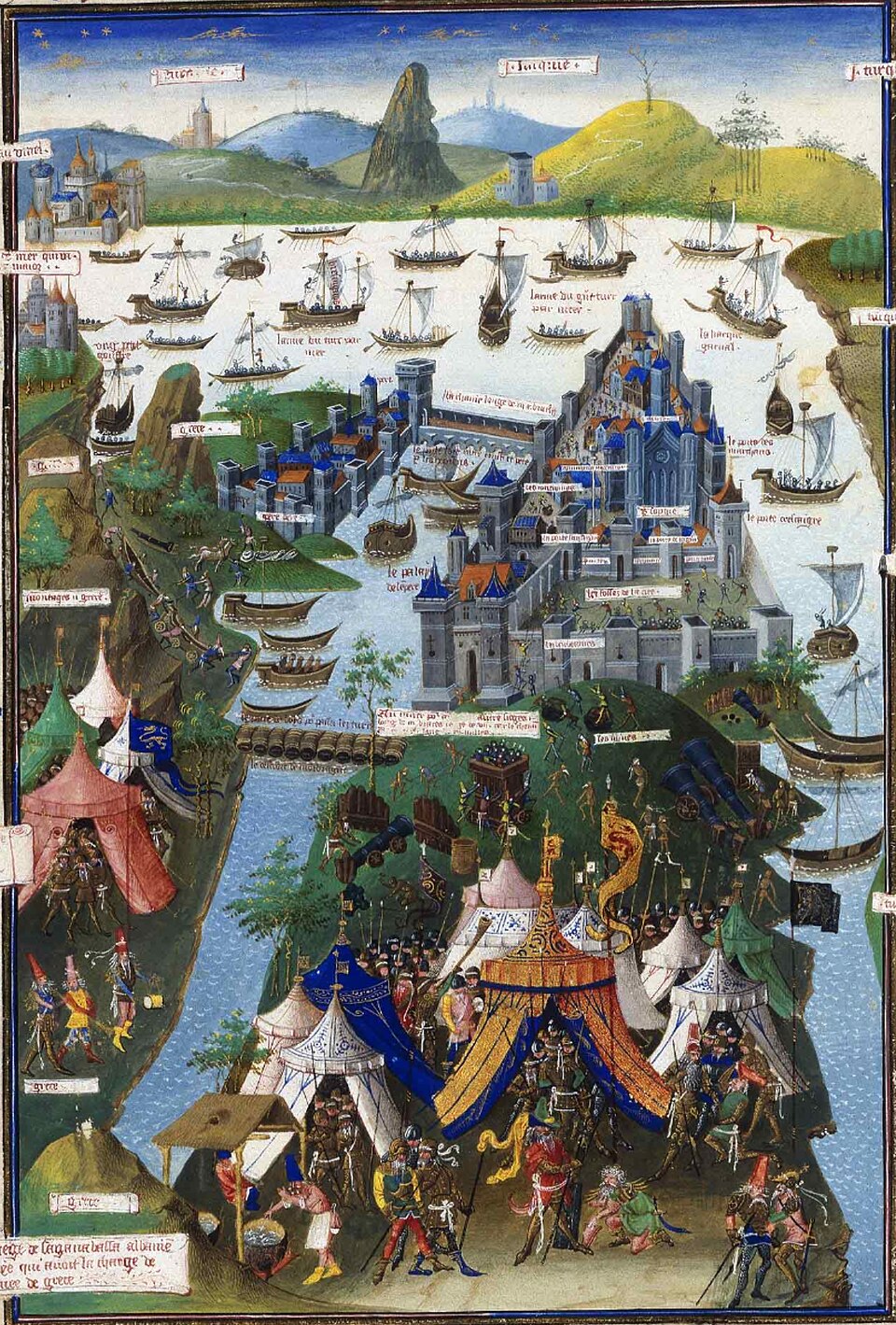
Constantinople, the capital of the Byzantine Empire, was captured by the Ottoman Empire on 29 May 1453. The city had withstood numerous sieges, but this time, the Ottomans, led by Sultan Mehmed II, had a plan. The siege had begun on 6 April, and the defenders, under Emperor Constantine XI, were vastly outnumbered. Mehmed’s forces, equipped with powerful cannons, broke through the legendary Theodosian walls, which had protected the city for 800 years.
The Ottomans had spent months preparing for the siege. Mehmed II, just 19 years old when he took the throne, had already begun constructing a second fortress on the European side of the Bosphorus. This fortress, Rumeli Hisarı, was strategically placed to control sea traffic and defend against attacks from the north. The Ottomans also fortified their positions and ensured their supply lines were secure, ready for the long battle ahead.
As the siege progressed, the Byzantine Empire faced a dire situation. The city had been weakened by years of war, economic decline, and the Black Death. By 1453, Constantinople was little more than a series of walled villages surrounded by vast fields. The empire had shrunk to a few square kilometers outside the city, with only the Princes' Islands and the Peloponnese remaining under its control. The Empire of Trebizond, a successor state from the Fourth Crusade, also existed on the Black Sea coast.
Mehmed II had not only focused on military preparations but also on securing alliances and resources. He had stationed a large garrison in the Peloponnese to prevent aid from reaching Constantine XI. The Ottomans also prepared the roads from Adrianople to Constantinople, ensuring that their massive cannons could be transported efficiently. The city’s defenders, however, were overwhelmed by the sheer scale of the Ottoman forces and the power of their weaponry.
European support for the Byzantines was limited and fraught with tension. The Byzantine Emperor Constantine XI had turned to the West for help, but the centuries-old divide between the Eastern and Western Churches made cooperation difficult. The Pope had previously agreed to a union with the Eastern Church, but this had been met with strong resistance in Constantinople. The city’s population was divided, with many fearing the loss of their religious and cultural identity.
More from History

The Morning Bingham Climbed to Machu Picchu
On a cold July morning in 1911, an American historian scrambled up a jungle-choked ridge above the Urubamba River — and by afternoon, a forgotten Inca citadel would belong to the world.

The Last Half-Hour of the Hindenburg
It was already half a day late, and the public had been told to keep away — but at seven o'clock that evening, the Hindenburg finally turned toward its mooring mast for the last time.

The Last Hours of Pompeii: August 24, 79 AD
By noon it was just another hot day beside the Bay of Naples. By evening, an entire mountain had rewritten the fate of thousands.

The Longest Walk: Mandela's Last Steps to Freedom
After 27 years behind bars, a 71-year-old man had to relearn how to walk out of a prison gate — into a waiting world of cameras, crowds, and a country holding its breath.

The Document Lincoln Signed on the First Day of 1863
On a single January morning, a president's pen would change the legal status of more than three million people — if the ink held and his hand did not shake.

The Day of the Dream: August 28, 1963
Two hundred and fifty thousand people converged on the National Mall that morning — by nightfall, one voice from the steps of the Lincoln Memorial would echo for generations.