The Fall of the Soviet Empire
In the final days of the 20th century, the world watched in awe as a superpower crumbled. The Soviet Union, once an unstoppable force, disintegrated in a matter of months, leaving behind a legacy of both triumph and tragedy.
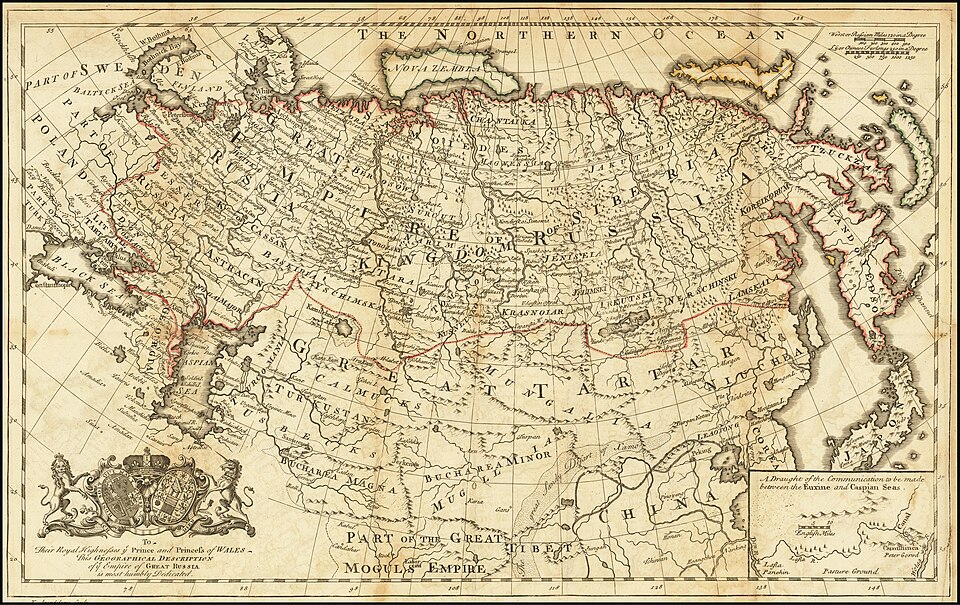
The Soviet Union's dissolution was the result of a slow but inevitable unraveling. For years, the country faced economic stagnation, an unsustainable arms race, and internal ethnic tensions. By the late 1980s, these issues had reached a breaking point. Mikhail Gorbachev, the reformist leader, tried to modernize the system through glasnost and perestroika, but his efforts only accelerated the collapse. The reforms, meant to revitalize the state, instead opened the floodgates for nationalist movements and political dissent.
Gorbachev's election as General Secretary in March 1985 marked the beginning of a new era. At 54, he was the youngest member of the Politburo and brought a fresh perspective to Soviet leadership. His goal was to revive the stagnating economy, but he quickly realized that political reform was essential. He began reshaping the leadership, bringing proteges such as Yegor Ligachev and Nikolai Ryzhkov into the Politburo and promoting Boris Yeltsin, who soon became head of the Moscow party organization. This shift laid the groundwork for a more open society, but also set the stage for internal conflict.
The freedom of speech that Gorbachev's reforms brought allowed nationalist movements to flourish. Ethnic groups within the Soviet Union, long suppressed, began to assert their identities. In Estonia, the first republic to declare state sovereignty in November 1988, the push for self-rule grew stronger. Meanwhile, the return of Andrei Sakharov, the most prominent Soviet dissident, from internal exile in December 1986—after a personal telephone call from Gorbachev—symbolized a shift in the political climate. His presence in Moscow signaled that the regime was becoming more tolerant of dissent.
Gorbachev's push for democratization led to significant changes. In 1989 the Communist Party introduced limited competitive elections to a new legislature, the Congress of People's Deputies, though it remained the dominant political force. Boris Yeltsin, who had been fired from his Moscow post after criticizing the slow pace of reform, rose in popularity as an anti-establishment figure. News of his 'secret speech' spread quickly, marking the start of a bitter rivalry with Gorbachev. This conflict would play a large role in the Soviet Union's final days.
The protests in the Baltic states were among the most visible signs of the growing unrest. In Riga, in December 1986, 300 Latvian youths marched through the streets shouting 'Soviet Russia out! Free Latvia!' before being confronted by security forces. In Kazakhstan, the Jeltoqsan riots erupted after Gorbachev dismissed Dinmukhamed Kunaev, sparking anger and unrest. These events underscored the deepening divide between the central government and the republics.
More from History

The Morning Bingham Climbed to Machu Picchu
On a cold July morning in 1911, an American historian scrambled up a jungle-choked ridge above the Urubamba River — and by afternoon, a forgotten Inca citadel would belong to the world.

The Last Half-Hour of the Hindenburg
It was already half a day late, and the public had been told to keep away — but at seven o'clock that evening, the Hindenburg finally turned toward its mooring mast for the last time.

The Last Hours of Pompeii: August 24, 79 AD
By noon it was just another hot day beside the Bay of Naples. By evening, an entire mountain had rewritten the fate of thousands.

The Longest Walk: Mandela's Last Steps to Freedom
After 27 years behind bars, a 71-year-old man had to relearn how to walk out of a prison gate — into a waiting world of cameras, crowds, and a country holding its breath.

The Document Lincoln Signed on the First Day of 1863
On a single January morning, a president's pen would change the legal status of more than three million people — if the ink held and his hand did not shake.

The Day of the Dream: August 28, 1963
Two hundred and fifty thousand people converged on the National Mall that morning — by nightfall, one voice from the steps of the Lincoln Memorial would echo for generations.