The Long Siege on the Tigris
For five months, a river bend held thousands of men hostage between hunger and hope — and when the white flag finally rose, it marked one of Britain's worst military humiliations of the Great War.
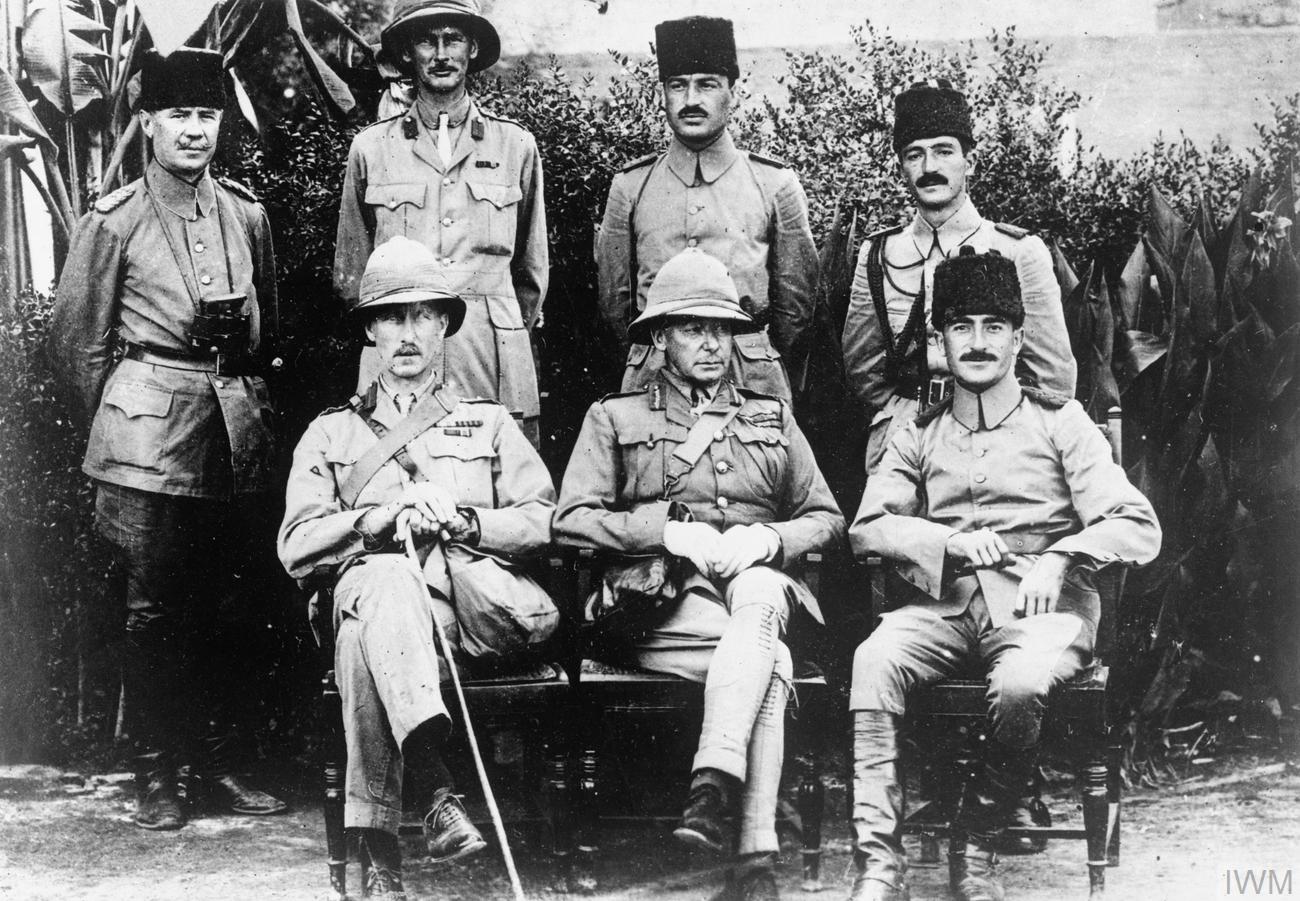
In early December 1915, Major-General Charles Townshend led the battered 6th (Poona) Division of the Indian Army into the town of Kut, 160 kilometers south of Baghdad. His men, numbering around 11,000 plus cavalry, had just retreated from Ctesiphon, and Kut's position within a long loop of the Tigris River offered a defensible refuge. Townshend chose to hold rather than continue south toward Basra, even though his supply lines stretched dangerously far.
The pursuing Ottoman forces, under Halil Pasha, arrived on 7 December 1915. Townshend sent his cavalry escaping south under Lieutenant-Colonel Gerard Leachman before the noose closed. Overall command of the siege fell to the respected German general Baron von der Goltz, who had spent twelve years modernizing the Ottoman army between 1883 and 1895. After three failed December assaults, Goltz built siege fortifications around Kut and defensive lines downriver to block any relief force coming from Basra.
Inside Kut, Townshend reported — inaccurately — that only one month of food remained, though he actually had supplies for over four months at reduced rations. This triggered a hasty relief effort. General Sir John Nixon had already requested transports from London, but confused wartime bureaucracy, a reorganizing War Office, and slow deliberations in the Cabinet delayed everything critically.
The first relief expedition, some 19,000 men under Lieutenant-General Aylmer, pushed up the Tigris from Ali Gharbi in January 1916. At the Battle of Sheikh Sa'ad on 6–9 January, British forces under Major-General Younghusband and then Aylmer fought hard, eventually forcing an Ottoman withdrawal, though at a cost of some 4,262 killed and wounded. The Ottomans fell back roughly sixteen kilometers to a tributary called the Wadi, where Aylmer attacked again on 13 January, at a cost of 1,600 more casualties.
The Ottomans then held a position at Hanna, between the Tigris and the Suwaikiya marsh. On 21 January, British troops assaulted this chokepoint and were repulsed with 2,741 casualties — a defeat that sealed Kut's fate. In early March, Aylmer tried once more at the Sabis (Dujaila) position, attacking the Ottoman 13th Corps under Colonel Ali İhsan Bey, but lost roughly 3,500 men and was relieved of command, replaced by General Gorringe.
More from History

The Morning Bingham Climbed to Machu Picchu
On a cold July morning in 1911, an American historian scrambled up a jungle-choked ridge above the Urubamba River — and by afternoon, a forgotten Inca citadel would belong to the world.

The Last Half-Hour of the Hindenburg
It was already half a day late, and the public had been told to keep away — but at seven o'clock that evening, the Hindenburg finally turned toward its mooring mast for the last time.

The Last Hours of Pompeii: August 24, 79 AD
By noon it was just another hot day beside the Bay of Naples. By evening, an entire mountain had rewritten the fate of thousands.

The Longest Walk: Mandela's Last Steps to Freedom
After 27 years behind bars, a 71-year-old man had to relearn how to walk out of a prison gate — into a waiting world of cameras, crowds, and a country holding its breath.

The Document Lincoln Signed on the First Day of 1863
On a single January morning, a president's pen would change the legal status of more than three million people — if the ink held and his hand did not shake.

The Day of the Dream: August 28, 1963
Two hundred and fifty thousand people converged on the National Mall that morning — by nightfall, one voice from the steps of the Lincoln Memorial would echo for generations.