The Longest Day: Twenty Hours on the Sea of Tranquility
For a few hours on July 20, 1969, two men on a dusty grey plain were the only humans not standing on Earth. Here is how that single day unfolded, minute by minute.
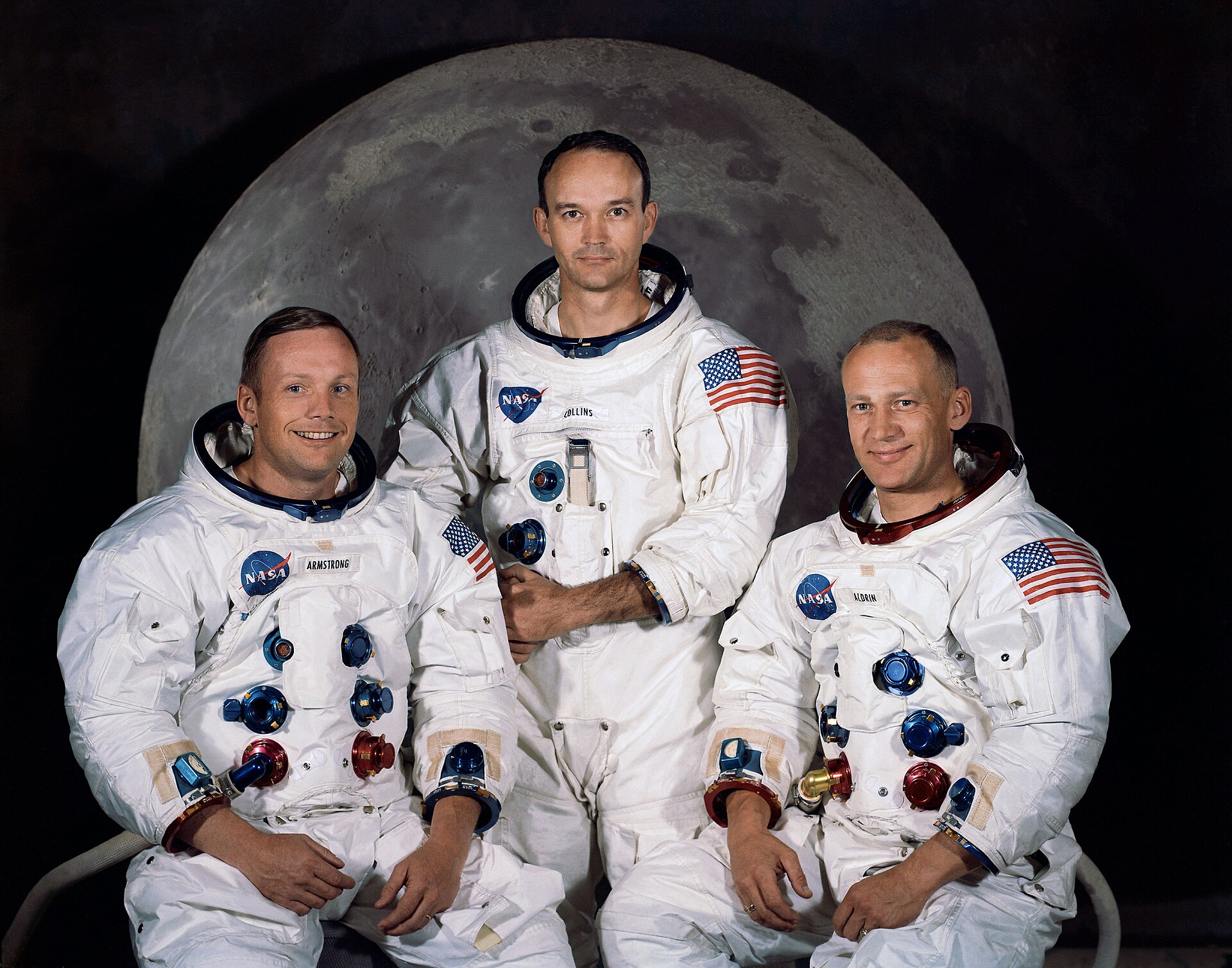
By July 20, Apollo 11 had already been flying for four days, its three-part spacecraft — command module Columbia, service module, and lunar module Eagle — closing in on the Moon after launching from Kennedy Space Center on July 16 atop a Saturn V. That morning, Neil Armstrong and Buzz Aldrin crawled into the cramped Eagle, sealed its hatch, and separated from Columbia, leaving Michael Collins alone in lunar orbit to keep watch.
The descent to the surface was tense and imperfect. Eagle's computer flashed program alarms as it neared the ground, and Armstrong, watching the automatic targeting carry them toward a boulder-strewn crater, took semi-manual control to find smoother ground. At 20:17 UTC, with only seconds of fuel to spare, the Eagle settled onto the Sea of Tranquility, the Mare Tranquillitatis, and the engine shut down.
What followed was not immediate action but hours of methodical preparation. Armstrong and Aldrin ran through checklists, guarded against the possibility of an emergency liftoff, and rested inside the tiny cabin — though sleep hardly came. Around six hours after touchdown, they began the slow process of donning their pressure suits and depressurizing the module for the moment the world was waiting for.
At 01:56 UTC on July 21 — 20:18 EEZ on July 20 back in Turkey's evening — Neil Armstrong stepped off Eagle's ladder onto the lunar surface, becoming the first human being to stand on another world. He spoke the words that would echo through the century: 'That's one small step for [a] man, one giant leap for mankind.' Nineteen minutes later, Buzz Aldrin followed him down.
For roughly two and a half hours, the two astronauts worked the grey plain together. They planted an American flag, spoke by radio with President Richard Nixon from the White House, deployed scientific instruments meant to keep transmitting long after they left, and collected 21.5 kilograms of lunar rock and soil — samples that would later reveal three minerals never before recognized on Earth.
More from History

The Morning Bingham Climbed to Machu Picchu
On a cold July morning in 1911, an American historian scrambled up a jungle-choked ridge above the Urubamba River — and by afternoon, a forgotten Inca citadel would belong to the world.

The Last Half-Hour of the Hindenburg
It was already half a day late, and the public had been told to keep away — but at seven o'clock that evening, the Hindenburg finally turned toward its mooring mast for the last time.

The Last Hours of Pompeii: August 24, 79 AD
By noon it was just another hot day beside the Bay of Naples. By evening, an entire mountain had rewritten the fate of thousands.

The Longest Walk: Mandela's Last Steps to Freedom
After 27 years behind bars, a 71-year-old man had to relearn how to walk out of a prison gate — into a waiting world of cameras, crowds, and a country holding its breath.

The Document Lincoln Signed on the First Day of 1863
On a single January morning, a president's pen would change the legal status of more than three million people — if the ink held and his hand did not shake.

The Day of the Dream: August 28, 1963
Two hundred and fifty thousand people converged on the National Mall that morning — by nightfall, one voice from the steps of the Lincoln Memorial would echo for generations.