The Longest Sunday: Waterloo, 18 June 1815
Rain had turned the fields to mud before dawn, and a French emperor decided to wait — a delay that would decide an empire's fate before nightfall.
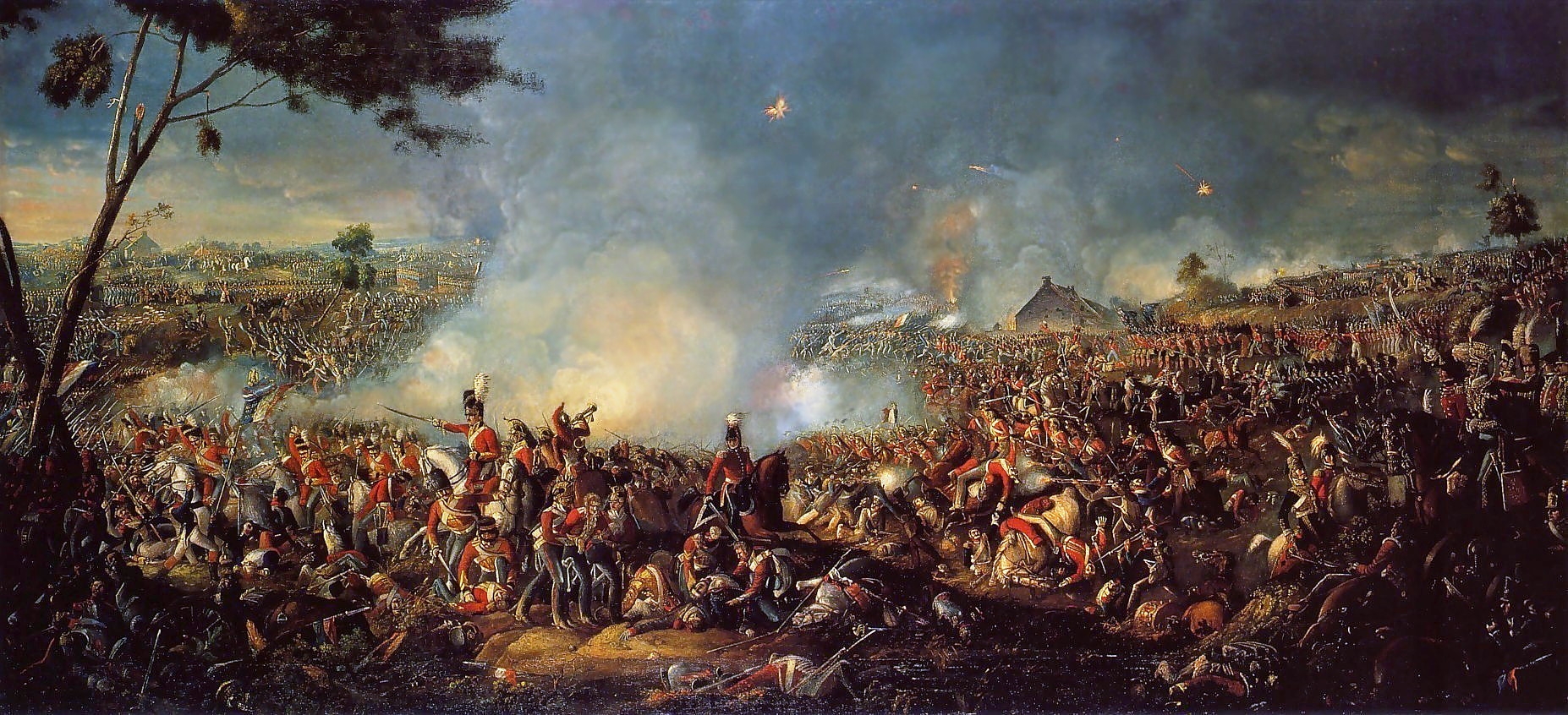
Sunday, 18 June 1815 began not with cannon fire but with rain. Heavy downpours through the night had soaked the ground near the village of Waterloo, south of Brussels, turning the rolling farmland into a quagmire. Napoleon, commanding the French Imperial Army, chose to delay his attack until the ground firmed enough for his artillery and cavalry to manoeuvre. That single decision, born of mud, would push the battle later into the day than he wanted.
Across the shallow valley, the Duke of Wellington had positioned a British-led coalition force — troops from the United Kingdom, the Netherlands, Hanover, Brunswick, and Nassau — along the Mont-Saint-Jean escarpment, straddling the Brussels road. Wellington had withdrawn there the previous day, moving in parallel with the Prussian army under Field Marshal Blücher, which had pulled back from Ligny after being struck by Napoleon two days earlier. Wellington's decision to stand and fight here rested on one crucial piece of intelligence: that Blücher's Prussians, though battered, could still march to join him.
By late morning the ground had dried enough. Napoleon opened the battle, known in France as Mont-Saint-Jean and in Prussia as La Belle Alliance after a roadside inn, with an assault meant to draw Wellington's reserves and break his line before Prussian help could arrive. The French had sent a third of their strength off to chase the retreating Prussians, a force that instead became locked in a separate fight at Wavre and never reached the main battlefield that day.d
Throughout the afternoon, wave after wave of French infantry and cavalry threw themselves against the coalition line on the escarpment. Wellington's men held their ground under repeated attacks, absorbing punishing losses hour after hour as the two sides fought within sight of the farmhouses and hollow roads that would soon become infamous.
As the afternoon wore on, the first Prussian columns began to appear on the horizon, working their way toward the French right flank. Napoleon had gambled that his detached force would keep them away; instead, roughly 50,000 Prussian troops arrived in stages and struck the French flank, forcing Napoleon to divert men who were desperately needed against Wellington's centre.
More from History

The Morning Bingham Climbed to Machu Picchu
On a cold July morning in 1911, an American historian scrambled up a jungle-choked ridge above the Urubamba River — and by afternoon, a forgotten Inca citadel would belong to the world.

The Last Half-Hour of the Hindenburg
It was already half a day late, and the public had been told to keep away — but at seven o'clock that evening, the Hindenburg finally turned toward its mooring mast for the last time.

The Last Hours of Pompeii: August 24, 79 AD
By noon it was just another hot day beside the Bay of Naples. By evening, an entire mountain had rewritten the fate of thousands.

The Longest Walk: Mandela's Last Steps to Freedom
After 27 years behind bars, a 71-year-old man had to relearn how to walk out of a prison gate — into a waiting world of cameras, crowds, and a country holding its breath.

The Document Lincoln Signed on the First Day of 1863
On a single January morning, a president's pen would change the legal status of more than three million people — if the ink held and his hand did not shake.

The Day of the Dream: August 28, 1963
Two hundred and fifty thousand people converged on the National Mall that morning — by nightfall, one voice from the steps of the Lincoln Memorial would echo for generations.