The Man Who Stopped a Column of Tanks
Just after noon on a Beijing avenue still smoking from the night before, one man carrying shopping bags walked into the path of an army — and the army stopped.
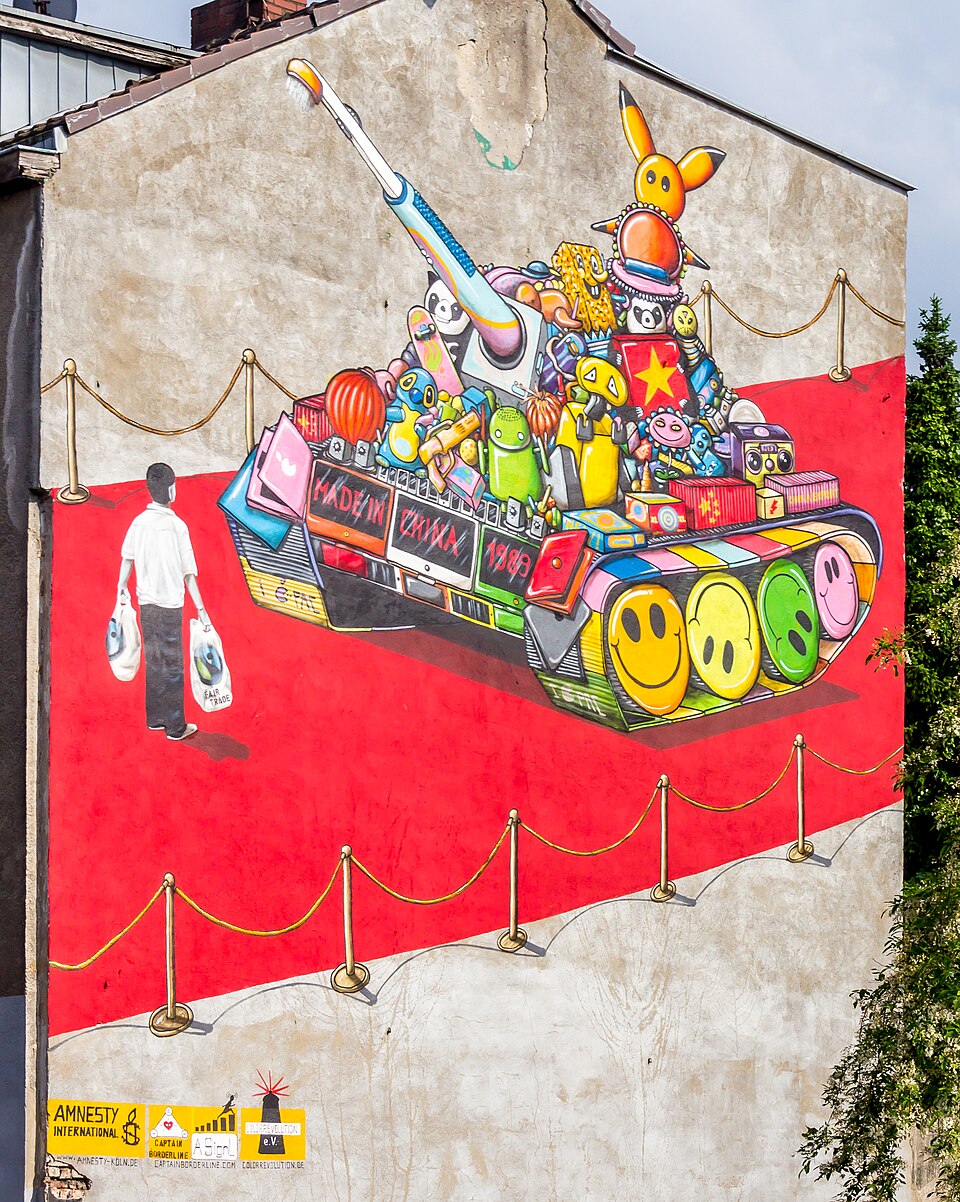
By the morning of June 5, 1989, Tiananmen Square had already fallen silent. The night before, Chinese troops had forcibly cleared six weeks of pro-democracy demonstrations, and hundreds had died in the streets around the square. Now, along the wide expanse of Chang'an Avenue at its northeast edge, a column of Type 59 tanks rumbled eastward, retreating from the cleared square, their engines the only sound left where crowds had roared for weeks.
Stuart Franklin, a photographer on assignment for Time, watched from a balcony at the Beijing Hotel. He later recalled that shots had been fired earlier that morning, and that the tanks carried on down the road away from Tiananmen — until they were blocked by a lone protester.
Just after noon, that protester stepped into the center of the avenue. He wore a plain white shirt and black trousers and carried two shopping bags, as if he had simply been walking home. He stood directly in front of the lead tank. When it slowed and stopped, he lifted one of his bags and gestured at it, as though addressing the machine itself.
The tank tried to steer around him. He shifted his position and blocked it again. It tried once more; he moved again, refusing to let it pass. After several failed attempts, the lead tank simply shut off its engine. The armored vehicles behind it did the same. For a moment, the avenue that had carried an army through a broken city fell completely still, one man and a column of steel locked in a silent standoff.
More from History

The Morning Bingham Climbed to Machu Picchu
On a cold July morning in 1911, an American historian scrambled up a jungle-choked ridge above the Urubamba River — and by afternoon, a forgotten Inca citadel would belong to the world.

The Last Half-Hour of the Hindenburg
It was already half a day late, and the public had been told to keep away — but at seven o'clock that evening, the Hindenburg finally turned toward its mooring mast for the last time.

The Last Hours of Pompeii: August 24, 79 AD
By noon it was just another hot day beside the Bay of Naples. By evening, an entire mountain had rewritten the fate of thousands.

The Longest Walk: Mandela's Last Steps to Freedom
After 27 years behind bars, a 71-year-old man had to relearn how to walk out of a prison gate — into a waiting world of cameras, crowds, and a country holding its breath.

The Document Lincoln Signed on the First Day of 1863
On a single January morning, a president's pen would change the legal status of more than three million people — if the ink held and his hand did not shake.

The Day of the Dream: August 28, 1963
Two hundred and fifty thousand people converged on the National Mall that morning — by nightfall, one voice from the steps of the Lincoln Memorial would echo for generations.