The Myth of the Immobilised Knight
Picture a knight so entombed in steel he needs a crane to mount his horse. It never happened — and the truth is almost the opposite.
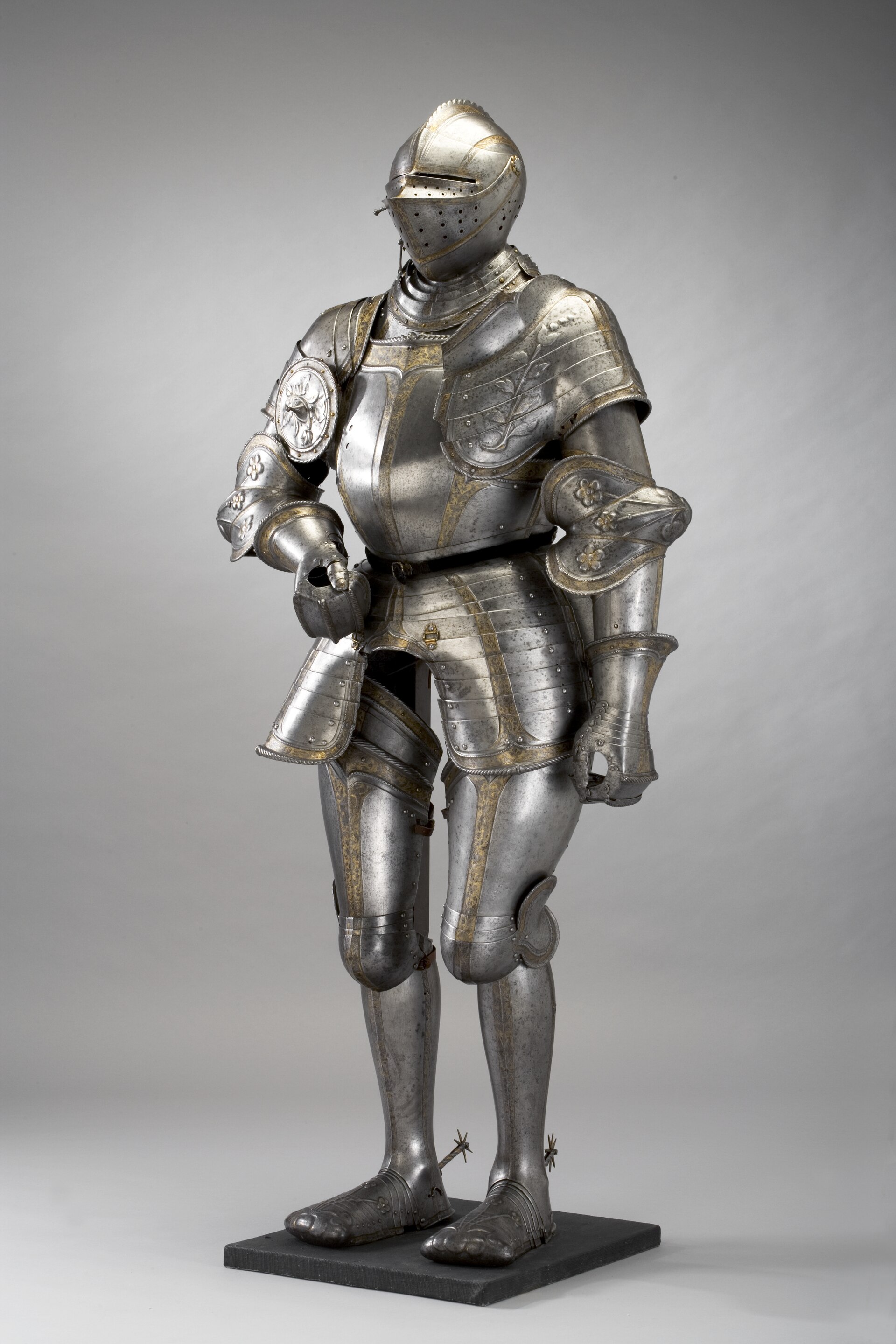
A stubborn image haunts popular imagination: the medieval knight, sealed inside plate armour so heavy and rigid that he could barely walk, let alone fight, and would supposedly lie helpless as a turtle if knocked to the ground. This picture of the clanking, immobilised warrior has become shorthand for medieval life itself — clumsy, brutal, and absurd by modern standards.
But this is, plainly, a widely held misconception. Full plate armour, the kind that developed in Europe during the Late Middle Ages out of earlier coats of plates worn over mail, was not the crushing burden of legend. According to what is actually known about the armour, a complete suit was lighter than the oxygen gear worn by a modern firefighter, and — crucially — its weight was distributed evenly across the body rather than slung entirely on the shoulders or waist.
That distribution mattered enormously. Armourers did not simply hammer out a rigid metal shell; they developed real skill in articulating lames, the individual overlapping plates, so that joints at the elbow, shoulder, and knee could still bend. Suits were fitted to individual wearers much like a tailor fits a garment, especially the expensive, high-quality armour worn by wealthy knights and jousters, as opposed to cheaper mass-produced 'munition armour' worn by common soldiers.
The purpose of all this plate was not decoration or intimidation alone — it was a direct, practical response to the weapons of the era. Plate was highly effective against cutting and slashing blows from swords, offering protection that mail alone could not. It was far more vulnerable to thrusting weapons: long tapering sword points, or pole weapons like the poleaxe, could find gaps and drive through. Arrows from longbows and crossbows could, at close range, pierce plate — the Battle of Visby is cited as an example — though the chronicler Jean Froissart argued that English bodkin-point arrows at the Battle of Poitiers in 1356 were not especially effective against plate, and that successful hits usually exploited its weaker side sections.
This arms race between armour and weapon shaped both. The rise of plate spurred the development of blunt or point-focused weapons — maces, war hammers, and hammer-headed poleaxes — designed to concentrate the force of a blow onto a small area, denting or bruising the wearer through the metal rather than cutting it. Fluted plates, decorative as they were, also stiffened the armour against blows and slashing, though this made them easier for a determined thrust to catch and penetrate.
More from History

The Morning Bingham Climbed to Machu Picchu
On a cold July morning in 1911, an American historian scrambled up a jungle-choked ridge above the Urubamba River — and by afternoon, a forgotten Inca citadel would belong to the world.

The Last Half-Hour of the Hindenburg
It was already half a day late, and the public had been told to keep away — but at seven o'clock that evening, the Hindenburg finally turned toward its mooring mast for the last time.

The Last Hours of Pompeii: August 24, 79 AD
By noon it was just another hot day beside the Bay of Naples. By evening, an entire mountain had rewritten the fate of thousands.

The Longest Walk: Mandela's Last Steps to Freedom
After 27 years behind bars, a 71-year-old man had to relearn how to walk out of a prison gate — into a waiting world of cameras, crowds, and a country holding its breath.

The Document Lincoln Signed on the First Day of 1863
On a single January morning, a president's pen would change the legal status of more than three million people — if the ink held and his hand did not shake.

The Day of the Dream: August 28, 1963
Two hundred and fifty thousand people converged on the National Mall that morning — by nightfall, one voice from the steps of the Lincoln Memorial would echo for generations.