The Myth That Never Was: Medieval Minds and the Round Earth
Everyone 'knows' medieval people thought the world was flat and lived in the Dark Ages. The historical record tells a stranger, more interesting story about where that idea actually came from.
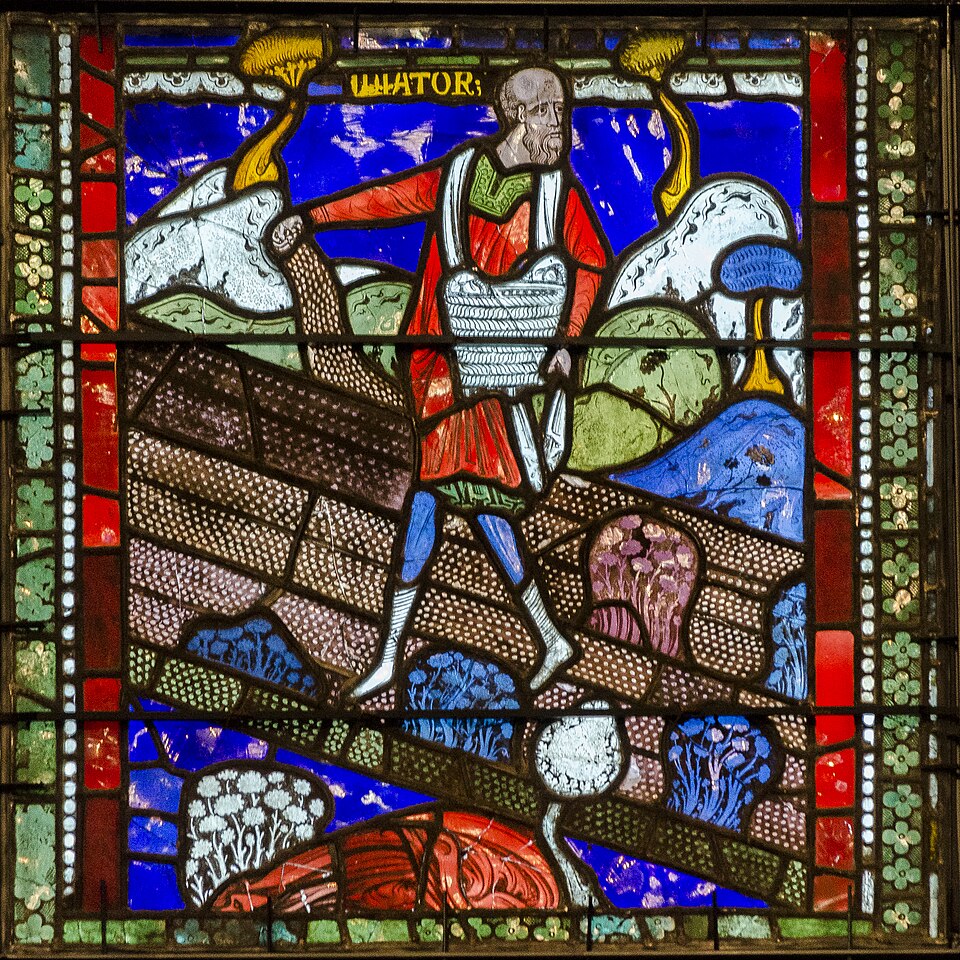
The claim gets repeated in classrooms and casual conversation alike: before Columbus, Europeans believed the Earth was flat, cowering in ignorance until modern science set them straight. It is one of the most durable myths about the medieval period — and the sources gathered here do not actually address or confirm any such belief among medieval people. What they do reveal, however, is something arguably more revealing: how the era got its reputation for darkness in the first place, and it wasn't from medieval people themselves.
The label 'Dark Ages' and the very notion of a benighted, backward Middle Ages trace to a specific origin point: the 1330s, when the Italian humanist and poet Petrarch divided history into two categories. He called the pre-Christian world antiqua, or 'ancient,' and cast it as an age of light. The centuries that followed Rome's fall he treated as darkness by comparison. Petrarch wasn't a medieval person describing his own ignorance — he was a Renaissance-adjacent thinker retrospectively judging the era before him, unfavorably, to elevate classical antiquity.
That framing stuck. Leonardo Bruni became the first historian to use a three-part division of history — ancient, middle, modern — in his 1442 History of the Florentine People, describing a middle period stretching 'between the fall of the Roman Empire and the revival of city life' in the late eleventh and twelfth centuries. The German historian Christoph Cellarius later cemented this tripartite scheme — ancient, medieval, modern — as the standard historical framework in the 17th century. The very term 'Middle Ages' first appears in Latin only in 1469, as media tempestas, or 'middle season.' Medieval people themselves never called their own era 'medieval' or 'dark' — they thought of their own time as 'modern.'
What the record actually shows about the so-called Dark Ages is a period of genuine intellectual and institutional achievement. The High Middle Ages, beginning after 1000, saw population growth fueled by agricultural innovation and a warming climate that boosted crop yields. Universities were founded. Scholasticism — a philosophical tradition explicitly dedicated to joining faith with reason, not superstition — flourished. Thomas Aquinas developed sophisticated theology; Dante and Chaucer wrote enduring poetry; Giotto painted; Marco Polo traveled as far as Asia; and cathedrals like Chartres rose in intricate Gothic stonework requiring advanced engineering knowledge.
Even in the empire's decline, learning didn't vanish — it relocated and persisted. The Byzantine Empire, the direct continuation of Rome, preserved its own law code, the Corpus Juris Civilis, which was rediscovered in Northern Italy in the 11th century, feeding directly into the era's intellectual revival. Meanwhile, in the Islamic world adjoining Europe, the sources note that from the mid-8th century to the late 15th century, Islamic civilization led the world in science, technology, art, and culture during what's remembered as its Golden Age — hardly evidence of a universally dark or backward epoch.
More from History

The Morning Bingham Climbed to Machu Picchu
On a cold July morning in 1911, an American historian scrambled up a jungle-choked ridge above the Urubamba River — and by afternoon, a forgotten Inca citadel would belong to the world.

The Last Half-Hour of the Hindenburg
It was already half a day late, and the public had been told to keep away — but at seven o'clock that evening, the Hindenburg finally turned toward its mooring mast for the last time.

The Last Hours of Pompeii: August 24, 79 AD
By noon it was just another hot day beside the Bay of Naples. By evening, an entire mountain had rewritten the fate of thousands.

The Longest Walk: Mandela's Last Steps to Freedom
After 27 years behind bars, a 71-year-old man had to relearn how to walk out of a prison gate — into a waiting world of cameras, crowds, and a country holding its breath.

The Document Lincoln Signed on the First Day of 1863
On a single January morning, a president's pen would change the legal status of more than three million people — if the ink held and his hand did not shake.

The Day of the Dream: August 28, 1963
Two hundred and fifty thousand people converged on the National Mall that morning — by nightfall, one voice from the steps of the Lincoln Memorial would echo for generations.