The Night Reactor 4 Stopped Obeying
By midnight it was just a routine safety test, delayed and slightly behind schedule. By 1:24 a.m., it was the worst nuclear accident in history.
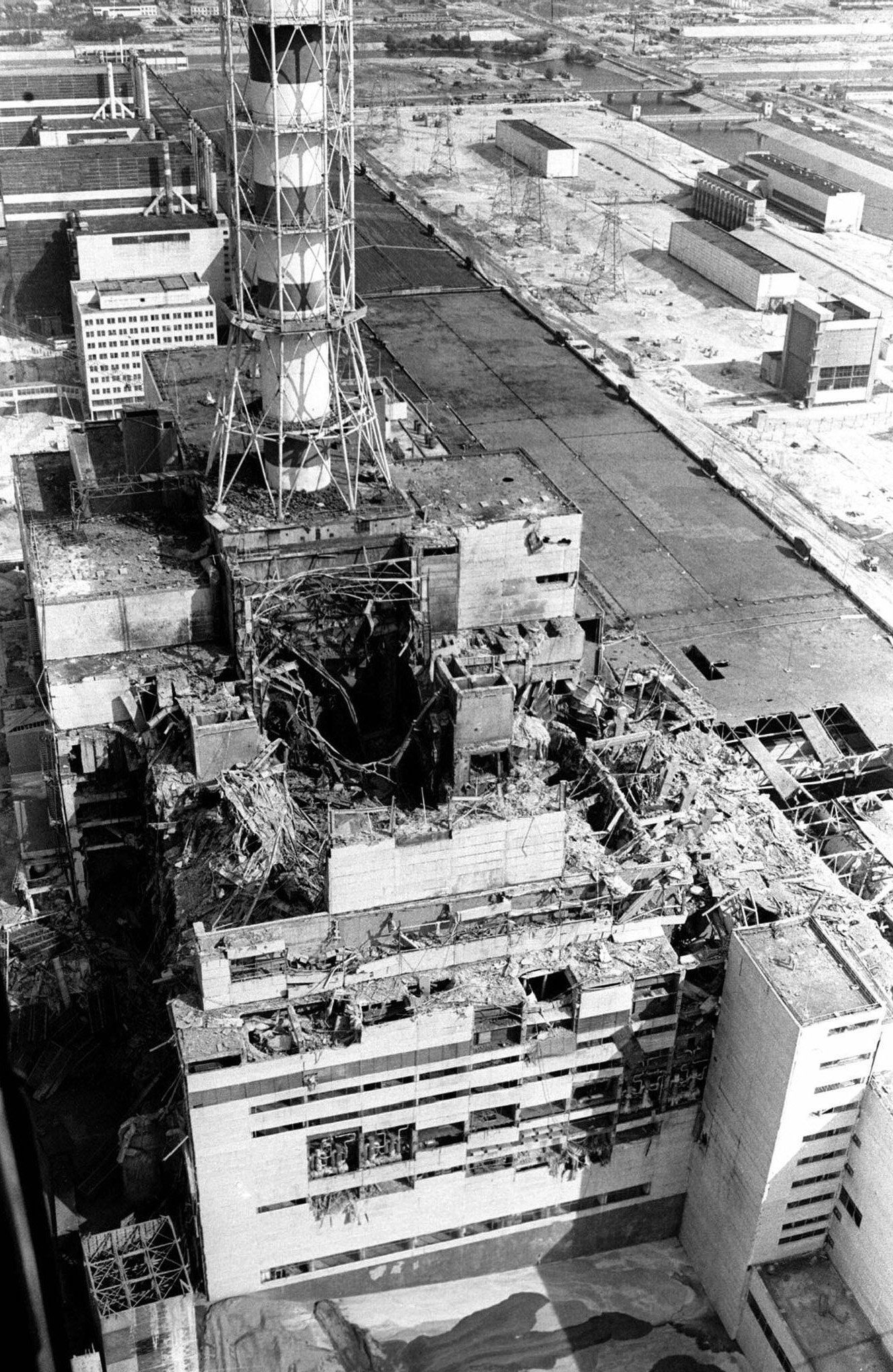
Saturday, 26 April 1986, began ordinarily at the Chernobyl Nuclear Power Plant near Pripyat, in the Ukrainian SSR. Reactor No. 4, an RBMK design, had been running at full power, 3,200 megawatts, for weeks. That morning, engineers began preparations for a test that had already failed three times before: could the reactor's own spinning turbine generate enough electricity to run emergency cooling pumps during a total power blackout, in the gap before backup diesel generators kicked in?
Around ten hours before the test, operators began lowering reactor power from 3,200 MW toward the 700–1,000 MW range needed for the experiment. But the process bred a buildup of xenon gas inside the core, a byproduct that suppresses the nuclear reaction. By the time the test window arrived that night, xenon poisoning had dragged power down far below the required 700 MW.
Determined to proceed, engineers pulled control rods out of the reactor to compensate, an action that violated operating procedure. Deputy chief engineer Anatoly Dyatlov is believed to have ordered the test to continue regardless. In the end, 205 of the reactor's 211 control rods were withdrawn almost completely, an extraordinarily unstable configuration, yet power still would not climb properly.
As the clock passed midnight into the early hours of 27 April by Moscow reckoning but still deep in the same overnight test, the imbalance inside the core began to reverse violently. Power surged without warning. Operators, sensing catastrophe, pressed the AZ-5 emergency button, designed to plunge all control rods back into the core simultaneously to shut it down.
What the operators did not fully appreciate was a fatal design flaw: the tips of those control rods were made of graphite, which increases reactivity rather than suppressing it. For a critical instant, as the graphite tips entered the core ahead of the boron that would actually absorb neutrons, the power spike accelerated instead of stopping.
More from History

The Morning Bingham Climbed to Machu Picchu
On a cold July morning in 1911, an American historian scrambled up a jungle-choked ridge above the Urubamba River — and by afternoon, a forgotten Inca citadel would belong to the world.

The Last Half-Hour of the Hindenburg
It was already half a day late, and the public had been told to keep away — but at seven o'clock that evening, the Hindenburg finally turned toward its mooring mast for the last time.

The Last Hours of Pompeii: August 24, 79 AD
By noon it was just another hot day beside the Bay of Naples. By evening, an entire mountain had rewritten the fate of thousands.

The Longest Walk: Mandela's Last Steps to Freedom
After 27 years behind bars, a 71-year-old man had to relearn how to walk out of a prison gate — into a waiting world of cameras, crowds, and a country holding its breath.

The Document Lincoln Signed on the First Day of 1863
On a single January morning, a president's pen would change the legal status of more than three million people — if the ink held and his hand did not shake.

The Day of the Dream: August 28, 1963
Two hundred and fifty thousand people converged on the National Mall that morning — by nightfall, one voice from the steps of the Lincoln Memorial would echo for generations.