The Night the Eternal City Fell
For one August night in 410, the city that had ruled the world for eight centuries lay open to the men it had once called barbarians. By dawn, Rome was no longer untouchable.
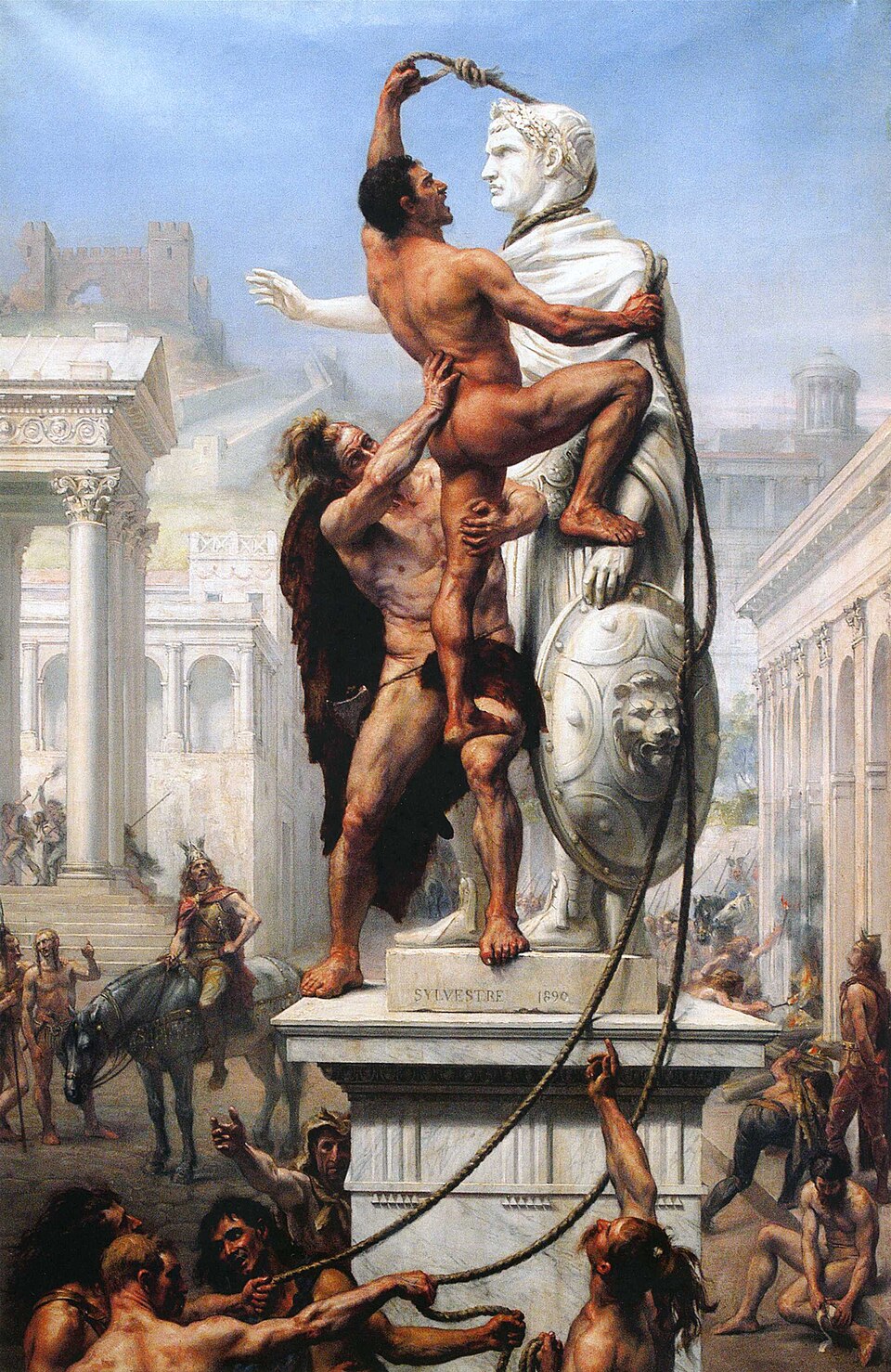
On 24 August 410, after months of siege and negotiation outside its walls, Rome finally gave way to Alaric, king of the Visigoths. The city had not been the empire's administrative capital for decades — Milan had taken that role in 286, and Ravenna since 402 — but it remained the eternal city, the symbolic heart of Roman identity, and no foreign army had breached its defenses in nearly eight hundred years, not since Brennus and the Gauls in the fourth century BC.
As night fell over the city, Alaric's warriors moved into the streets. What followed was not a single explosive battle but three days of looting and pillage that began that evening and stretched onward, sweeping through households, temples, and public buildings. The Visigoths, who had spent years as uneasy federates and rivals of Rome since their treaty of 382, now moved through the city they had once served under Roman generals like Stilicho.
Amid the chaos, Alaric's men seized the city's wealth — gold, silver, and centuries of accumulated Roman treasure — carrying it off as they went from district to district. They also took something far more valuable politically: Galla Placidia, sister of the Western Emperor Honorius, captured as a hostage whose fate would remain tied to the Visigothic court for years afterward.
While the physical destruction unfolded street by street, the psychological shock rippled outward instantly. In Constantinople, word of the sack reached the Eastern Emperor Theodosius II, who declared three days of public mourning for a city he had never ruled directly but which still commanded reverence as Rome.
Far to the east, in Bethlehem, the scholar Jerome received the news with despair, writing the words that would echo through history: 'the city which had taken the whole world was itself taken.' His grief captured what so many felt that day and night — that if Rome could fall, nothing was safe.
More from History

The Morning Bingham Climbed to Machu Picchu
On a cold July morning in 1911, an American historian scrambled up a jungle-choked ridge above the Urubamba River — and by afternoon, a forgotten Inca citadel would belong to the world.

The Last Half-Hour of the Hindenburg
It was already half a day late, and the public had been told to keep away — but at seven o'clock that evening, the Hindenburg finally turned toward its mooring mast for the last time.

The Last Hours of Pompeii: August 24, 79 AD
By noon it was just another hot day beside the Bay of Naples. By evening, an entire mountain had rewritten the fate of thousands.

The Longest Walk: Mandela's Last Steps to Freedom
After 27 years behind bars, a 71-year-old man had to relearn how to walk out of a prison gate — into a waiting world of cameras, crowds, and a country holding its breath.

The Document Lincoln Signed on the First Day of 1863
On a single January morning, a president's pen would change the legal status of more than three million people — if the ink held and his hand did not shake.

The Day of the Dream: August 28, 1963
Two hundred and fifty thousand people converged on the National Mall that morning — by nightfall, one voice from the steps of the Lincoln Memorial would echo for generations.