The Night the Glass Fell
It began with a gunshot in Paris and ended with a country's windows in the gutter — one night, from dusk to dawn, that shattered any illusion Germany's Jews had left.
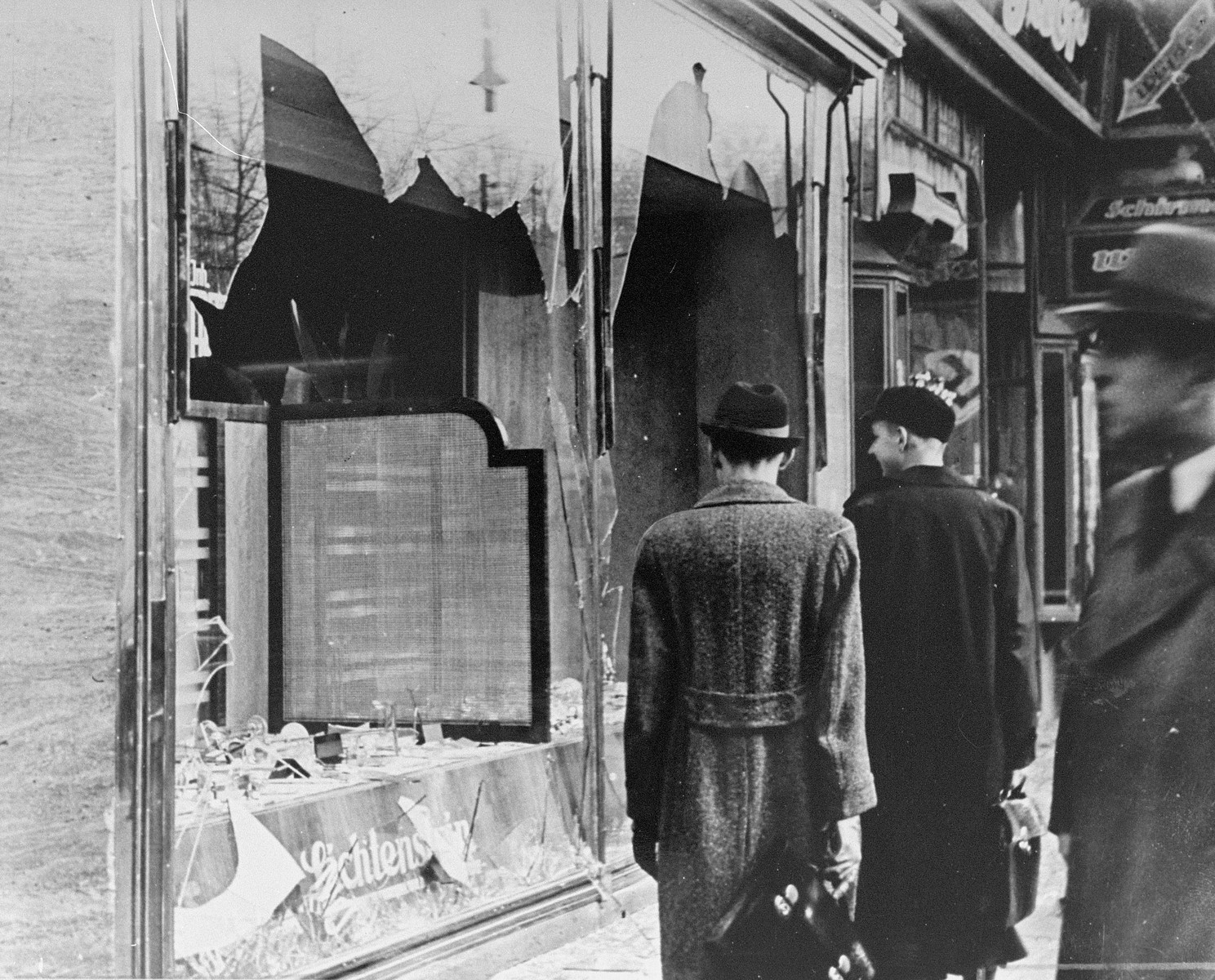
The pretext had arrived days earlier. On 9 November 1938, Ernst vom Rath, a German diplomat shot in Paris by seventeen-year-old Herschel Grynszpan, died of his wounds. Grynszpan, born in Germany to Polish-Jewish parents, had acted after learning his family was among thousands of Polish Jews expelled from Germany and left stranded, penniless, at the Polish border. Joseph Goebbels seized on the death immediately, telling his party that no spontaneous actions would be planned — but that if the German people rose up against the Jews on their own, no one would stop them.
By nightfall on 9 November, word had spread through the Sturmabteilung (SA) and Schutzstaffel (SS) networks. Members of the Hitler Youth joined in. Civilians, some incited by agents in the crowd, followed. Police and firemen across Germany, Austria, and the Sudetenland had their orders: do not intervene.
In the hours after dark, sledgehammers came out. Attackers moved street by street, smashing the windows of Jewish-owned shops, homes, hospitals, and schools. The noise of shattering glass — plate glass from department store fronts, the delicate windows of prayer rooms — became the defining sound of the night, later giving the pogrom its name.
Synagogues burned. By the time the violence subsided, more than 1,400 synagogues and prayer rooms across Germany, Austria, and the Sudetenland lay gutted or destroyed. Torches were carried into sanctuaries; Torah scrolls and furnishings were thrown into the street or set alight while fire brigades stood by, under instruction not to save Jewish property.
As the night wore into the early hours of 10 November, more than 7,000 Jewish-owned businesses were vandalized or demolished. Storefronts were stripped bare, merchandise scattered across the pavement, cash registers emptied or smashed. Rioters moved on to private apartments, breaking down doors, destroying furniture, terrorizing families in their own homes.
More from History

The Morning Bingham Climbed to Machu Picchu
On a cold July morning in 1911, an American historian scrambled up a jungle-choked ridge above the Urubamba River — and by afternoon, a forgotten Inca citadel would belong to the world.

The Last Half-Hour of the Hindenburg
It was already half a day late, and the public had been told to keep away — but at seven o'clock that evening, the Hindenburg finally turned toward its mooring mast for the last time.

The Last Hours of Pompeii: August 24, 79 AD
By noon it was just another hot day beside the Bay of Naples. By evening, an entire mountain had rewritten the fate of thousands.

The Longest Walk: Mandela's Last Steps to Freedom
After 27 years behind bars, a 71-year-old man had to relearn how to walk out of a prison gate — into a waiting world of cameras, crowds, and a country holding its breath.

The Document Lincoln Signed on the First Day of 1863
On a single January morning, a president's pen would change the legal status of more than three million people — if the ink held and his hand did not shake.

The Day of the Dream: August 28, 1963
Two hundred and fifty thousand people converged on the National Mall that morning — by nightfall, one voice from the steps of the Lincoln Memorial would echo for generations.