The Night the Wonder Burned
Somewhere in Macedon a queen was screaming in labor, and in Ephesus a man was climbing toward the roof beams of the greatest temple in the world with a torch in his hand.
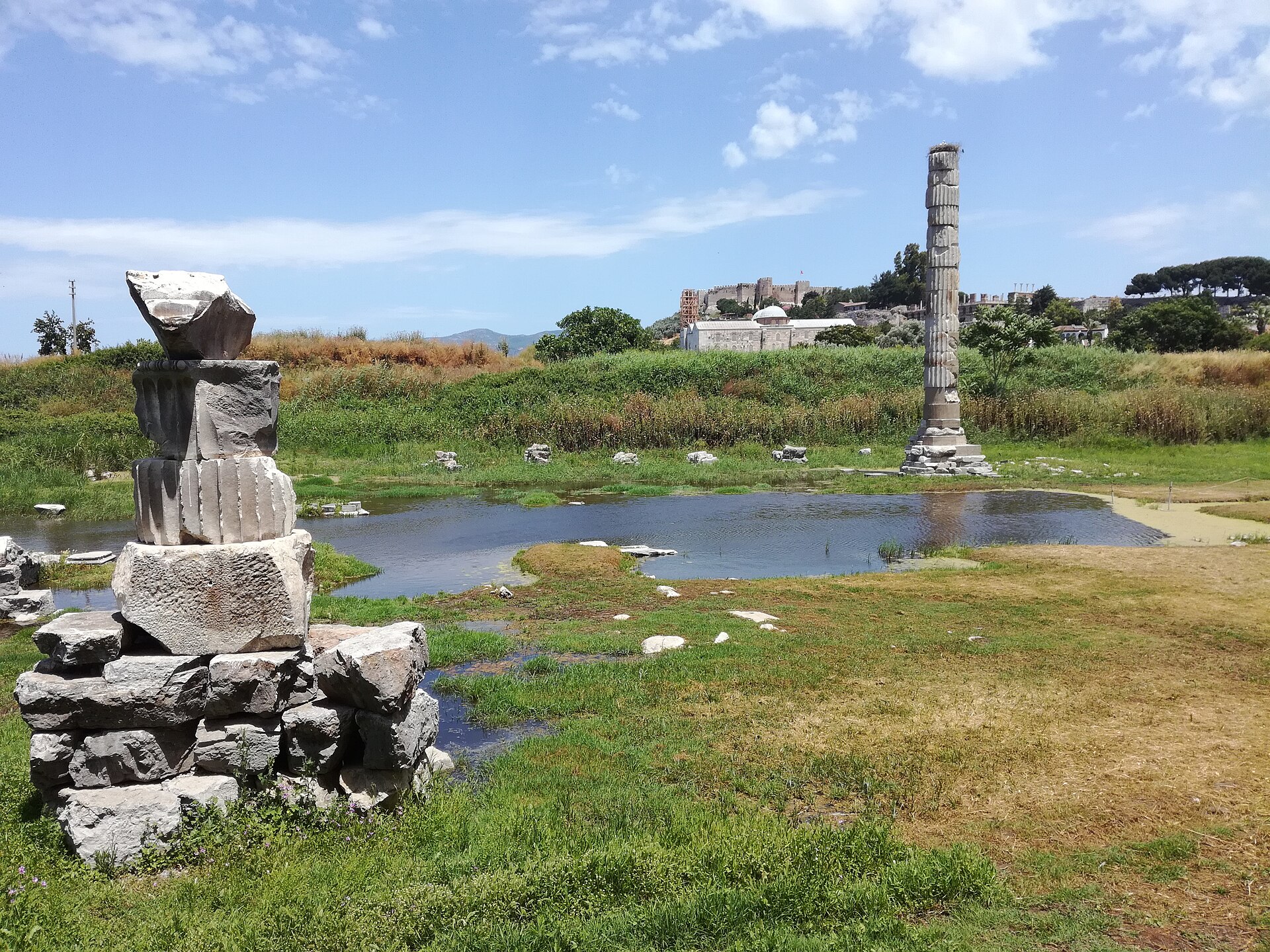
By the summer of 356 BC, the Temple of Artemis at Ephesus had stood for nearly two centuries in its rebuilt marble form, funded by Croesus of Lydia and raised under the architect Chersiphron. It was no ordinary shrine. Merchants, kings, and travelers came from across Anatolia to lay jewelry at the feet of Artemis, and the desperate came seeking sanctuary — the temple's precinct had long offered refuge to those fleeing punishment, a tradition the Ephesians traced back to the Amazons themselves.
On this particular day, sometime around the 20th or 21st of July, a man made his way inside. Ancient sources name him Herostratus, and they say his purpose was simple and terrible: to burn the temple down and be remembered forever for it. Whether he moved alone or with help is something later writers would argue about — some, like Stefan Karweise, note that reaching the great wooden roof beams would have required real access, hard to manage without someone looking the other way. An 'entire corps' of temple guards and custodians was known to watch over the sanctuary. But on this day, whatever watch there was failed.
Herostratus set fire to the wooden roof-beams. Wood does not forgive heat gathered in dry Aegean summer air, and the flames caught fast. The fire spread through the timber framing high above the marble columns and painted panels, above the sculptures by Polyclitus, Pheidias, Cresilas, and Phradmon, above the gilded columns that travelers had marveled at for generations. Aristotle would later describe the conflagration itself, though he never explained its cause.
While the temple burned, tradition holds that something else was happening far to the north: in Macedon, a queen was giving birth to a son who would become Alexander the Great. Greek and Roman historians could not resist the coincidence, dating it to the same day, around July 20–21. Plutarch later wrote that Artemis had been too occupied with the delivery of Alexander to save her own burning house — though even he offered no cause for the fire itself, only the irony of timing.
By the time the flames died, the roof was gone and much of the temple with it. What had taken generations and the wealth of a Lydian king to build had been undone in a matter of hours by fire climbing through timber.
More from History

The Morning Bingham Climbed to Machu Picchu
On a cold July morning in 1911, an American historian scrambled up a jungle-choked ridge above the Urubamba River — and by afternoon, a forgotten Inca citadel would belong to the world.

The Last Half-Hour of the Hindenburg
It was already half a day late, and the public had been told to keep away — but at seven o'clock that evening, the Hindenburg finally turned toward its mooring mast for the last time.

The Last Hours of Pompeii: August 24, 79 AD
By noon it was just another hot day beside the Bay of Naples. By evening, an entire mountain had rewritten the fate of thousands.

The Longest Walk: Mandela's Last Steps to Freedom
After 27 years behind bars, a 71-year-old man had to relearn how to walk out of a prison gate — into a waiting world of cameras, crowds, and a country holding its breath.

The Document Lincoln Signed on the First Day of 1863
On a single January morning, a president's pen would change the legal status of more than three million people — if the ink held and his hand did not shake.

The Day of the Dream: August 28, 1963
Two hundred and fifty thousand people converged on the National Mall that morning — by nightfall, one voice from the steps of the Lincoln Memorial would echo for generations.