The October Revolution: A Turning Point in History
In the heart of Petrograd, amid the chaos of war and hunger, a revolution ignited that would reshape the world. The October Revolution, a pivotal moment in history, was more than a coup—it was a declaration of the people's power.
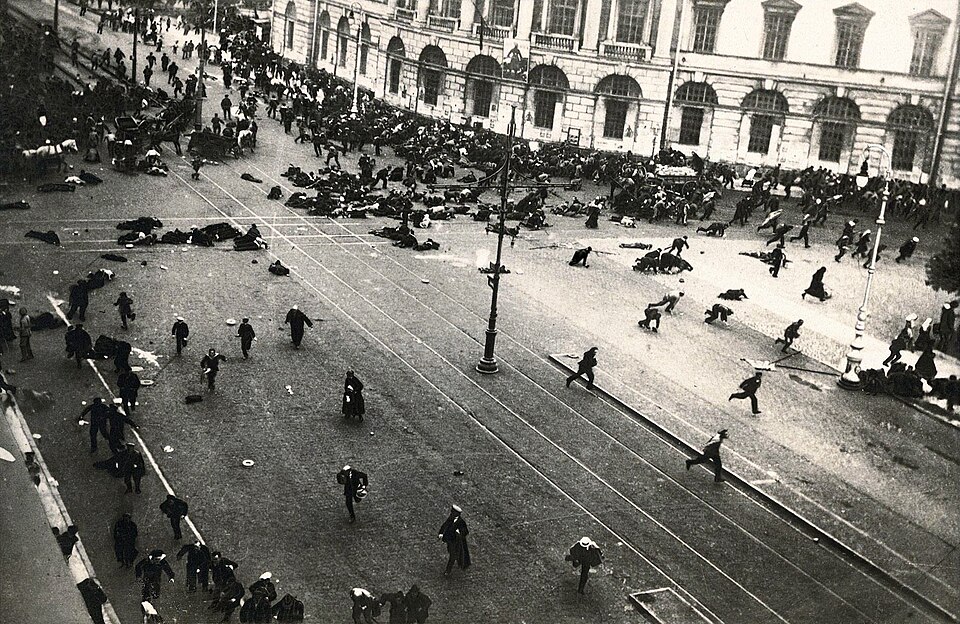
The October Revolution began with a plan, a call to action, and a belief that the people could seize their destiny. Led by Vladimir Lenin's Bolsheviks, the revolution was not an accident but the culmination of years of discontent and growing unrest. The Provisional Government, which had replaced the Tsar after the February Revolution, was seen as weak and unpopular. Its continued involvement in World War I made it a target for the masses, and its repression — including the killing of hundreds of protesters during the July Days — deepened the anger. The streets of Petrograd, once filled with hope, now echoed with the cries of the hungry and the weary.
The revolution was not just a political shift but a social upheaval. Workers, peasants, and soldiers had been organizing for months, forming soviets — councils that represented their demands. These soviets were the backbone of the revolution, giving a voice to people the government had long ignored. In the factories, workers took control of production, while in the countryside peasants seized land from the wealthy landowners. The revolution was a movement of the people, driven by the desire for change and justice.
The events of October 1917 were swift and decisive. On 10 October, the Petrograd Soviet, led by Leon Trotsky, voted to back a military uprising. On 24 October the government closed numerous newspapers and sealed off Petrograd in an attempt to forestall the revolution, but the next day a full-scale uprising erupted as a fleet of Bolshevik sailors entered the harbor and tens of thousands of soldiers rose up in support. Red Guards under the Military-Revolutionary Committee began occupying government buildings, and in the early morning of 26 October they captured the Winter Palace, the seat of the Provisional Government. This first stage of the revolution unfolded largely without bloodshed, yet the outcome was clear: the Bolsheviks had taken control of Russia's capital.
The revolution's impact was immediate and far-reaching. It marked the end of the Provisional Government and the beginning of a new era. Yet the Bolshevik seizure of power was not universally recognized, and the country descended into a civil war that lasted until late 1922, drawing in intervention by the Western Allies on the anti-Bolshevik side. Out of that conflict emerged the Soviet Union, a state that would shape world politics for decades to come.
More from History

The Morning Bingham Climbed to Machu Picchu
On a cold July morning in 1911, an American historian scrambled up a jungle-choked ridge above the Urubamba River — and by afternoon, a forgotten Inca citadel would belong to the world.

The Last Half-Hour of the Hindenburg
It was already half a day late, and the public had been told to keep away — but at seven o'clock that evening, the Hindenburg finally turned toward its mooring mast for the last time.

The Last Hours of Pompeii: August 24, 79 AD
By noon it was just another hot day beside the Bay of Naples. By evening, an entire mountain had rewritten the fate of thousands.

The Longest Walk: Mandela's Last Steps to Freedom
After 27 years behind bars, a 71-year-old man had to relearn how to walk out of a prison gate — into a waiting world of cameras, crowds, and a country holding its breath.

The Document Lincoln Signed on the First Day of 1863
On a single January morning, a president's pen would change the legal status of more than three million people — if the ink held and his hand did not shake.

The Day of the Dream: August 28, 1963
Two hundred and fifty thousand people converged on the National Mall that morning — by nightfall, one voice from the steps of the Lincoln Memorial would echo for generations.