The Officers' Battle: Sakarya and the Turn of a War
For twenty-one days along a river fifty miles from Ankara, an army fought with no clear front line at all — only orders to hold the ground beneath their boots or die trying.
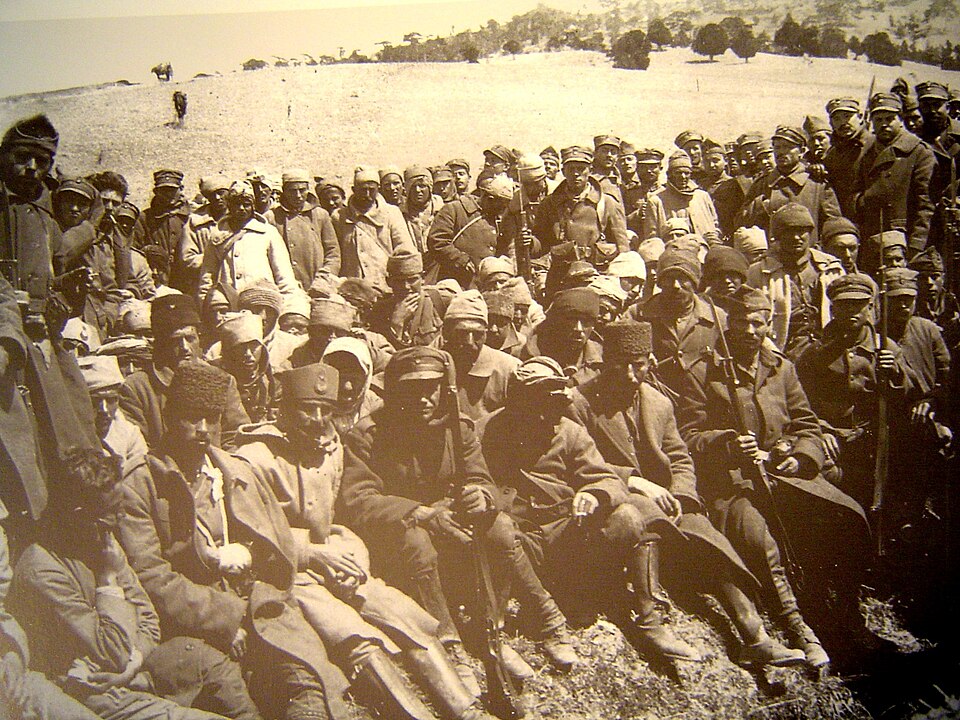
On August 10, 1921, Greek King Constantine I finally gave the order his own commanding general, Anastasios Papoulas, had once resisted: march on Ankara. Papoulas had warned that dragging his army deep into the barren, roadless heart of Anatolia was a reckless gamble, but public pressure and the lure of becoming the 'Conqueror of Ankara' overrode his caution. His troops set out on a nine-day march through country so harsh it starved horses and broke down vehicles, forcing soldiers to strip Turkish villages of maize and water along the way.
The Turkish army they marched toward had just suffered defeat at Kütahya and Eskişehir, and its front was in crisis. Mustafa Kemal Pasha, president of the Grand National Assembly, came to the front himself and, together with Fevzi Pasha, ordered a withdrawal east of the Sakarya River, opening a wide gap between the two armies. Mustafa Kemal issued the famous directive that there would be no fixed defensive line but a defensive surface — the whole homeland — and that every unit, however small, must reform and keep fighting wherever it was driven back, without regard to its neighbors' retreat.
On August 23, the Greeks made contact with Turkish positions south of the Gök River, near Polatlı, where Turkish headquarters had been set. Three days later they attacked all along the line, crossing the shallow Gök and storming ridge after entrenched ridge under heavy fire. By September 2 they had seized Mount Chal, the most strategically vital height on the road to Ankara, and their encircling movements against the Turkish flanks had largely failed, turning the fight into a grinding, head-on struggle of infantry, machine guns, and artillery.
The Greek main effort in the center pushed forward some ten miles, or sixteen kilometers, in ten days, breaking through a second Turkish defensive line. Some units came within thirty-one miles — about fifty kilometers — of Ankara, the deepest the Greek army would ever reach into Anatolia. But for days, ammunition and food failed to reach the front, choked off by Turkish cavalry raids on Greek supply lines. All Greek reserves were now committed, while fresh Turkish conscripts kept arriving in response to national mobilization.
On September 10, Mustafa Kemal personally commanded a general Turkish counter-offensive, retaking Mount Chal that same day. By September 13, Greek forces had been pushed back east of the Eskişehir-Afyon line, abandoning towns like Sivrihisar, Aziziye, Bolvadin, and Çay in the weeks that followed. As they withdrew, the Greek army destroyed railways and bridges and burned villages, leaving little the Turks could use.
More from History

The Morning Bingham Climbed to Machu Picchu
On a cold July morning in 1911, an American historian scrambled up a jungle-choked ridge above the Urubamba River — and by afternoon, a forgotten Inca citadel would belong to the world.

The Last Half-Hour of the Hindenburg
It was already half a day late, and the public had been told to keep away — but at seven o'clock that evening, the Hindenburg finally turned toward its mooring mast for the last time.

The Last Hours of Pompeii: August 24, 79 AD
By noon it was just another hot day beside the Bay of Naples. By evening, an entire mountain had rewritten the fate of thousands.

The Longest Walk: Mandela's Last Steps to Freedom
After 27 years behind bars, a 71-year-old man had to relearn how to walk out of a prison gate — into a waiting world of cameras, crowds, and a country holding its breath.

The Document Lincoln Signed on the First Day of 1863
On a single January morning, a president's pen would change the legal status of more than three million people — if the ink held and his hand did not shake.

The Day of the Dream: August 28, 1963
Two hundred and fifty thousand people converged on the National Mall that morning — by nightfall, one voice from the steps of the Lincoln Memorial would echo for generations.