The People Who Vanished from Their Cliffs
They carved multi-room cities into sheer canyon walls, mastered irrigation and pottery for centuries — then, around 1300, walked away and left their pots and clothes behind, as if planning to return.
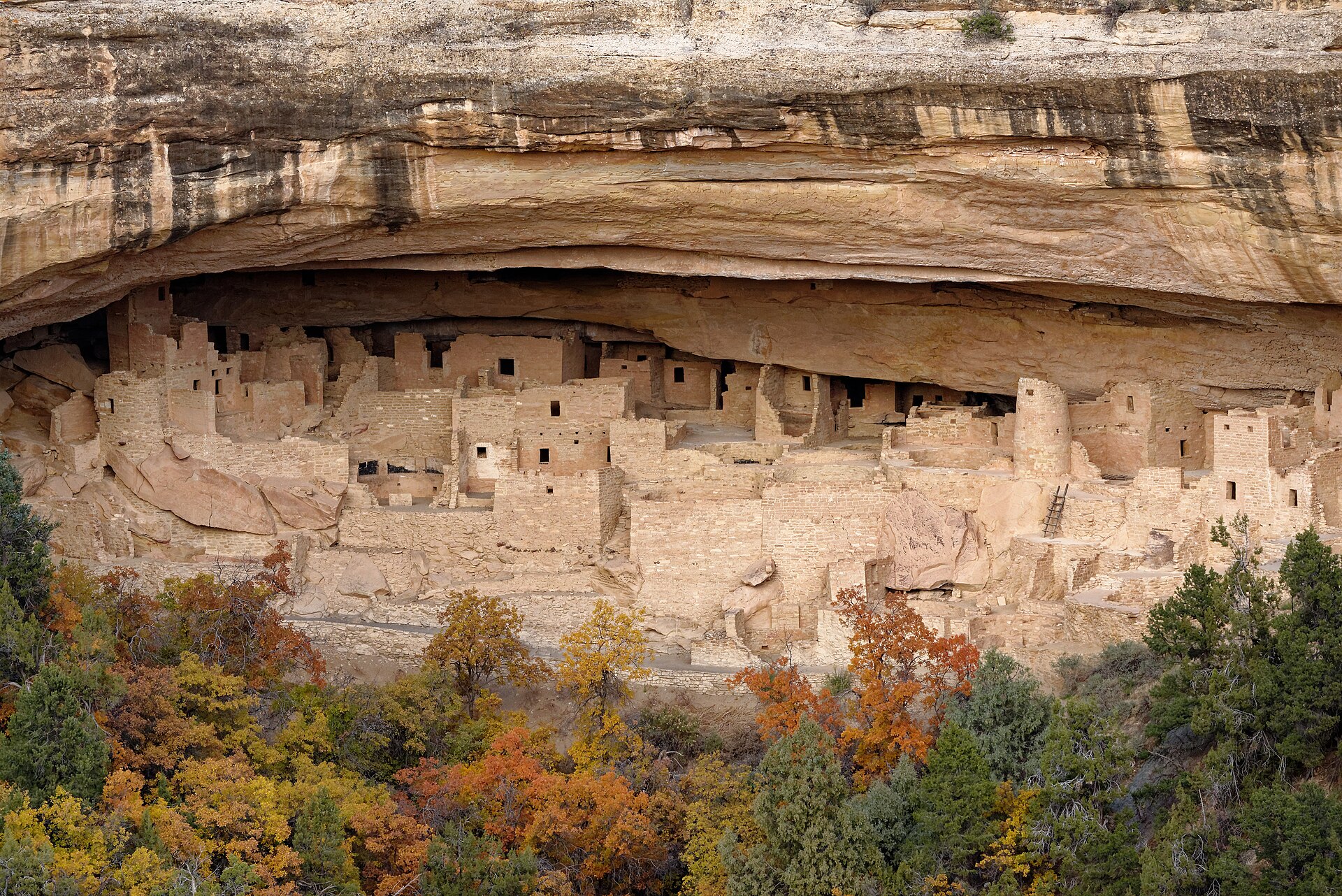
High on the Colorado Plateau, where mesas rise between 4,500 and 8,500 feet and juniper, pinyon, and ponderosa pine mark the changing elevations, a distinct Native American culture took root long before written history reached the Four Corners region. Archaeologists continue to debate when this culture first emerged, with the Pecos Classification's Early Basketmaker II Era offering one proposed starting point, but the culture as it is most commonly dated flourished from roughly 500 CE to 1300 CE, and is believed to have developed at least partly from the Oshara tradition, itself descended from the Picosa culture. Today we call them the Ancestral Puebloans — though for much of the twentieth century they were known by another name entirely.
That name, Anasazi, comes from the Navajo language, and its meaning has been argued over for generations. Some say it simply means 'ancient people'; the more literal Navajo translation is 'enemy ancestors' or 'ancestors of our enemies,' reflecting old rivalries between the Navajo and the Pueblo peoples. The Hopi, by contrast, call these same ancestors Hisatsinom — 'ancient people' — without the freight of enmity. The term Anasazi was popularized by Richard Wetherill, a rancher and trader who explored the Mesa Verde ruins in 1888–1889 and who understood exactly what the Navajo word implied. It was later cemented into archaeology by Alfred V. Kidder, who used it in his 1927 Pecos Classification, mistakenly thinking it was the Diné word for 'old people.' Contemporary Pueblo descendants consider the term derogatory and prefer 'Ancestral Pueblo peoples.' Navajo historian Wally Brown has even argued that the original word referred only to a specific slave-raiding group once based in Chaco Canyon, not to all Ancestral Puebloans, and that anthropologists mistakenly broadened its meaning.
Whatever the name, the culture's footprint stretched across a vast and varied homeland — from central New Mexico to southern Nevada, bounded loosely by parts of Nevada, Utah, and Colorado to the north, and by the Colorado, Little Colorado, Rio Puerco, and Rio Grande rivers to the south. Evidence of their presence even reaches east onto the Great Plains, near the Cimarron and Pecos Rivers and in the Galisteo Basin. Within this territory they built a complex network linking hundreds of communities and population centers across the Colorado Plateau.
Their way of living evolved dramatically over the centuries. The earliest dwellings, established around 500 CE according to the traditions recorded in their history, were simple pit-houses dug into the earth. Over time these gave way to kivas — underground ceremonial chambers used for communal gatherings and ritual — and eventually to square masonry pueblos, as builders refined stone-working techniques passed down through generations.
During these early centuries, the Ancestral Puebloans were already hunting game and cultivating corn, squash, and beans, the classic triad of Southwestern agriculture. They built increasingly sophisticated dams and irrigation networks to coax crops from an arid, unforgiving landscape, and developed a pottery tradition distinctive enough that its wares still help archaeologists trace their movements and trade routes today.
More from History

The Morning Bingham Climbed to Machu Picchu
On a cold July morning in 1911, an American historian scrambled up a jungle-choked ridge above the Urubamba River — and by afternoon, a forgotten Inca citadel would belong to the world.

The Last Half-Hour of the Hindenburg
It was already half a day late, and the public had been told to keep away — but at seven o'clock that evening, the Hindenburg finally turned toward its mooring mast for the last time.

The Last Hours of Pompeii: August 24, 79 AD
By noon it was just another hot day beside the Bay of Naples. By evening, an entire mountain had rewritten the fate of thousands.

The Longest Walk: Mandela's Last Steps to Freedom
After 27 years behind bars, a 71-year-old man had to relearn how to walk out of a prison gate — into a waiting world of cameras, crowds, and a country holding its breath.

The Document Lincoln Signed on the First Day of 1863
On a single January morning, a president's pen would change the legal status of more than three million people — if the ink held and his hand did not shake.

The Day of the Dream: August 28, 1963
Two hundred and fifty thousand people converged on the National Mall that morning — by nightfall, one voice from the steps of the Lincoln Memorial would echo for generations.