The Phoenicians: Sailors Who Carried the Alphabet
A people with no unified name for themselves, no empire, and almost no surviving literature quietly reshaped how the world writes. Their ships crossed the Mediterranean before Rome was even a village.
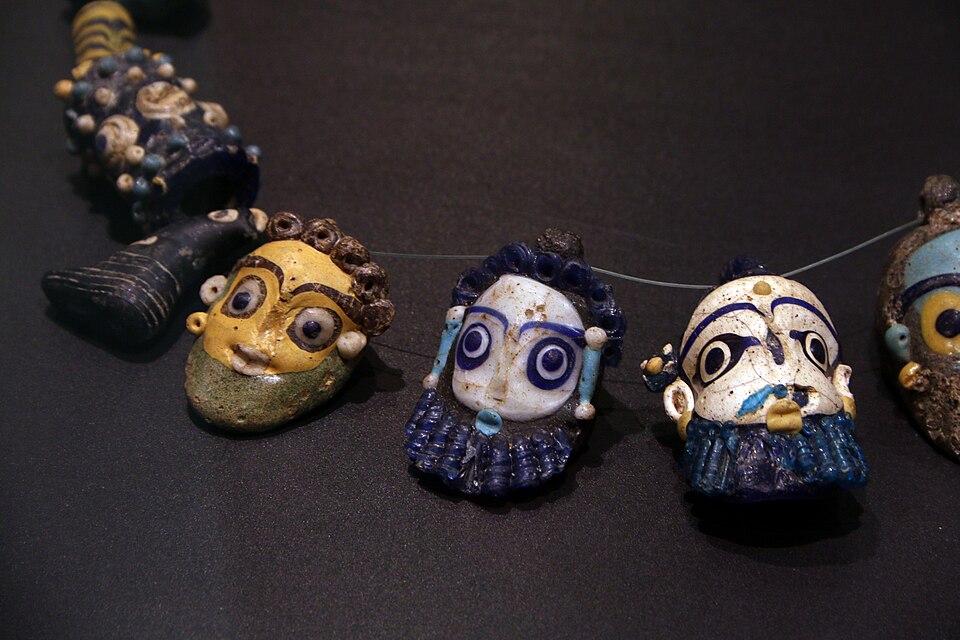
Long before Rome rose to power, a network of independent city-states clung to the narrow coastline of the Levant, in what is now mostly Lebanon. These were the Phoenicians, a Semitic-speaking people who emerged directly from the Bronze Age Canaanites and who, remarkably, never called themselves 'Phoenicians' at all. They referred to themselves as Canaanites, and their identity was rooted not in a shared nation but in their individual cities — a person was a Sidonian, a Tyrian, a Byblian, defined by the city they called home rather than by any pan-Phoenician allegiance.
The name history remembers them by came from the Greeks, who first applied it in the writings of Herodotus. Its roots are debated. Egyptian inscriptions at Karnak refer to a 'land of fnḫw', meaning 'carpenters' — a fitting label given that Phoenicia was central to the lumber trade of the ancient Levant, and scholars believe this word was loaned into Greek as phoînix. That same Greek word, however, could also mean 'Tyrian purple, crimson' or 'date palm', and later Greek writers linked the Phoenicians' name to the crimson dye their coastal cities became famous for. Which meaning came first, and how they connect, remains debated — but the name stuck to a people who never used it themselves.
Their great cities — Byblos, Sidon, and Tyre chief among them — were never united under a single crown. Each retained its own political autonomy, ruled sometimes by kings, sometimes by powerful merchant families operating through informal oligarchies. There is no evidence they ever considered themselves a single nation. What bound them was not politics but the sea: a shared maritime culture that carried goods, ideas, and people across the entire Mediterranean basin for more than a thousand years.
Phoenician ships linked Mesopotamia, Egypt, and Greece across this long maritime history, though their earliest documented contact with the Aegean world reached back to Minoan Crete, between roughly 1950 and 1450 BC. From their core stretching between Arwad and Mount Carmel, Phoenician sailors pushed outward — to Cyprus, across to the Maghreb, into the Iberian Peninsula, and, according to later tradition, even as far as Britain. They founded colonies and trading posts wherever they went, and one of these outposts, founded around 800 BC by exiles from Tyre on the coast of Tunisia, grew into something far greater than a trading post: Carthage.
Carthage never forgot its origins. Even as it rose to rival the great Mediterranean powers, the city maintained ties of loyalty to Tyre, reportedly donating a tenth of its trading profits to the temple of the god Melqart back in the Phoenician homeland. By the 7th century BC, Carthage had become a major power in its own right — and it was Carthage, centuries later, whose defeat by Rome under Hannibal's failed campaigns handed the Romans mastery of Mediterranean trade.
More from History

The Morning Bingham Climbed to Machu Picchu
On a cold July morning in 1911, an American historian scrambled up a jungle-choked ridge above the Urubamba River — and by afternoon, a forgotten Inca citadel would belong to the world.

The Last Half-Hour of the Hindenburg
It was already half a day late, and the public had been told to keep away — but at seven o'clock that evening, the Hindenburg finally turned toward its mooring mast for the last time.

The Last Hours of Pompeii: August 24, 79 AD
By noon it was just another hot day beside the Bay of Naples. By evening, an entire mountain had rewritten the fate of thousands.

The Longest Walk: Mandela's Last Steps to Freedom
After 27 years behind bars, a 71-year-old man had to relearn how to walk out of a prison gate — into a waiting world of cameras, crowds, and a country holding its breath.

The Document Lincoln Signed on the First Day of 1863
On a single January morning, a president's pen would change the legal status of more than three million people — if the ink held and his hand did not shake.

The Day of the Dream: August 28, 1963
Two hundred and fifty thousand people converged on the National Mall that morning — by nightfall, one voice from the steps of the Lincoln Memorial would echo for generations.