The Rubber People: Mesoamerica's First Civilization
Long before the Maya carved their calendars or the Aztecs built their island city, someone in the swamps of the Gulf Coast was already sculpting stone heads the size of cars. No one knows what they called themselves.
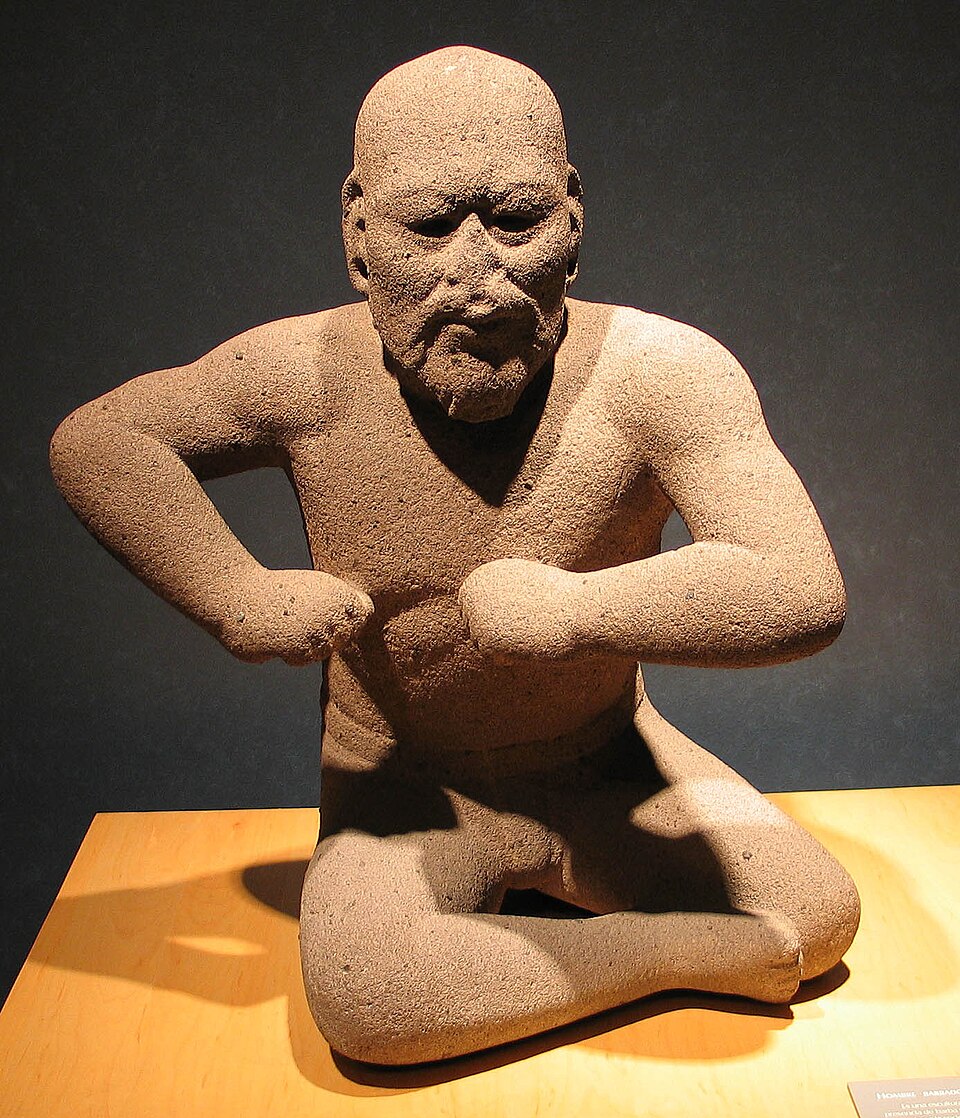
In the tropical lowlands of what is now Veracruz and Tabasco, a distinct culture crystallized at a site called San Lorenzo Tenochtitlán. Traditionally, historians placed the beginnings of Olmec civilization between 1400 and 1200 BC, but ritual deposits found at the nearby shrine of El Manatí pushed the earliest known Olmec traces back to at least 1600–1500 BC. Still, what we recognize today as fully formed Olmec culture, its distinctive artistic and religious features, first appeared at San Lorenzo itself around 1400 BC. Archaeologists gave these people a name borrowed from the much later Aztecs: Olmec, from the Nahuatl for 'rubber people,' since their descendants' neighbors processed latex from the Castilla elastica tree, mixed with vine juice, to make balls for a ceremonial game. The name stuck even after scholars realized it referred to people living two thousand years after the original civilization had vanished. What the Olmec called themselves remains unknown, though later accounts may preserve a memory of them as 'Tamoanchan.'
Their roots run deeper still, into farming communities in Tabasco dating back to 5100–4600 BC, communities that shared crops and technologies with the later Olmec. By around 1400 BC, San Lorenzo had become the seat of something new: a densely populated society sustained by the fertile, well-watered soil of the Coatzacoalcos river basin, an environment comparable to the great river valleys of the Nile, Indus, and Yellow River. That fertility fed a growing elite, and that elite demanded luxury: jade from the Motagua River valley in Guatemala, obsidian hauled from highland sources 200 to 400 kilometers away, magnetite worked into polished ornaments.
Curiously, some Olmec-style artifacts appear even earlier outside the Gulf heartland. At Amuco-Abelino, in the modern state of Guerrero, objects have been dated to as early as 1530 BC, suggesting that the culture's formative currents ran through multiple regions before crystallizing at San Lorenzo.
The Olmec are most famous today for their art, especially the colossal stone heads, carved from massive boulders and unlike anything else in the ancient Americas. But their innovations reached further: they appear to be the first Mesoamerican society to practice ritual bloodletting and to play the Mesoamerican ballgame, a sport and ritual that would echo through nearly every civilization that followed them across the region for the next two thousand years.
Around 900 BC, San Lorenzo's dominance collapsed. Widespread destruction of many of its monuments occurred around the 950s BC, a sign perhaps of internal upheaval, though the leading theory today points to environmental change, shifting rivers that undercut the city's foundations. Power shifted to La Venta, which held Olmec preeminence until roughly 400 BC.
More from History

The Morning Bingham Climbed to Machu Picchu
On a cold July morning in 1911, an American historian scrambled up a jungle-choked ridge above the Urubamba River — and by afternoon, a forgotten Inca citadel would belong to the world.

The Last Half-Hour of the Hindenburg
It was already half a day late, and the public had been told to keep away — but at seven o'clock that evening, the Hindenburg finally turned toward its mooring mast for the last time.

The Last Hours of Pompeii: August 24, 79 AD
By noon it was just another hot day beside the Bay of Naples. By evening, an entire mountain had rewritten the fate of thousands.

The Longest Walk: Mandela's Last Steps to Freedom
After 27 years behind bars, a 71-year-old man had to relearn how to walk out of a prison gate — into a waiting world of cameras, crowds, and a country holding its breath.

The Document Lincoln Signed on the First Day of 1863
On a single January morning, a president's pen would change the legal status of more than three million people — if the ink held and his hand did not shake.

The Day of the Dream: August 28, 1963
Two hundred and fifty thousand people converged on the National Mall that morning — by nightfall, one voice from the steps of the Lincoln Memorial would echo for generations.